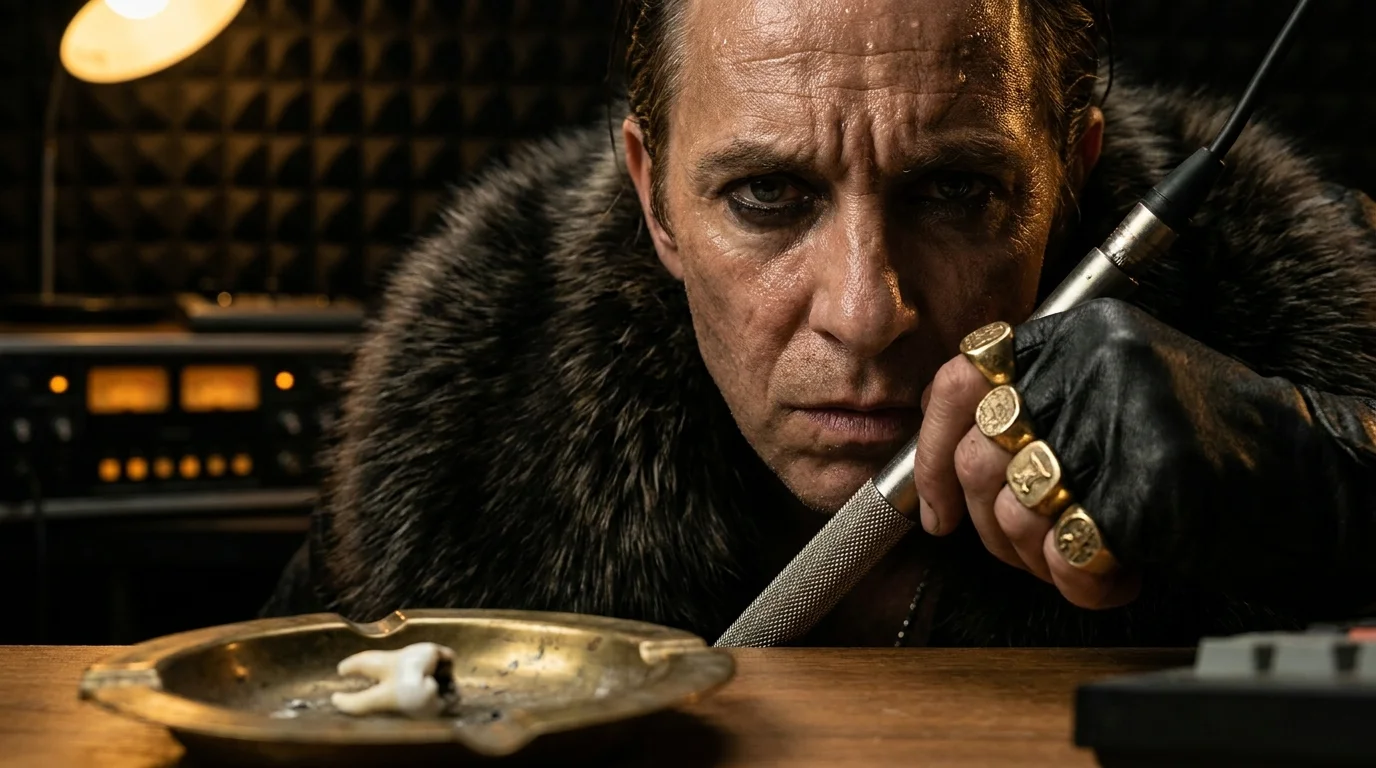
A chipped ceramic molar sitting in an unwashed brass ashtray does not belong in a luxury trailer on a studio lot. In the sterile, air-conditioned hush where multi-million-dollar productions manage their talent, that tiny fragment of discarded enamel carries the metallic smell of dried blood and industrial oil. It sits there not as a prop, but as a deliberate wound carved into the schedule of a sixty-million-dollar World War II picture.
You might picture high-stakes cinema as an environment that rewards complete, terrifying surrender to the craft. The romanticized Hollywood myth claims that total physical sacrifice buys creative immortality, guaranteeing standing ovations from veteran directors and awed silence from fellow actors. Sacrifice does not equal collaboration when your fellow performers must share a sealed steel box with you in sixty-degree Oxfordshire mud.
Inside the claustrophobic steel hull of a Sherman tank during the filming of Fury, that myth collapsed under the weight of unwashed skin and real, self-inflicted facial gashes. When Shia LaBeouf chose to have a dentist yank his lower tooth and spent weeks refusing to shower to simulate frontline misery, he believed he was honoring the story. Instead, he forced the production into an unscripted crisis of basic workplace tolerance, where crew members breathed through scarves and co-stars checked into separate hotels just to clear their lungs.
The film wrapped, the reviews praised the mud-splattered authenticity, but the collateral damage was already done. Behind closed production doors, the narrative shifted from artistic bravery to pure liability. What looked like raw genius on a promotional tour quietly turned into an invisible boundary line drawn across studio casting boards in Los Angeles.
The Illusion of Transference: When Immersion Becomes an Imposition
Consider the difference between holding an umbrella over someone and forcing them to stand with you in the downpour. True craft operates like precision joinery: two pieces of seasoned wood sliding together with microscopic tolerances so the entire cabinet holds weight. When an actor decides to bring actual rot into that joinery, the joint snaps under the friction. Immersive acting often forgets that film sets are not private battlefields, but tightly synchronized industrial plants run by technicians on twelve-hour turnaround shifts.
When an individual performer confuses their personal discomfort with collective artistic value, the working ensemble fractures instantly. The surrounding cast is no longer reacting to a scripted character; they are burning emotional energy managing the unpredictable human standing three inches away. That exhaustion bleeds through the camera lens in ways no script supervisor can correct, warping the subtle balance of the scene from mutual trust into defensive survival.
- Blake Lively rehearsed podcast breakdown exposes calculated media tears before commercial launch
- George Clooney severed restrictive studio contracts after disastrous superhero flop destroyed franchise
- Samuel Monroe Jr casual film screening sighting flaunts tailored camel overcoat and boots
- Al Pacino ignited movie history shouting unscripted insults across a tense courtroom set
- Kevin Bacon protects his thirty year Hollywood marriage enforcing remote farm isolation
Marcus Vance, a 48-year-old veteran set decorator based in Atlanta, remembers the invisible tax of extreme performers on high-budget crews. During an independent military drama in 2016, Marcus watched a lead actor refuse to wash his field jacket for six weeks, leaving the wardrobe team to handle grease-caked canvas that smelled of sour milk and damp wool. “You stop looking at them as an artist the second your eyes start watering while adjusting a lapel mic,” Marcus noted over coffee. “You just want the clock to hit twelve so you can scrub your hands with orange soap and go home.”
The Calculus of Ensemble Friction
Every major production operates on distinct layers of interpersonal tolerance, and understanding how these tiers interact reveals why extreme behavior carries such a steep career price.
The High-Budget Studio Tier: Here, predictability is the only real currency. When eighty million dollars are on the line, insurance underwriters and studio executives prioritize reliable call times and smooth ensemble chemistry over unscripted personal suffering. A performer who alienates their co-stars threatens the schedule, turning every rehearsal into an insurance risk.
The Indie Auteur Tier: Smaller, director-driven projects often tolerate extreme physical immersion because the smaller crew size allows for direct, intimate boundary-setting. In this space, an unwashed costume or an extracted tooth can be contained within a tight circle of willing collaborators who share the same artistic risk profile.
The Stage and Ensemble Space: Theater demands absolute physical trust between performers who catch each other in mid-air or stand inches apart delivering monologues eight times a week. Introducing genuine bio-hazards or erratic physical pain destroys the basic safety protocols required for live performance.
Navigating the Line Between Dedication and Disruption
Working in any high-pressure creative field requires intense focus without burning the room down around you. You can build profound depth in your output while keeping your collaborators entirely safe and respected through small, intentional choices.
- Establish hard boundaries before the work begins: Clarify your working methods with the team long before production starts so no one is surprised by your process.
- Keep physical discomfort strictly personal: If a method requires sensory deprivation or physical strain, contain it to your private prep space rather than bringing the sensory fallout onto the shared floor.
- Respect the invisible support staff: The sound mixers, wardrobe dressers, and camera assistants are not part of your psychological experiment; treat their working environment with clean professionalism.
- Separate the character’s hostility from your own presence: Drop the edge the second the camera cuts, ensuring your peers know they are working with a grounded partner, not a volatile hazard.
The tactical toolkit for sustained creative work does not require extreme dental surgery or unwashed wool. It requires an exact internal timer, thirty minutes of quiet vocal warmups in an empty room, a clean bottle of peppermint oil for mental focus, and an ironclad commitment to leave the character on the soundstage floor.
The Long View: Reputation as an Unbroken Circuit
True creative mastery leaves no scars on the people who helped you build it. When you look back at legendary performances that stood the test of decades, their power never came from how much grief the crew endured between takes. It came from the quiet, razor-sharp discipline of an artist who knew exactly how to ignite an intense fire inside the frame while keeping the floor around them completely cool.
When you protect the peace of the people in your workspace, you build something far more durable than a viral behind-the-scenes rumor. You build an open door. The studios may chase shock value for a weekend headline, but they hand long careers to the professionals who deliver raw truth without making the room unbreathable.
The highest level of craft is making the impossible look effortless without asking anyone else to pay for your pain.
| Key Point | Detail | Added Value for the Reader |
|---|---|---|
| Physical Shock Tactics | Pulling healthy teeth or skipping basic hygiene during production. | Shows why extreme methods alienate peers instead of winning genuine creative respect. |
| Ensemble Chemistry Cost | Co-stars forced to manage real-life discomfort inside tight sets. | Explains how personal immersion drains the scene of mutual performance trust. |
| Long-Term Industry Standing | Quiet casting omissions from major multi-star franchise projects. | Proves that reliability and teamwork outweigh volatile dedication in big-budget casting. |
Did the tooth extraction permanently damage Shia LaBeouf’s career?
While it created buzz for the film, it signaled to major studios that casting him in ensemble projects carried high interpersonal friction, shifting his career toward smaller, independent productions.Why do some directors encourage extreme immersion?
Certain filmmakers look for immediate, unvarnished reactions on camera, but this often comes at the expense of crew morale and long-term working relationships.How do other actors achieve intensity without extreme physical methods?
Trained performers use technical voice control, deep psychological script analysis, and emotional memory, dropping the intensity instantly when the director calls cut.What is the difference between dedication and method disruption?
Dedication improves the final scene while honoring the schedule and crew safety; disruption forces the entire set to accommodate one person’s personal process.Can an actor rebuild studio trust after being labeled difficult?
Yes, through years of consistent, drama-free supporting work, punctual production habits, and clear, respectful communication with crew members.