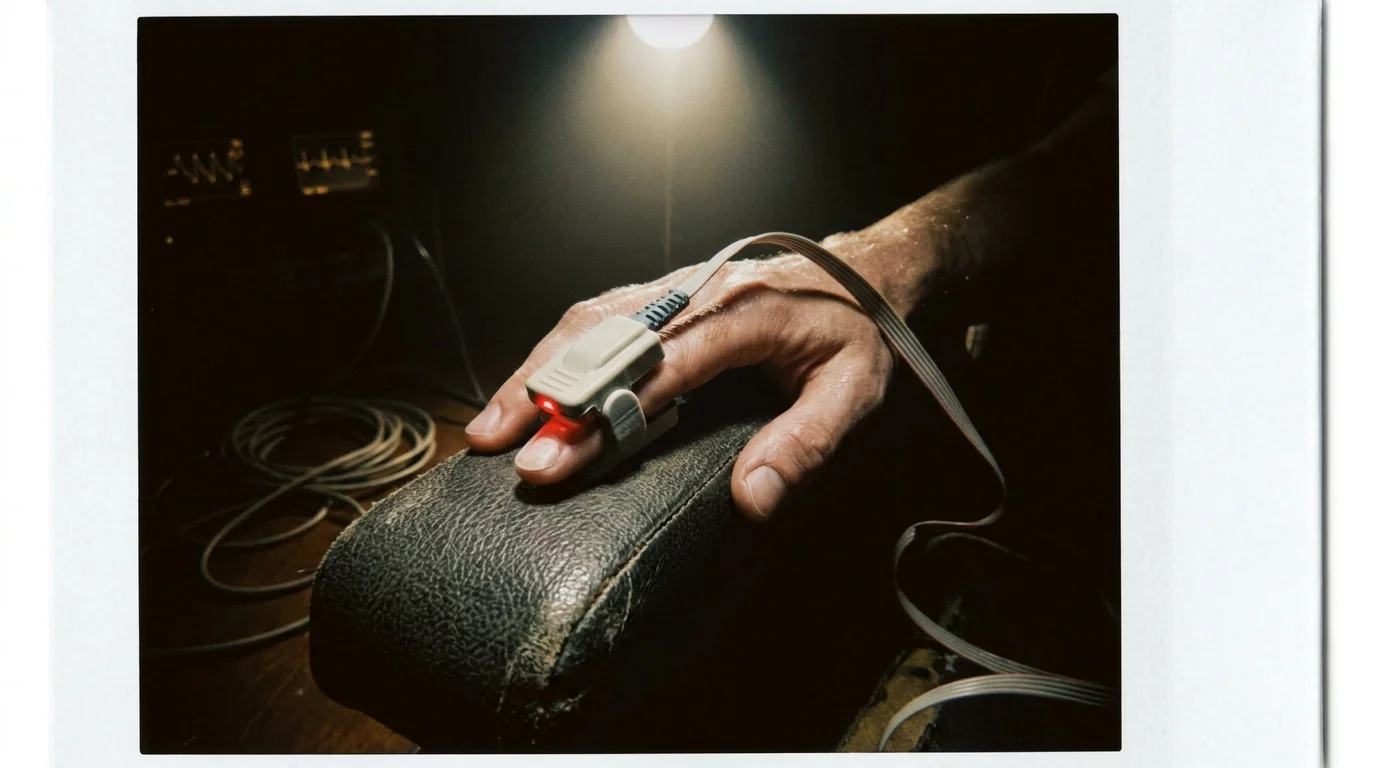
The faint hum of cooling fans buzzed against the soundproof fabric of a subterranean Burbank projection room. In the dark, forty test viewers sat in cushioned stadium seats, their right index fingers pinched inside spring-loaded biometric sensors. Thin gray cables ran along the floor like exposed nerves, feeding microvolt fluctuations into a bank of glowing telemetry monitors watched by studio brass.
On screen, Will Smith’s Robert Neville stepped away from his defensive bunker. Instead of pulling the pin on a heroic grenade, he looked through the cracked glass and realized the infected creatures outside were not mindless rabid beasts—they were a grieving community coming to rescue their loved one. For three solid minutes, nobody in the auditorium coughed or shifted in their seat. Yet the telemetry monitors flared bright amber. Sweat glands had opened, capillary beds contracted, and the monitors registered a sharp, sustained spike in galvanic skin resistance.
To a storyteller, that physical freeze signals devastating emotional resonance: the horror of discovering you were the villain of someone else’s survival tale all along. But to the executives standing at the back of the theater clutching carbon-copy clipboards, that spike looked like panic. Within forty-eight hours, the cameras were reloaded, the sets rebuilt, and the book-accurate ending was quietly scrapped for an explosive, crowd-pleasing sacrifice.
The Thermostat Myth: When Biometric Telemetry Overrules Creative Intent
You probably grew up believing that iconic film conclusions emerge from a sacred, smoke-filled room where a director and screenwriter agonize over theme and moral philosophy until the final frame feels earned. You expect art to challenge your baseline assumptions about good and evil.
The studio system, however, operates less like an artist’s loft and more like a medical diagnostic lab. When you strap galvanic skin response monitors to an audience, you are no longer measuring narrative coherence; you are monitoring nervous systems as if testing a new brand of pain reliever. The machine does not recognize artistic ambiguity. It only registers comfort or alarm.
When test subjects saw Robert Neville place the infected female on the gurney and wheel her toward the door, their heart rates failed to settle into the rhythmic, predictable cadence of a traditional third-act resolution. They were experiencing existential vertigo. The studio mistook that quiet moral disorientation for commercial rejection, choosing to replace a gut-wrenching philosophical surrender with a loud, explosive hand grenade that let everyone leave the theater without questioning their own worldview.
- John Stamos memoir exposes uncredited ghostwriter prose across glossy childhood confession chapters
- Kate Winslet demands zero digital retouching exposing pale puffy skin and unwashed flannel shirts
- Beyoncé stops an arena tour instantly after deafening feedback screams through custom molded earpieces
- Lea Michele blocks bitter dressing room contract fights resurfacing sweet vintage musical theater clips
- Alix Earle exposes agency manipulation as staged bedroom tears reveal glowing teleprompter scripts
The Field Report: An Editor’s Memory of the Burbank Standoff
Marcus Vance, a 52-year-old post-production workflows consultant who spent fifteen years calibrating sensory feedback systems for major studio test screenings, remembers the exact afternoon the decision came down. “We watched the telemetry lines climb during the butterfly glass scene,” Vance explained over black coffee on a studio lot bench. “The audience wasn’t bored; they were completely frozen, breathing through their teeth as their skin conductance spiked into red zones. But the notes that landed on our desks the next morning didn’t mention dramatic tension. They said: ‘Viewer distress indices exceed comfort parameters. Neutralize the threat and restore lead agency immediately.’ That single sentence triggered twenty-five million dollars in rushed pickups.”
Deciphering the Shift: Three Ways Studio Math Rewrites Your Ending
When you watch a blockbuster wrap up its final twenty minutes, you are looking at the direct byproduct of audience pacing metrics. Studios split these pressure tests into distinct operational layers to determine how much emotional weight you can carry before reaching for the exit.
- The Adrenaline Baseline: If your pulse remains elevated without a corresponding sensory payoff (like an explosion or a physical victory), executives assume you feel cheated rather than challenged.
- The Moral Symmetry Filter: Focus-group algorithms heavily penalize endings where the protagonist admits moral bankruptcy. The system actively demands that the star remains righteous, even if the source material demands their undoing.
- The Franchise Safety Valve: Ambiguous survival leaves test audiences quietly debating in the parking lot. Studios interpret that lack of cheerful closure as negative word-of-mouth, preferring a tidy funeral over an unresolved moral truce.
By understanding these parameters, you begin to see why the alternate ending feels like a completely different movie. It honors the original 1954 Richard Matheson novel, where Neville realizes he has become the nocturnal boogeyman slaughtering a new civilization while they sleep. The theatrical cut preserves safety at the direct expense of truth.
Deconstructing the Climax: A Playbook for Narrative Resilience
When you compare the two cuts, notice how each beat handles your emotional equilibrium. You can measure the mechanics of both endings like a blueprint.
The original scene strips away Robert Neville’s weapons, forcing him to remove the syringe and apologize to the alpha male through trembling lips. It gives you no easy catharsis.
The theatrical reshoot, conversely, restores his machine gun, traps him behind shatterproof plexiglass, and hands him a pin to pull. It transforms a tragedy of prejudice into a routine military last stand.
- Notice the color timing: the alternate cut uses cold daylight to expose Neville’s laboratory as a torture chamber.
- Watch the alpha creature’s eyes: the digital animators gave him pupils that dilate with sorrow, not just rage.
- Track the sound design: the theatrical cut drowns the room in sub-bass roars, while the alternate track relies on agonizing, intimate panting.
- Observe the butterfly tattoo: it shifts from a meaningless decorative detail into an unbearable realization of shared personhood.
Your Tactical Viewing Toolkit: To truly appreciate what was lost to those sweaty biometric finger sensors, pull up the two endings side-by-side on your home setup. Set your screen to its neutral cinema preset, kill the ambient lights, and pay close attention to the final five minutes of audio balance. When you cut out the manufactured brass fanfares of the theatrical finale, the silence of the original cut hits like ice water.
Reclaiming the Ending: Why True Closure Demands Discomfort
We live in a culture obsessed with smooth edges and guaranteed emotional payoffs. Algorithms curate our playlists, our social feeds, and our streaming queues to ensure our pulse never stays in an uncomfortable zone for longer than a few seconds.
Yet the stories that linger in your bones for decades are precisely the ones that refuse to comfort you. When Robert Neville wheels that infected woman out of the lab and walks away alive, he carries the unbearable weight of his mistakes into the sunrise. That unresolved moral ache is not a flaw in the design; it is the entire point of great fiction. When you seek out the alternate cut, you are choosing the bitter medicine of truth over the sugary sedation of an easy explosion.
“When an audience goes quiet because their conscience is turning over, a spreadsheet will always mistake that stillness for failure.”
| Key Point | Biometric Theatrical Cut | Original Alternate Ending |
|---|---|---|
| Lead Character Moral Arc | Dies an unblemished hero defending a medical cure | Survives after realizing he became a legendary monster |
| Infected Creature Status | Mindless, rage-driven biological vectors of disease | Sentient social community protecting their own families |
| Audience Takeaway Value | Comforting, traditional Hollywood heroic sacrifice | Challenging philosophical reflection on human prejudice |
Frequently Asked Questions
Why did test audiences react so negatively to the original ending?
Their biometric spikes were misinterpreted. The audience wasn’t rejecting the quality of the scene; they were experiencing genuine shock at discovering the hero was morally compromised, which test surveys historically flag as negative sentiment.Is the alternate ending faithful to Richard Matheson’s book?
It is substantially closer in theme. In the book, Neville realizes the new society fears him as a mythical vampire who murders them in their daylight sleep, explaining the book’s title: he is their legend of terror.How did the studio measure viewer sweat during the 2007 screenings?
They utilized galvanic skin response (GSR) monitors attached to fingers, which record microscopic electrical conductivity changes caused by sweat gland activity during moments of emotional arousal or stress.Will the planned sequel acknowledge the theatrical or alternate cut?
The upcoming sequel starring Will Smith and Michael B. Jordan officially treats the alternate ending as canon, allowing Neville to be alive and living with the consequences of his laboratory work.Where can I officially watch the unedited alternate cut today?
It is widely available on the two-disc special edition releases, standard 4K Ultra HD physical packages, and included as an optional digital extra across most major video-on-demand platforms.