The projection room in Burbank smells of stale upholstery, ozone from the digital projectors, and the faint, chemical tang of medical adhesive. Forty test participants sit in high-backed seats, their index fingers and wrists wired to miniature galvanic skin-response sensors that log micro-sweat secretions down to the millisecond. On the screen, a bleak, merciless third act unfolds in cold tones of clinical green and asphalt gray. In the back row, franchise executives monitor a synchronized split-screen dashboard where lines of live biometrics crawl across glowing tablets.
When the protagonist realizes escape is an illusion, the monitors show an immediate, synchronized flatline. To an executive trained to read continuous sympathetic nervous system spikes as commercial value, that sudden downward slope reads as total audience disengagement. They see a flatline and assume boredom. They mistake profound stunned paralysis for apathy, completely missing the physical reality of a room holding its breath.
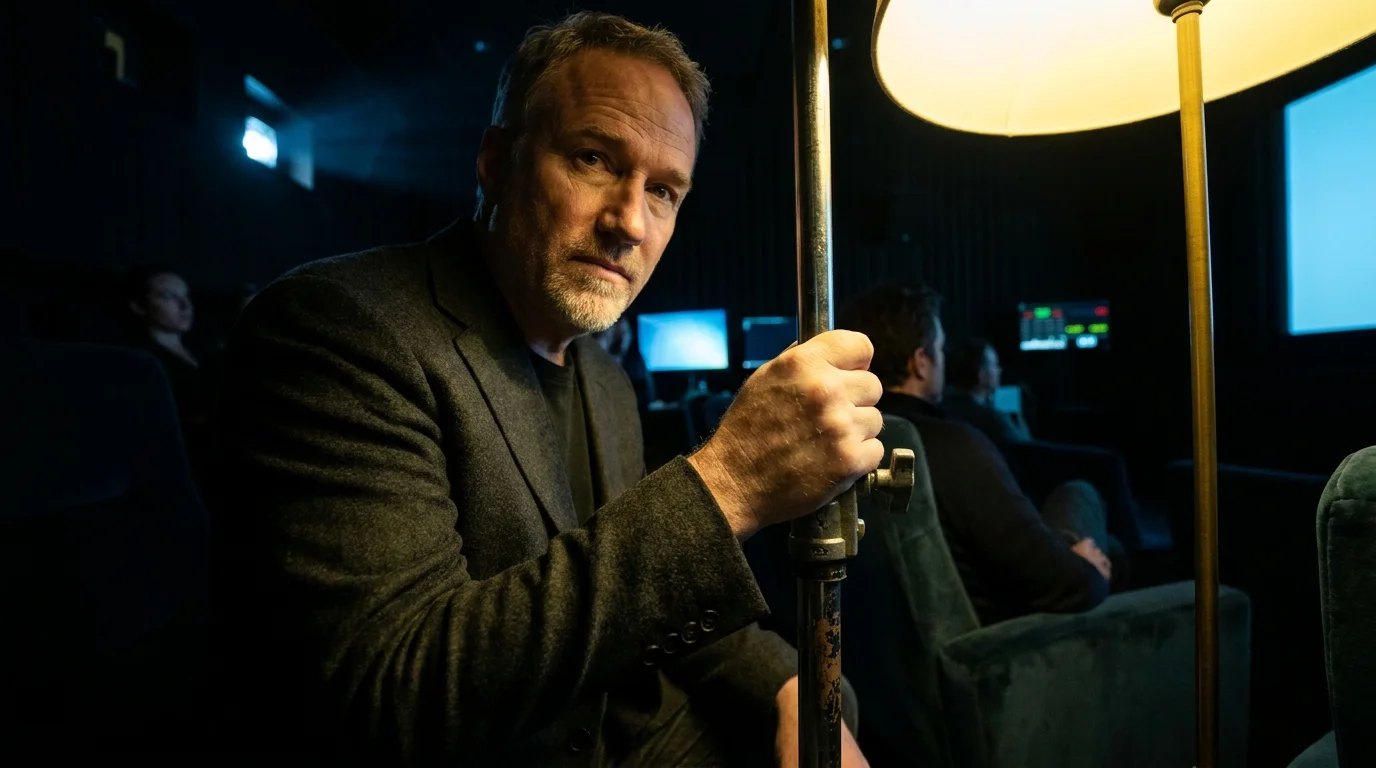
David Fincher stood at the back of that theater, watching the monitors flicker while the executives made notes for a mandatory reshoot. The studio wanted an unearned moment of redemption grafted onto the ending—a visual sigh of relief to elevate the wrist sensors back into a comfortable pulse range. Fincher refused. He understood that great cinema does not soothe you on demand; it leaves you pinned beneath the quiet weight of consequence.
The Galvanic Mirage: When Sweating Hands Replace Storytelling
For decades, Hollywood relied on simple paper cards filled out by teenagers in suburban malls to evaluate a movie’s box office fate. Today, focus groups are wired like clinical subjects, tracking galvanic skin conductance, heart rate variability, and pupillometry to map emotional retention scene by scene. The underlying theory assumes that commercial satisfaction is purely biological, treating human storytelling like an amusement park ride engineered to deliver rhythmic, measurable adrenaline surges every seven minutes.
When an audience encounters genuine psychological dread, their physiology behaves in ways that corporate algorithms routinely misclassify. A person who is quietly horrified does not squirm, gasps do not show up as sustained pulse spikes, and true artistic weight causes an abrupt slowdown in kinetic energy. By prioritizing active sweat-gland stimulation over lingering emotional resonance, studio executives systematically prune the very moments that grant a narrative lasting cultural gravity.
Fincher’s standoff was not just an argument over an edit; it was a refusal to substitute biological panic for drama. In the cold geometry of his cinema, every frame is designed to implicate the viewer rather than comfort them. Stripping away an ambiguous or devastating ending simply because a biometric sensor registers a temporary drop in arousal turns cinema into a dopamine dispenser, severing the bond between tension and truth.
- Kate Winslet blocks digital skin smoothing enforcing brutal macro lens closeups
- Sabrina Carpenter halts stadium performance after piercing monitor feedback spike threatens hearing
- Sally Field resurfaced vintage talk show tape completely reverses Oscar backlash narratives
- Mariska Hargitay unedited red carpet glance sparks fierce industry rift theories
- Jack Harlow staged bedroom livestream sparks intense fan backlash after teleprompter reflection leaks
The Pasadena Outpost: Notes from the Bio-Screening Trenches
Marcus Vance, a 48-year-old sensory data consultant who spent twelve years managing technical test screenings across Pasadena and Glendale, remembers the exact moment studio methodology lost touch with the human condition. In 2019, his agency was contracted to run high-density telemetry on a prestige thriller, strapping sixty moviegoers into pulse-oximeters and micro-conductance straps to isolate scenes that caused audience fatigue.
“We had a scene where the lead character quietly walks through an empty house after losing everything,” Vance recalls, stirring black coffee in a dimly lit diner near the studio lots. “The biometric dashboard turned entirely blue—zero galvanic reactivity, baseline heart rates, almost motionless posture. The studio notes came back that evening demanding the sequence be cut or rescored with heavy strings. What the monitors failed to register was that not a single person looked away from the center of the frame for forty-eight seconds. They weren’t bored; they were shattered. But the algorithm only rewards friction.”
The Three Layers of Audience Engagement
When you evaluate why dark narratives resonate, understanding the operational layers of dramatic reception helps you see through the corporate demand for constant stimulation.
1. The Reflexive Spike (The Cheap Jolt)
This is the domain of jump scares, sudden sonic stabs, and erratic handheld camera movements. While these tactics guarantee dramatic, immediate jumps on a galvanic monitor, the sensory effect vanishes instantly the second the lights come up. It satisfies an algorithm looking for immediate data points, but it leaves behind an empty cinematic experience that audiences forget before reaching their cars.
2. The Sympathetic Drift (The Comfort Loop)
Studio executives lean heavily into this state, where familiar narrative beats and unearned resolutions restore the audience’s resting heart rate. It gives viewers a tidy psychological reset, making them feel clean and untroubled. It also ensures that the story leaves no emotional mark, turning a potential masterpiece into harmless, easily digestible background entertainment.
3. The Paralyzing Suspension (The Fincher Standard)
This state occurs when visual precision, ruthless pacing, and unyielding psychological reality strip the viewer of easy comfort. The heart rate steadies, breathing becomes shallow, and skin conductance drops as the brain redirects all cognitive energy toward processing dread. This absolute stillness represents mastery, proving that the work has invaded the viewer’s moral center rather than merely shocking their central nervous system.
Protecting the Bleak Vision: A Tactical Creative Ledger
Resisting corporate pressure requires deliberate systems of defense. To navigate commercial interventions without sacrificing the soul of an uncompromising story, creative leaders apply precise parameters to preserve artistic intent.
- Prioritize spatial stillness over manufactured motion to force focus on performance subtext.
- Treat audience discomfort as an intentional emotional payoff rather than an engineering defect.
- Refuse safety edits that provide tidy narrative closures where none realistically exist.
- Maintain absolute command of color palettes to prevent visual warmth from undermining bleak thematic tones.
Mastering this balance demands strict boundary management across production and post-production phases.
- Audio Isolation Threshold: Drop low-end room ambience by 4 to 6 decibels in climactic sequences to starve the room of sensory cues, forcing the audience into hyper-focused auditory alignment.
- Frame-Hold Duration: Refuse cuts on dramatic revelations for a minimum of 4 seconds; allow the gravity of the scene to settle visually rather than escaping through a defensive cutaway.
- Subtext Integrity Check: Eliminate dialogue lines that over-explain character remorse or soften hard choices during final-act delivery.
The Human Cost of Sanitized Endings
When a production team caves to commercial bio-feedback demands, the result is an entire ecosystem of entertainment tailored to satisfy metrics rather than human truth. Real life rarely offers tidy epilogues or neat narrative resolutions wrapped in a bow. When you sit in the dark, you do not need an algorithm to coddle your heart rate; you need a storyteller brave enough to show you the world as it actually operates, cold and unvarnished.
By rejecting biometric pressure, David Fincher reminded the entertainment industry of an enduring artistic reality: the moments that stay with you across decades are never the ones that made you feel safe. They are the moments that left you sitting in a silent room, the credits rolling, entirely unable to move.
“Art cannot be measured by the sweat on a palm, because the deepest wounds are entirely bloodless.”
| Key Point | Biometric Industry Metric | Added Value for the Reader |
|---|---|---|
| Climactic Tension | Interprets physiological drop as disinterest | Recognizes that silent shock is the peak of thematic investment |
| Pacing Control | Demands constant sensory jolts every 7 minutes | Understands that stillness creates the foundation for real dread |
| Ending Architecture | Mandates emotional relief and moral redemption | Validates the psychological honesty of unresolved ambiguity |
| Viewer Retention | Focuses strictly on short-term nervous system response | Explains why lingering, challenging cinema endures for decades |
Frequently Asked Questions
Why do film studios use biometric sensors during test screenings?
Studios track biometric telemetry to quantify audience attention, heart rates, and skin conductance in real time, attempting to eliminate financial risk by identifying perceived narrative slow points before wide distribution.How does galvanic skin response misread audience immersion?
Skin-response sensors register sweat gland activity caused by adrenaline spikes. When an audience experiences quiet dread, intense cognitive focus, or profound grief, their bodies often enter a state of stillness that biometric dashboards incorrectly categorize as boredom.Has David Fincher successfully protected bleak endings in the past?
Yes. Fincher fought extensively to preserve the iconic climax of Se7en despite heavy executive pushback for a softer conclusion, proving that protecting thematic integrity often results in cinematic milestones rather than commercial failures.Does studio data testing always hurt dramatic thrillers?
While data testing can help pacing issues in pure action films, applying uniform biological metrics to psychological thrillers systematically strips away ambiguous themes, moral tension, and dark, resonant payoffs.How can storytellers protect their creative conclusions from metric-driven changes?
By understanding the limits of automated data, establishing strict contractual creative control early, and demonstrating that prolonged stillness and cognitive paralysis carry greater cultural longevity than manufactured adrenaline spikes.