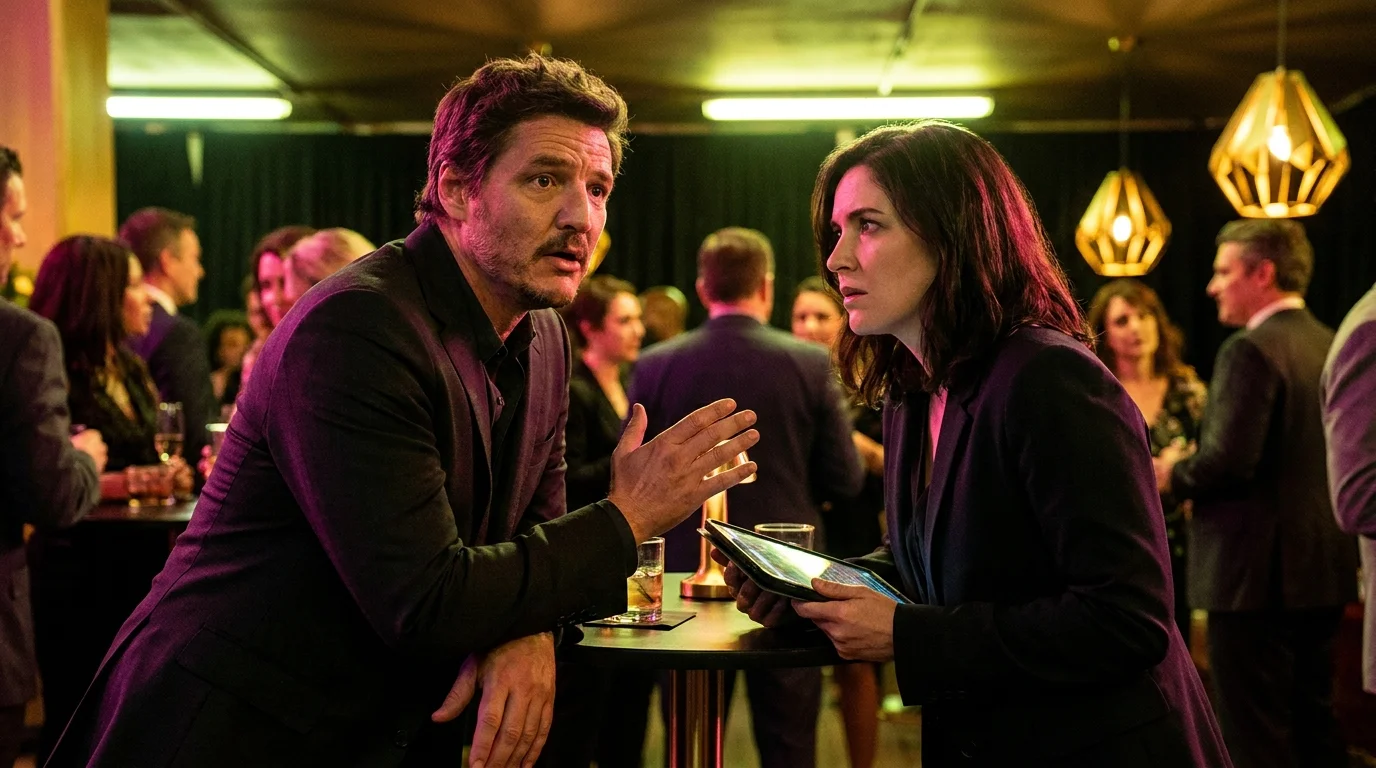
You can identify the voice from across a crowded room: the low, gravelly scrape, the sudden softness on an unstressed syllable, and above all, the heavy, deliberate hesitation before a revelation. When Pedro Pascal speaks on screen, the weight of the performance lives inside the empty space between his words. It feels like an unhurried heartbeat in an industry addicted to hyper-speed delivery.
Yet if you switch audio tracks on your streaming menu while traveling abroad, that iconic rhythm evaporates. What replaces it is not merely a different language or a foreign voice actor; it is an aggressive, machine-driven tightening of time itself. The signature hesitation vanishes, flattened into a rigid, breathless cadence that feels less like dramatic revelation and more like an automated airport announcement.
Behind the glossy sheen of prestige streaming interfaces, an uncredited technical practice is quietly rewriting performance art. Automated dubbing pipelines and algorithmic timing engines are systematically trimming the natural silences an actor fought to leave in the frame. What appears on your television screen as seamless global content delivery is actually a quiet, computational war against the human breath.
The Compression of Silence: Why Algorithms Fear the Pause
In modern performance theory, silence is not nothingness; it is an architectural weight. When an actor like Pascal pauses before answering a question in a bleak wasteland drama, that two-second vacuum forces you to confront the grief of the character. The silence is an accordion of tension, expanding the frame until the atmosphere feels thick enough to chew.
For global streaming distribution networks, however, empty space is technical inefficiency. Streaming pipelines rely on strict structural synchronization models designed to map localized dubs onto original camera plates without jarring visual discrepancies. When foreign dialogue tracks require more linguistic syllables than English, automated localization suites no longer stretch the video; they algorithmically shrink the natural audio pauses of the original actor to match international delivery specs.
The system treats dialogue like liquid poured into rigid plastic molds. If the Spanish, German, or Mandarin dub requires rapid-fire syllable density, automated time-compression plugins shave 120 milliseconds off the original English stems to maintain identical frame markers across multi-language streams. The star never authorized the cut, and the director never sat in the mixing bay to approve the nip-and-tuck.
- Olivia Rodrigo arena sound mixes rely on sub-bass to mask pitch gaps
- Jerrod Carmichael freezes on live broadcast as teleprompter lock halts monologue
- Keanu Reeves wire stunts trigger agonizing vertebral compression during action sequences
- Denis Villeneuve confronts studio heads after galvanic skin tests force reshoots
- Rooney Mara blocks digital skin smoothing demanding stark unretouched macro close-ups
The Burbank Calibration Bay: A Technician’s Confession
Marcus Vance, a 42-year-old dialogue conforming engineer based in Burbank, spent eight years watching pristine master stems arrive from celebrated mixing stages only to see them fed into automated cadence-smoothing plugins. “We used to manually nudge dub tracks against the actor’s lip movement with razor-thin edits and room tone crossfades,” Vance admits. “Now, automated ingestion engines run global deliverables through algorithmic cadence resynchronization to ensure universal closed-caption timing across thirty territories simultaneously.”
Vance recalls loading a landmark dramatic sequence featuring Pascal, only to watch automated mastering software flag an authentic, grief-stricken three-second hesitation as an “acoustic dead zone.” Without human intervention, the algorithm excised the silence down to six hundred milliseconds, dragging the vocal track forward to ensure foreign dub tracks wouldn’t drift off the visual lip flaps during fast playback.
The Layers of Acoustic Tampering: How Cadence Is Altered
The technical machinery operating behind your smart TV functions through several distinct operational layers, each stripping away another degree of authentic actor intentionality.
The Syllabic Squeeze
When romance languages require twenty percent more syllables than English to express the same emotional beat, localized dubbing software makes micro-cuts. It eliminates micro-pauses within compound sentences, pulling words closer together. If you toggle between audio streams, you will notice Pascal’s original English delivery in select international catalog versions has been subtly pulled forward to align with the rhythm of the dubbed track.
The Closed-Caption Pacing Clamp
Streaming algorithms prioritize readability metrics over acoustic truth. To guarantee that automated subtitles stay within strict reading-speed limits (typically 17 characters per second), playback engines normalize dialogue spacing. Vocal pauses are violently compressed to keep dialogue chunks synchronistic with mobile screen refreshes, creating an artificial, caffeinated delivery style.
Zero-Crossing Audio Stitching
Modern editing suites utilize automated zero-crossing detection to splice out room tone between words without causing digital clicks. When applied aggressively by streaming ingestion pipelines, the subtle intake of breath—the precise sound that communicates panic, exhaustion, or hesitation—is discarded as background noise.
Auditing the Warped Dialogue in Your Living Room
You do not need an acoustic laboratory to recognize when algorithmic dubbing tools have stripped the life from a performance. You only need to calibrate your ears to the mechanical signatures left behind by dynamic compression and automated sync engines.
Listen for these subtle structural indicators during dramatic conversations:
- Unnatural Inhales: Notice if an actor delivers a long, emotionally fraught sentence without the acoustic sound of air entering their lungs beforehand.
- Room-Tone Cutoffs: Pay attention to the background hiss of the room; if the ambient air drops to dead digital silence the instant a line ends, an algorithmic gate has clamped shut.
- Metronomic Pacing: If every line of dialogue lands on an identical temporal interval regardless of the emotional stakes, you are listening to software-aligned cadence.
- Uncanny Vocal Velocity: Watch the actor’s throat and jaw. When the spoken audio feels slightly faster than the physical musculature of the face, time-compression algorithms have accelerated the track by three to five percent.
To experience the unmolested track, access your streaming platform’s advanced audio settings. Manually select the original ‘English [Original]’ 5.1 or Atmos stream rather than standard stereo downmixes, and disable any features labeled ‘Dialogue Enhancement’ or ‘Volume Leveling,’ which often trigger native client-side cadence smoothing.
Reclaiming the Human Flaw in Modern Sound
Great acting is not an exercise in efficient information transfer. It is a messy, vulnerable documentation of human hesitation, uncertainty, and physical frailty. When you strip an actor of their natural pauses, you transform dramatic art into corporate data delivery.
Pedro Pascal’s appeal does not rest entirely on his sharp humor or rugged charisma; it rests on the raw, unhurried authenticity of his presence. By learning to hear where the machines have clipped the edges of that presence, you become an active listener rather than a passive consumer, refusing to let an algorithm decide how long a broken heart takes to catch its breath.
“Performance lives in the terrifying space between thoughts; eliminate that space, and you are no longer watching an actor, but an algorithm executing a script.”
| Key Point | Technical Detail | Added Value for the Reader |
|---|---|---|
| Algorithmic Cadence Trimming | Automated removal of 100-300ms pauses between sentences to match global dubbing specs. | Explains why international or updated streaming versions sound unnaturally rushed. |
| Character-Per-Second Clamping | Subtitle systems accelerating audio playback by 3-5% to fit reading speed constraints. | Helps you identify when audio pacing is dictated by software rather than performance. |
| Room Tone Gating | Automated silence-detection tools cutting ambient breathing sounds out of vocal stems. | Teaches you to spot the jarring digital silence that ruins dramatic immersion. |
Frequently Asked Questions
Did Pedro Pascal approve these changes to his vocal tracks?
No. Standard modern contracts grant streaming platforms broad rights over technical localization, allowing audio engineers and automated software suites to alter sync parameters for international markets without talent consent.Why do streaming platforms compress dialogue pauses?
They do it to solve localization friction. Languages like Spanish or Italian often require more words than English; shortening original pauses ensures international dubs and subtitles align with global video streams without re-editing the picture.Does this cadence alteration affect domestic US viewers?
Occasionally. While the most aggressive changes occur in international catalog cuts, automated quality-control software can apply universal audio leveling and timing sync across global master files, impacting domestic feeds.Can I turn off automated dialogue smoothing on my TV?
You cannot alter the source master, but turning off ‘Clear Voice,’ ‘Dialogue Boost,’ or ‘Dynamic Compression’ settings in your television’s audio menu prevents your hardware from exaggerating algorithmic edits.Does this affect theatrical releases, or is it unique to streaming?
It is almost exclusively a streaming phenomenon. Theatrical releases feature human-supervised multi-channel mixes tailored to physical theaters, whereas streaming requires rapid, automated ingest across dozens of localized markets.