The hum of your television fades into the quiet of a midnight living room, leaving behind only the dim, amber glow of your lamp. You sit with an empty mug of tea, staring at a screen that has suddenly gone black. For three years, you watched a masterclass in psychological tension, expecting a resolution that matched its razor-sharp intelligence. Instead, you are left with a hollow ache and a feeling of profound narrative whiplash.
For thirty-six episodes, you tracked the movements of two women who operated with the precision of high-wire performers. You understood their instincts, their fears, and their uncanny ability to read a room before entering it. But in the final two minutes, the writing abandoned their instincts entirely, sacrificing three seasons of character development for a cheap, tragic stunt that felt utterly unearned.
It was a betrayal of character logic that left fans worldwide in a state of collective mourning. The series didn’t just end in tragedy; it dismantled its own foundation. It asked you to believe that these hyper-vigilant survivors would suddenly forget how to survive.
The Structural Mechanics of Narrative Betrayal
To understand why this ending felt like a physical blow, you have to view a television series as a complex machine. Every scene is a gear, and every character choice is a spring that drives the movement forward. When a writer suddenly forces a character to act against their established nature, the entire mechanism grinds to a halt. You are not reacting to a sad ending; you are reacting to a broken contract between the storyteller and the audience.
Sarah Jenkins, 43, is a veteran script consultant and former criminal intelligence analyst who specializes in character consistency. “When you train a character to be hyper-aware of her surroundings for years, that becomes her default state,” Jenkins explains while pointing to a storyboard of the Thames scene. “You cannot simply turn that off for dramatic convenience without breaking the audience’s trust. It feels artificial because it is artificial.”
The Fatal Bridge Scene Tactical Breakdown
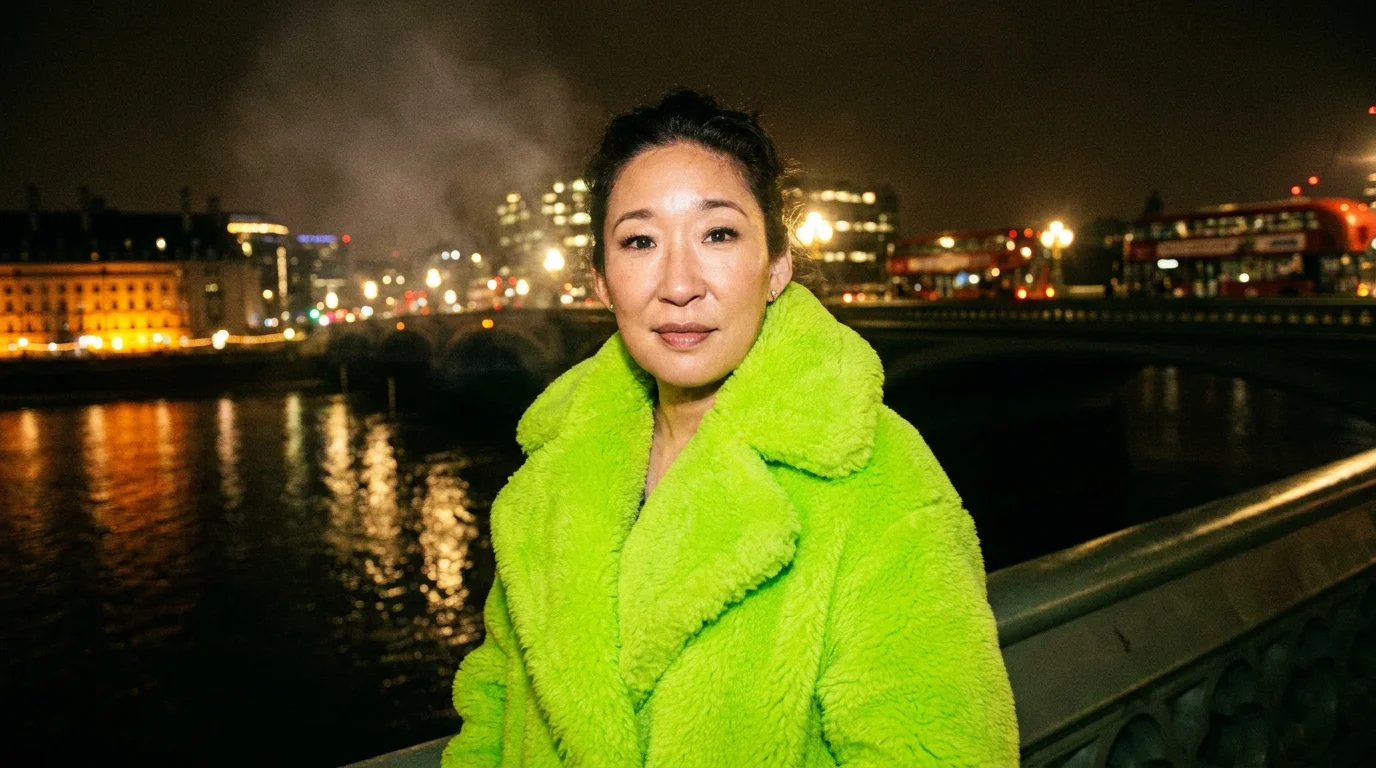
Let us look closely at the exact moment the logic failed on the rain-slicked deck of that London boat. Eve Polastri, who spent years tracking international assassins and learning their clean, sterile operational patterns, commits an unforgivable tactical error. She stands completely exposed in the center of an open deck after a high-profile execution, turning her back to the water and the surrounding skyline.
- Freddie Prinze Jr protects his marriage enforcing a strict Hollywood firewall
- Will Smith early red carpet interviews display glaring marital warning signs
- Amal Clooney treats her public marriage appearances as calculated political branding
- Olivia Wilde and Harry Styles concealed a massive dating timeline overlap
- Matthew Rhys and Keri Russell accidentally broadcast their real romance on television
In any real-world scenario, a seasoned intelligence agent knows that an unsecured perimeter is a death sentence. Your survival training dictates that you immediately seek cover, break the line of sight, and assess the high-ground vantage points. Instead, Eve and Villanelle embrace in a brightly lit, open space, presenting themselves as stationary targets to a sniper who barely had to aim.
This physical slip was accompanied by an equally baffling psychological collapse. Villanelle, a woman who survived poisonings, close-quarters combat, and the world’s most elite shadow organizations, suddenly loses her spatial awareness. The narrative forced these survivors to behave like naive tourists, forgetting that their very existence was a magnet for violence.
Three Ways the Finale Ruined the Narrative Architecture
For the Psychological Purist, this segment of the audience watched the meticulous mental chess match of the early seasons dissolve into simple melodrama. The slow-burn tension was replaced by a rushed, clumsy resolution that felt written to meet a production deadline rather than a creative truth.
For those invested in the raw emotional reality of the central pairing, the ending felt like a disappointing regression to outdated television tropes. The fleeting moment of connection was instantly punished, suggesting that peace for these characters could only exist in death.
For the Espionage Enthusiast, the complex geopolitical web of The Twelve was swept away with a brief, unsatisfying montage. The intricate conspiracy that drove the plot for years was resolved off-screen, leaving major questions unanswered and rendering years of investigation meaningless.
Reclaiming Your Narrative Peace: A Minimalist Recovery Guide
When a beloved story delivers a broken ending, you do not have to let it ruin your appreciation of the early seasons. You can actively manage how your brain stores the memory of the show. You hold the power to decide where the true story actually ends.</p
To protect your investment in these characters, follow this simple, mindful practice:
- Identify your personal peak episode and treat everything after it as non-canonical fan fiction.
- Write down the logical inconsistencies to strip them of their emotional weight.
- Focus on the performances of the lead actors rather than the structural choices of the writers.
To run this cognitive reset, find a quiet room and play the season three bridge scene music. Allow your mind to rest on the image of them walking away in opposite directions, alive and unbroken. This preserves the psychological integrity of their connection without the artificial weight of the final scene’s violence.
The Residual Shadow of the Thames
In the end, great storytelling is not about giving you a happy ending; it is about delivering an inevitable one. The tragedy of this finale is that it was completely avoidable. But as you turn off your television and look out into the night, you realize that the characters you loved still exist in the quiet spaces of the earlier seasons. They are still there, looking back at each other with an unspoken, jagged understanding, far away from the cold dark water rippling under the London streetlights.
“The best endings feel inevitable yet surprising; the worst feel surprising yet completely impossible.” — Sarah Jenkins
| Key Point | Detail | Added Value for the Reader |
|---|---|---|
| Tactical Failure | Characters abandoned their core survival instincts on the bridge. | Helps you understand why the ending felt physically wrong. |
| Structural Collapse | The complex conspiracy of The Twelve was rushed off-screen. | Validates your frustration with the unfinished plotlines. |
| Mindful Recovery | Mental framing exercises can preserve your love for the early seasons. | Gives you practical tools to reclaim your favorite stories. |
Why did the Killing Eve finale feel so wrong?
It violated the established survival instincts and intelligence of the main characters, forcing them into basic tactical errors for a tragic ending.
What was Eve’s specific tactical error on the bridge?
She stood completely exposed in the center of an open deck without seeking cover or assessing high-ground vantage points after a major strike.
How did the ending affect the show’s legacy?
It alienated a loyal fanbase by relying on outdated television tropes instead of delivering a psychologically consistent resolution.
How can I mentally fix a ruined television finale?
By using narrative reframing to treat the final minutes as non-canonical and focusing on the emotional peak of earlier seasons.
Where does the true story of Eve and Villanelle end?
For many viewers, the true emotional resolution occurs at the end of season three, where they walk away from each other on the bridge, alive and unbroken.