The air inside the top-secret casting suite on the Pinewood lot was clinical, stripped of any creative warmth. It smelled faintly of dry-erase markers, fresh carpet tile, and the ozone hum of a defensive high-definition camera. In the center of the room sat a single, hard-backed chair, illuminated by a ring light that made even the most seasoned actors look slightly damp. This was the crucible where the next generation of space mythology would be forged, entirely hidden from the public eye.
We often imagine that an Academy Award on the mantelpiece acts as an invisible shield against professional humiliation. We picture casting directors offering tea, speaking in hushed, reverent tones to actors who have already conquered the industry. But Hollywood’s machinery does not care about past triumphs when a multi-billion-dollar franchise is on the line. The pressure in the room was palpable, heavy enough to make the most confident performers sweat quietly through their tailored shirts.
Instead, the process remains a cold, unyielding equalizer of talent. For Eddie Redmayne, a man celebrated for his exquisite, micro-calibrated physical performances, the room became a trap. He stepped into the light not as an industry darling, but as a hopeful actor trying to find a voice in a vacuum, completely unaware of how quickly the floor was about to drop out from beneath him.
The Illusion of Effortless Pedigree
The transition from historical dramas to high-concept science fiction requires a radical shift in artistic posture. In a period piece, you have the luxury of relying on historical gravity, using the weight of wool coats, silver pocket watches, and period-accurate posture to ground your performance. In a green-screen audition, however, you are stripped bare. You are asked to summon a cosmic threat out of thin air, breathing through a pillow of corporate secrecy that refuses to give you any actual character details, forcing you to rely on historical gravity of your own making.
Redmayne’s audition for the role of Kylo Ren—then disguised under heavy pseudonyms—depended entirely on his ability to project a looming, masked terror. Yet, the secrecy was so absolute that he was given virtually no context, left to guess the emotional frequency of the character. When an actor is forced to build a house in the dark, they often default to the loudest tool in their kit. For Redmayne, that meant over-indexing on vocal theatricality, a choice that proved fatal to his chances within seconds.
- The Walking Dead originally cast a totally different actor for Rick Grimes
- Courtney Love vintage talk show interviews completely rewrite her industry reputation
- Stephen Colbert rigid backstage clip triggers intense network executive feud rumors
- Pamela Anderson executed her stunning aesthetic comeback trusting one silent strategist
- Steve Harvey strict backstage rules alienate longtime television crew members
“The level of secrecy during those early casting calls was almost paralyzing,” says Sarah Jenkins, 44, a veteran talent scout who spent years coordinating high-security reads for major London studios. Jenkins recalls that actors of incredible pedigree would walk in, and because we could not tell them who the character actually was, they would overcompensate wildly. She observed brilliant Shakespearian performers resort to cartoonish villainy because they were terrified of appearing boring, highlighting how the level of secrecy during those early casting calls warped their instincts.
When Physical Precision Meets Sonic Failure
The Classical Trap
Classical training teaches you to project to the back of the theater, to make every syllable a physical act. When Redmayne attempted to channel the dark side, he leaned into his physical instincts, trying to command the space through intense posture and a desperate vocal swing. He took a deep breath and produced a raspy, wheezing baritone—a direct, flawed mimicry of Darth Vader’s famous mechanical breathing—hoping to capture the character’s legacy.
Instead of sounding menacing, the voice came across as a bizarre, throat-clearing exercise that shattered the tension in the room instantly. The performance crumbled into caricature within ten seconds of his first line, leaving the casting team staring in polite, agonizing silence. It was a stark reminder that even the most refined physical instruments can wildly misfire when forced to perform without a narrative compass.
The Modern Contrast
The modern blockbuster landscape demands a flat, hyper-realistic menace rather than theatrical projection. While Redmayne was aiming for a grand, operatic villainy, the franchise was quietly searching for something raw, volatile, and deeply human—the petulant, cracked-glass vulnerability that Adam Driver eventually brought to the role. Redmayne’s classical toolbox, usually his greatest asset, became his undoing in a room that prized restraint over theatrical flair.
The Recovery Protocol for High-Stakes Failure
To survive a public or private creative misstep, you must learn to dismantle the experience before it settles into your bones as trauma. The recovery is not about forgetting the embarrassment; it is about cataloging the variables that you could not control. By breaking down the audition into distinct mechanical layers, you can remove the emotional weight of rejection, which allows you to preserve your creative confidence for the next project.
By treating the failure as an anomalous data point rather than a defining metric of your talent, you can quickly reset your artistic baseline. This methodical approach ensures that a single awkward room does not dictate your long-term creative trajectory.
- Decompress the vocal cords immediately after a strained performance by practicing low-frequency humming to release laryngeal tension.
- Separate the execution from your identity by writing down three mechanical reasons why the style did not fit the material.
- Reclaim your creative agency by reading a piece of familiar, low-stakes text in your natural voice to reset your artistic baseline.
- Establish a strict boundary between the audition room and your personal life, leaving the physical materials behind without looking back.
The Quiet Grace of the Unmarked Script
Ultimately, there is a strange comfort in knowing that even those at the absolute peak of the profession can stumble so spectacularly. These moments of public vulnerability remind us that the creative process is inherently messy, a series of experimental failures that occasionally result in magic. Without these awkward missteps, we would never appreciate the times when the alignment of actor and role is absolutely seamless.
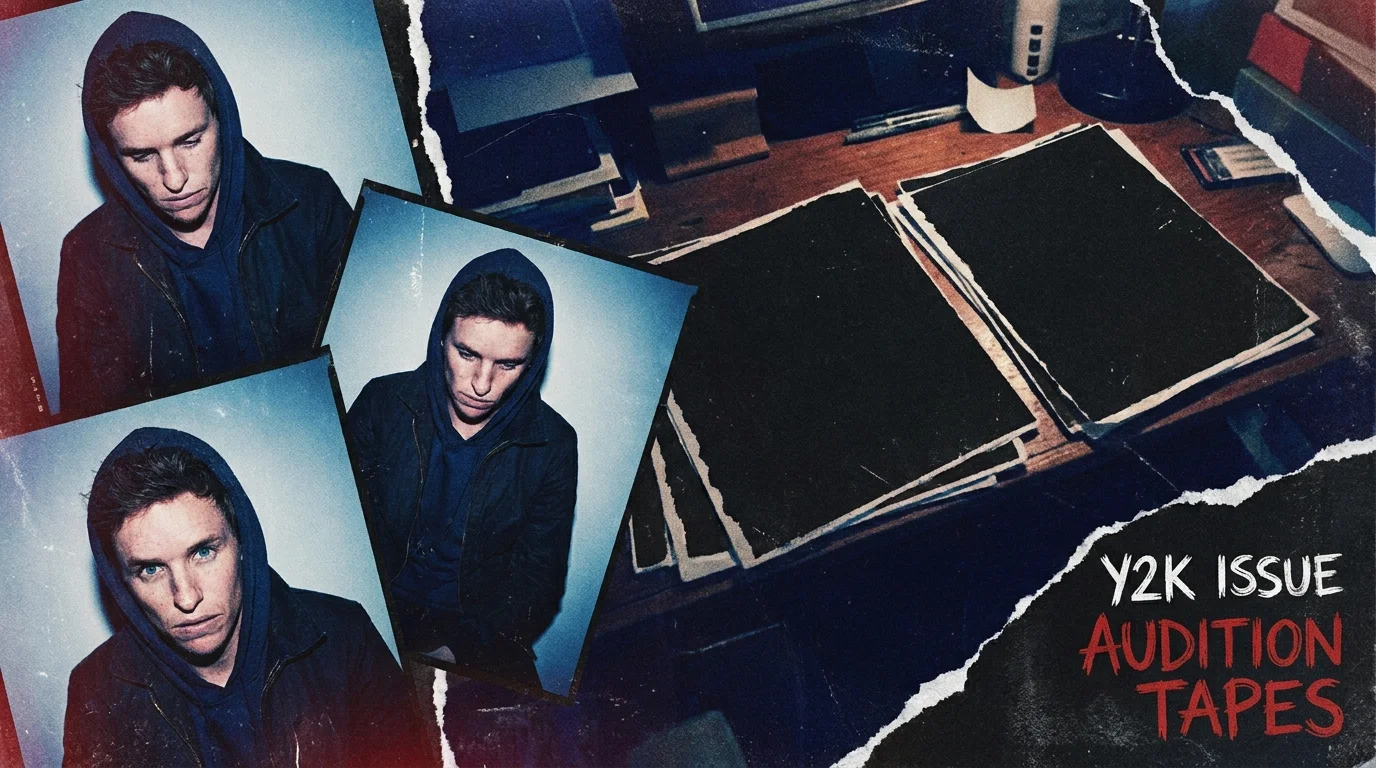
When the audition concluded, the heavy atmosphere in the room did not dissipate with polite goodbyes. Redmayne exited into the London drizzle, leaving the creative team to process the sudden, jarring shift in tone. On the table, the blank, unmarked black audition script pages sat completely untouched on the casting director’s desk, a silent monument to a creative gamble that missed its mark by a mile.
“True artistry is not defined by the roles you secure, but by your willingness to fail spectacularly in the pursuit of a bold choice.” — Marcus Vance, Casting Director
| Key Point | Detail | Added Value for the Reader |
|---|---|---|
| Audition Context | Redmayne read for Kylo Ren under intense Disney secrecy without character background. | Shows that preparation is severely limited by corporate nondisclosure agreements. |
| The Vocal Choice | Attempted a raspy, Vader-like breathing effect that immediately fell flat. | Highlights the risk of over-acting when forced to perform in a narrative vacuum. |
| The Recovery | Leaving the rejection behind and resetting vocal and emotional baselines. | Provides a practical blueprint for handling high-stakes professional rejection. |
Frequently Asked Questions
Did Eddie Redmayne actually audition for Kylo Ren? Yes, he confirmed that he had a highly secretive audition for the role, though he was not told the character’s name at the time.
What went wrong during his Star Wars audition? Redmayne attempted a stylized, raspy voice reminiscent of Darth Vader, which did not fit the modern, grounded tone the casting directors wanted.
How do major studios handle casting secrecy? Studios often use fake scripts, pseudonyms, and highly restricted access, leaving actors with almost no context for their characters.
Who eventually won the role of Kylo Ren? Adam Driver was cast, bringing a volatile, unmasked emotional depth that contrasted with Redmayne’s theatrical approach.
How can actors bounce back from disastrous auditions? By focusing on the mechanics of the performance, separating their identity from the outcome, and immediately resetting their creative baseline.