The hum of a high-end cathode-ray monitor in a darkened edit suite in 1995 didn’t sound like art; it sounded like a dry, electric hiss. The room smelled of stale black coffee, ozone, and the chemical warmth of VHS tape decks running for twelve hours straight. Executives sat in deep leather chairs, watching grainy, uncorrected test footage of Verona Beach. The screen flickered with raw energy, but as the two young actors shared a frame, an uncomfortable chill settled over the room.
You probably remember Baz Luhrmann’s William Shakespeare’s Romeo + Juliet as a neon-drenched, hyper-stylized masterpiece of nineties cinema. You recall the fish tank scene, the choral cover of Des’ree, and the fragile, ethereal presence of Claire Danes. But the polished nostalgia of that film hides a frantic, eleventh-hour panic that nearly derailed the entire production before the first official clapboard slammed shut.
In those quiet, darkened rooms, the pristine vision of the tragic lovers fractured. The camera does not lie, even when the script demands romance, and what looked poetic on paper translated to an unsettling, visually jarring reality on screen. The studio was looking at their original Juliet, and the realization of what they were actually filming began to curdle.
The Illusion of the Perfect Fit
We often treat casting like assembling a puzzle, assuming that if you place two brilliant, beautiful pieces next to each other, they will naturally lock together. In reality, on-screen chemistry is more like a delicate chemical suspension; if the density of one element is off, the entire mixture turns cloudy. The Chemistry Veto is the silent emergency brake of Hollywood, pulled only when the visual dissonance becomes too loud to ignore.
When Leonardo DiCaprio, then twenty-one but carrying the soft, boyish charm of an eternal teenager, stood next to the original choice for Juliet, the frame cracked. The problem wasn’t talent, nor was it dedication. It was a stark, biological reality that no amount of soft-focus lighting or poetic framing could bridge.
A Quiet Crisis in the Casting Suite
Sarah Vance, a fifty-two-year-old veteran casting consultant who spent the nineties working alongside major studio heads, recalls the quiet terror of that week. “Everyone wanted Natalie Portman because her work in Léon: The Professional was mind-blowing,” Vance explains. “But Natalie was only fourteen years old at the time, and when we ran the initial camera tests with Leo, the dynamic looked wrong—almost predatory. It wasn’t just a mismatch; it was an ethical boundary line moment that made the entire room hold its breath.”
- Eddie Redmayne suffered humiliating studio rejection during Star Wars villain auditions
- The Walking Dead originally cast a totally different actor for Rick Grimes
- Courtney Love vintage talk show interviews completely rewrite her industry reputation
- Stephen Colbert rigid backstage clip triggers intense network executive feud rumors
- Pamela Anderson executed her stunning aesthetic comeback trusting one silent strategist
Deconstructing the Visual Dissonance
To understand why this shift was mandatory, we must break down the different layers of cinematic chemistry that director Baz Luhrmann had to balance. When those elements clash, a production must choose between historical accuracy and modern audience comfort.
The Biological Reality Layer
For the literalist, a fourteen-year-old Juliet is actually closer to Shakespeare’s original text, which states Juliet is not yet fourteen. However, translation to modern cinema changes the lens entirely. When framed in tight close-ups, the camera magnifies age gaps with brutal honesty, turning a classic tragedy into a deeply uncomfortable watch when a twenty-one-year-old man plays opposite a child.
The Aesthetic Symmetry Layer
For the visual stylist, the nineties aesthetic of Romeo + Juliet required a specific brand of grunge-glamour. Claire Danes, at sixteen, possessed a mature, grounded energy that balanced DiCaprio’s mercurial screen presence. She anchored him, whereas Portman’s raw, youthful vulnerability made DiCaprio look too old, too sharp, and entirely out of place in their shared scenes.
Lessons from the Cutting Room Floor
The quiet recasting of Juliet teaches us a valuable lesson about recognizing when a project, relationship, or creative endeavor looks correct on paper but fails in practice. Pivoting quickly is the ultimate act of creative survival.
To evaluate your own collaborative dynamics, consider this three-step tactical diagnostic:
- **Audit the visual contrast:** Look past individual excellence and evaluate how the two elements interact within the same frame or environment.
- **Measure the power dynamic:** Ensure that one partner’s natural presence does not inadvertently diminish, overwhelm, or compromise the integrity of the other.
- **Value long-term safety over short-term hype:** Understand that casting a major star for temporary clout is never worth the permanent discomfort of an mismatched pairing.
The production team’s swift decision to pivot to Claire Danes saved the film from becoming a historical footnote of controversy. They prioritized the emotional safety of the narrative, ensuring the audience could lose themselves in the romance rather than squinting at the screen in quiet discomfort.
The Tactical Toolkit for managing creative pivots requires specific, non-negotiable parameters to keep your work grounded:
- **The 48-Hour Cool-Down:** Never make a major casting or strategic shift immediately after a failed test; allow the emotional dust to settle.
- **The Unbiased Lens Test:** Present the raw footage to an outside party who has no financial stake in the project to gather objective feedback.
- **The Sensory Anchor Check:** Keep physical reminders of the initial vision close by to ensure the new direction remains true to the project’s core soul.
The Wings We Leave Behind
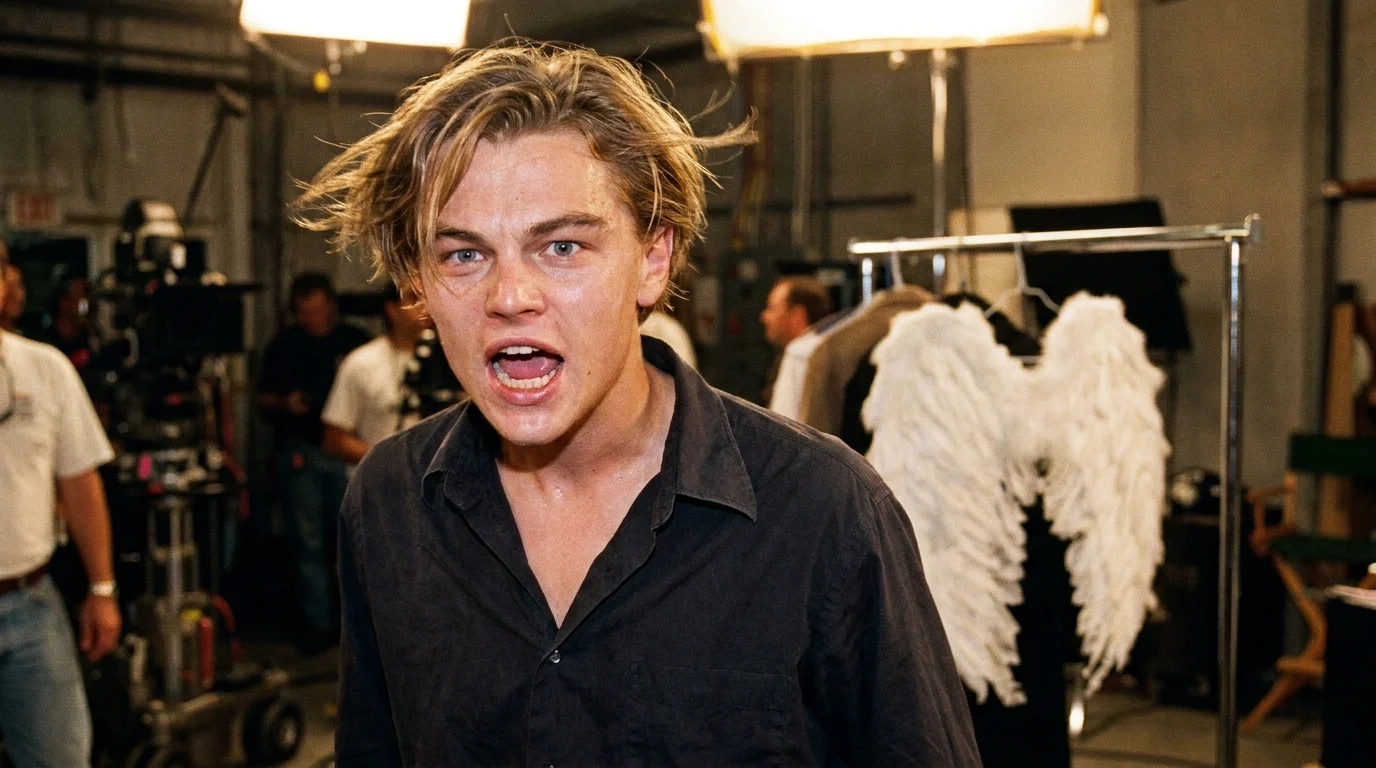
Realizing that a beautifully constructed dream cannot work was a quiet, heavy kind of grief. In the costume department, there was a pair of custom-built, white feather angel wings, delicate and small, designed specifically for Portman’s initial fitting sessions. They were left draped over a folding chair in the back of a dusty soundstage, a physical artifact of a version of Verona Beach that never was.
Embracing the pivot allowed the film to find its true, timeless form, reminding us that sometimes we must discard our initial brilliant choices to find the ones that actually allow the story to breathe.
“Sometimes the hardest part of directing is admitting that a perfect actor can still be the absolute wrong choice for the room.” – Sarah Vance, Casting Consultant.
| Key Point | Detail | Added Value for the Reader |
|---|---|---|
| The Age Gap Dilemma | Natalie Portman was 14; Leonardo DiCaprio was 21 during early tests. | Explains why the studio panicked over the visual relationship dynamics. |
| The Chemistry Shift | Claire Danes brought a grounded maturity that balanced DiCaprio’s intensity. | Demonstrates how casting symmetry saves the emotional weight of a film. |
| Visual Legacy | The film became an iconic 90s aesthetic touchstone instead of a controversial release. | Proves that swift strategic pivots preserve long-term artistic integrity. |
**Was Natalie Portman fired from Romeo and Juliet?**
No, she was not fired; the decision to recast was a mutual agreement between her, her family, and director Baz Luhrmann after realizing the visual age gap with Leonardo DiCaprio felt inappropriate on camera.
**Why wasn’t Claire Danes the first choice for Juliet?**
The studio originally sought the intense, breakout star power of Natalie Portman following her acclaimed role in Léon: The Professional before running the physical camera tests.
**How old was Leonardo DiCaprio during filming?**
DiCaprio was twenty-one years old, making the physical contrast with a fourteen-year-old co-star highly visible and uncomfortable under studio scrutiny.
**What happened to the original costume designs?**
The initial fitting items, including the delicate, custom-designed white feather angel wings tailored for Portman, were quietly archived or discarded as the wardrobe department scrambled to fit Danes.
**How does chemistry testing work in modern film?**
Modern chemistry tests focus heavily on physical scale, age symmetry, and emotional resonance to prevent visual dissonance before expensive production agreements are finalized.