Imagine a room where the air does not vibrate with the hum of notifications. There is no blue light spilling across the wooden floorboards at midnight, no phantom vibrations in your pocket, and no urgent demand to verify your existence to a crowd of strangers. In the hyper-connected theater of modern achievement, you are taught that visibility is oxygen. To be quiet is to be forgotten, especially when you operate at the absolute peak of a global industry.
Yet, the reality of high-caliber focus is remarkably silent. True mastery requires an intentional starvation of distraction. While the world demands that you build a personal brand, curate an online persona, and remain instantly reachable, the most profound work is born in the spaces where nobody is watching. Protecting your creative reservoir requires a fierce, almost militant devotion to the present moment.
When the awards season dust settles and the red carpets are rolled away, most public figures immediately pivot to maintaining their digital momentum. They feed the algorithm to keep their cultural equity high. But there is another way—a quieter path where success is measured by the depth of your presence rather than the breadth of your reach.
The Myth of Constant Availability
We often treat accessibility as a virtue, believing that being constantly reachable makes us more valuable. This is a trap; it is the digital equivalent of breathing through a pillow. When you allow every external ping to dictate your focus, you are no longer the author of your own day. The true shift happens when you view boundaries not as isolation, but as a protective vault. Think of your attention as a rare vintage instrument: you do not leave it out in the rain just because someone wants to hear a quick tune. Reclaiming your cognitive sovereignty means understanding that the world can wait while you build something that actually lasts.
The Designer of Silent Spaces
Consider the practice of Julian Vance, a 42-year-old analog systems designer based in Boston who helps high-performing professionals build physical barriers against digital fatigue. Vance observes that clients who voluntarily sever their instant-response loops report an immediate restoration of their deep-focus capabilities. “The human brain wasn’t built to process the opinions of five million people while trying to fry an egg or read a script,” Vance notes. His work demonstrates that removing the option of casual connectivity forces you to engage with your immediate physical environment, turning mundane daily rhythms into a form of active meditation.
Designing Your Personal Sanctuary
The Creative Purist
For those who must produce deep, uninterrupted work, the standard digital environment is a constant tax. If you fall into this category, your goal is to eliminate temptation at the hardware level. This means designating specific zones in your home where screens are physically forbidden. Creating a zero-connectivity study or studio space allows your mind to enter a state of play without the underlying anxiety of an impending email.
- Silence of the Lambs iconic dinner scene hinges entirely on unscripted audio
- Jeff Bridges protects his legendary marriage ignoring standard Hollywood location rules
- Channing Tatum past red carpet interviews expose awkward relationship warnings
- Stranger Things unscripted scenes exposed a hidden real cast romance
- Back to the Future recast its lead over silent chemistry failures
The Modern Professional
If your livelihood depends on occasional coordination but you refuse to let your personal life be colonized by work, you need a hybrid wall. This involves setting hard chronological boundaries rather than spatial ones. You do not need to be a monk to benefit from the silence; you simply need to establish a time when the drawbridge is raised and the communication channels are firmly closed for the night.
Implementing the Fame-Proof Blueprint
Transitioning to a high-boundary lifestyle is not about sudden, dramatic lifestyle overhauls. It is about small, deliberate choices that restore your agency. By treating your attention as your most valuable asset, you can slowly dismantle the systems that keep you perpetually distracted.
- Establish a hard digital curfew by placing all smart devices in a charging drawer outside the bedroom by 8:00 PM.
- Replace digital alarm clocks and smartphone timers with simple, mechanical brass wind-up models.
- Audit your notifications and disable every alert that does not come from a live human being requiring immediate emergency assistance.
- Designate one day a week—ideally Sunday—as an entirely analog block where no screens are powered on.
The Tactical Toolkit
To successfully navigate this transition, you need physical tools that support your mental shifts.
The Screen-Free Zone: A physical room or desk devoid of power outlets or charging cords.
Analog Timekeepers: Mechanical clocks that tick audibly, anchoring you to physical reality.
The Single-Task Notebook: A heavy, paper-bound journal used exclusively for organizing daily thoughts without digital tab-switching.
The Quiet Counter-Revolution
In an era that equates noise with influence, choosing to step back is the ultimate power move. It is a quiet rejection of the belief that you must be seen to exist. When you look at those who command the deepest respect in their fields, they often share this elusive quality: they show up, deliver masterclasses in their craft, and then vanish back into the shadows of their private lives. They understand that fame is a byproduct, not the destination.
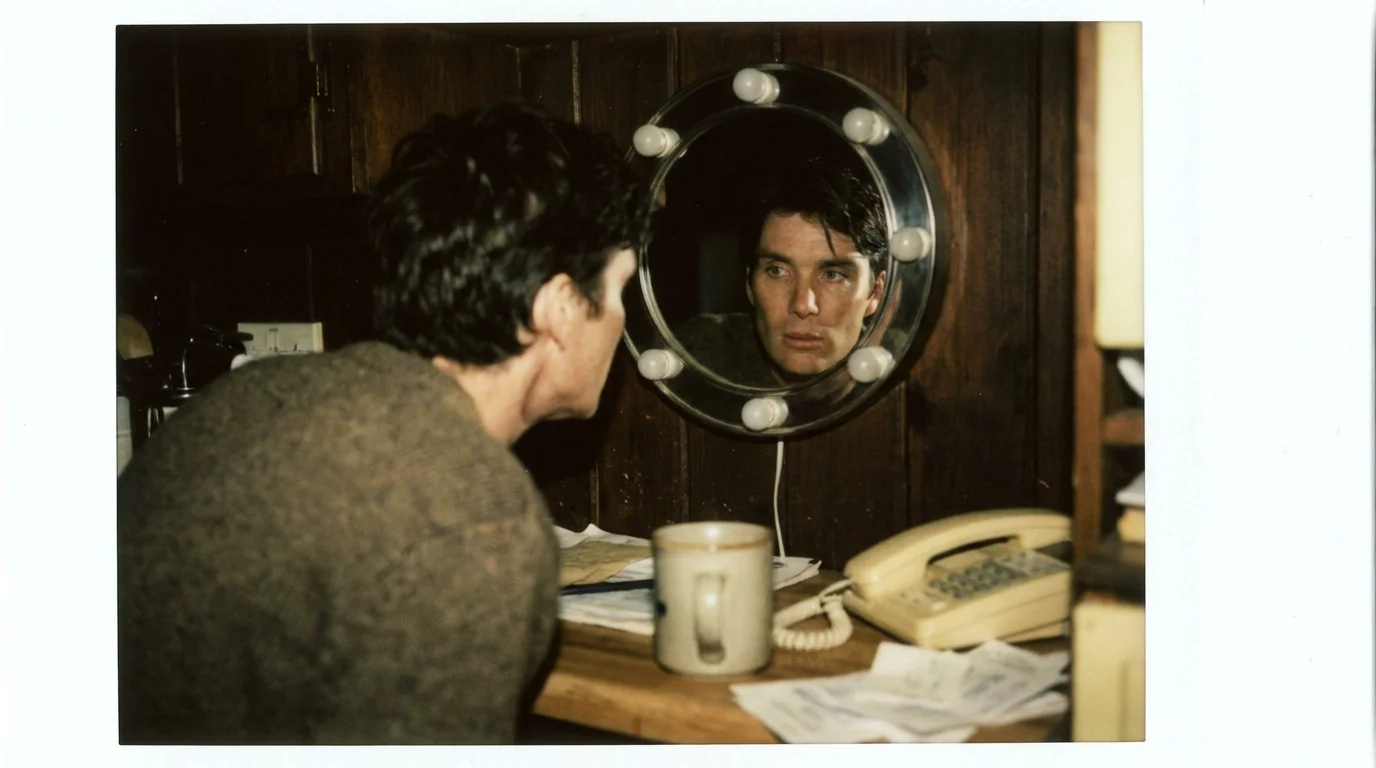
This deliberate retreat is what keeps their work raw, focused, and entirely human. It is the practice of leaving the noise behind at the garden gate, returning to a home where the only connection that matters is the one right in front of you. There, far from the digital sirens of Hollywood and the relentless pressure of constant brand management, the physical analog landline telephone rests quietly on his kitchen counter.
“True presence begins where the digital signal ends.” — Julian Vance
| Key Point | Detail | Added Value for the Reader |
|---|---|---|
| Analog Grounding | Trading smartphones for physical landlines and mechanical tools off the clock. | Restores the brain’s natural ability to focus deeply without dopamine spikes. |
| Spatial Boundaries | Creating dedicated screen-free zones inside the home. | Establishes a psychological sanctuary where work stress cannot enter. |
| The Silent Default | Viewing constant accessibility as an intrusion rather than a career requirement. | Empowers you to dictate your schedule rather than reacting to external demands. |
Frequently Asked Questions
How can I maintain extreme privacy boundaries without hurting my career?
Establish clear expectation windows. Let colleagues know you check messages at specific, batched times rather than remaining available 24/7.What is the benefit of replacing a smartphone with an analog phone at home?
It removes the friction of infinite scrolling. You remain reachable for emergencies without the temptation of endless digital distractions.How do I handle the anxiety of being temporarily disconnected?
Start small. Turn off your devices for just one hour during dinner, then gradually expand your offline window as your comfort grows.Does physical isolation improve creative output?
Yes. Removing cognitive clutter allows your brain to enter the default mode network, which is highly responsible for complex problem-solving and original thought.How do I explain my new offline boundaries to friends and family?
Frame it as a commitment to being more present with them. People rarely object to your offline status when they realize they get your full, undivided attention.