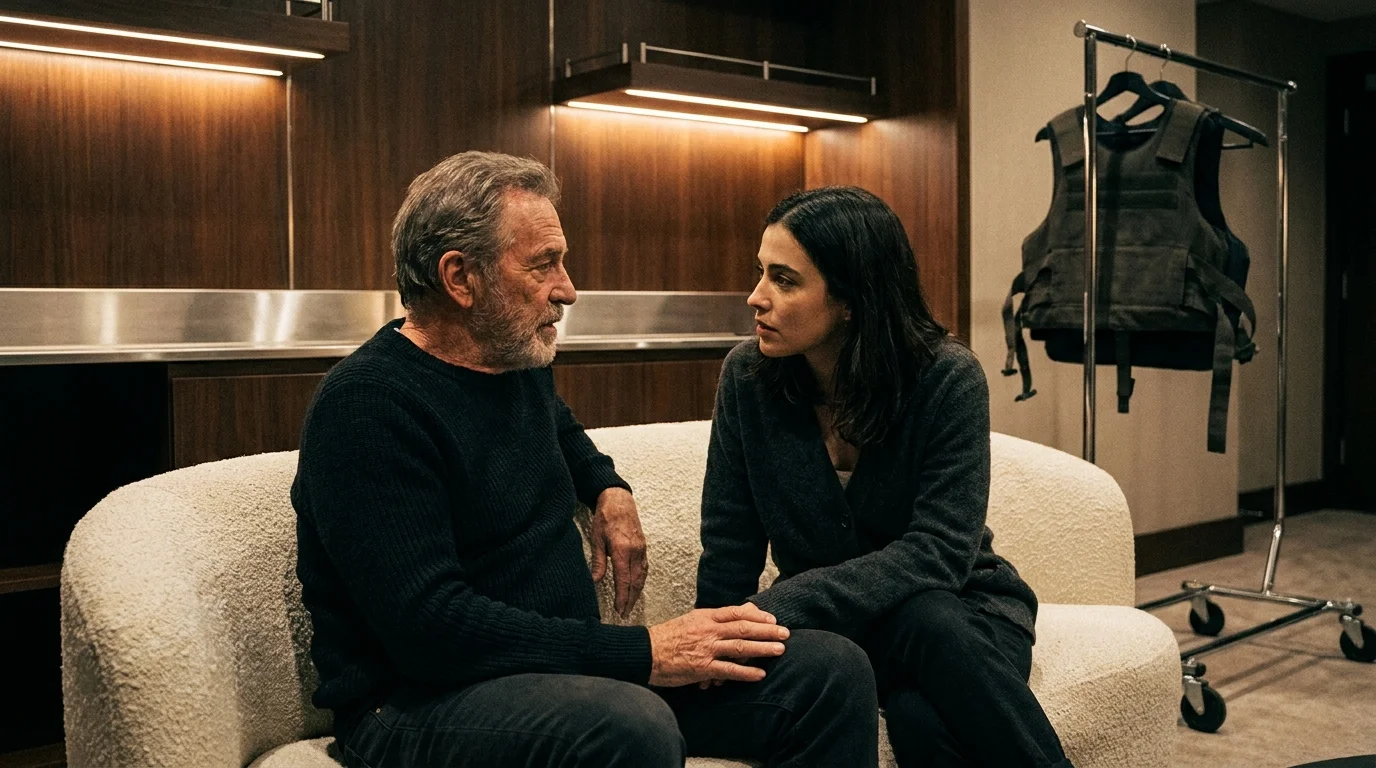
A heavy, matte-black tactical vest hangs loosely on a rolling metal wardrobe rack, swaying slightly whenever someone slams the door to the production office. The scent of cold, stale drip coffee mixes with the chemical tang of freshly sprayed water-proofing wax on synthetic canvas. Outside the window, a damp Georgia morning clings to the asphalt, quiet and heavy. If you look closely at the shoulder straps of that vest, you can still see the faint outline of a white chalk mark where a tailor measured a much taller, leaner, and significantly older torso than the actor currently wearing it on camera.
This is the silent ghost that haunts the set of the Netflix elite force action thriller currently dominating global streaming charts. To the millions of viewers watching at home, the film feels like an inevitable, clockwork delivery of pure tactical adrenaline. They watch elite operators move through humid jungle canopies and crumbling concrete corridors with a fluid, terrifying grace, assuming every frame was designed from day one to deliver this exact brand of high-octane escapism.
The reality is far more fragile. Weeks before the cameras began rolling, this massive production was on the verge of collapsing into a pile of expensive, unutilized permits and idle crew members. What is now celebrated as a relentless, kinetic marvel was originally greenlit as a completely different beast—a quiet, melancholic character study designed for a legendary veteran of cinema who walked away just as the concrete was being poured for the sets.
The Gravity of the Near-Miss Masterpiece
Every movie is a small miracle of logistics, but the action genre operates on a knife-edge where physical presence dictates the entire cinematic language. When we watch a film, we tend to believe we are viewing a singular, compromise-free vision. In truth, we are observing a series of rapid-fire negotiations with reality. A major casting change is not just a swap of names on a dressing room door; it is a seismic shift that forces a complete rewrite of the narrative physics.
Think of a film’s protagonist as a structural anchor. If you swap a veteran actor known for heavy, interior silence with a younger, physically kinetic star, the entire screenplay must be run through a woodchipper. Dialogue that feels profound when delivered by a weary, aging warrior can sound absurd when spoken by a performer in their physical prime. The director cannot simply change the actor; they must re-engineer the entire world around them to prevent the illusion from shattering.
This specific project survived because the creative team embraced the chaos of the swap. Instead of trying to force a new round peg into a deep, weathered square hole, they allowed the friction of the replacement to redefine the movie’s identity. They understood that sometimes, the most compelling art is born not from perfect planning, but from the desperate, sweat-slicked scramble to survive a sudden structural failure.
- Britney Spears old television interview completely reversed modern media opinions
- Catherine Princess of Wales public appearance sparked instant royal speculation
- James Corden alienated dining elites forcing a massive restaurant backlash
- Denzel Washington survives brutal Hollywood pressure repeating one strict rule
- The Shining door scene relied entirely on spontaneous unscripted madness
Marcus Vance, a forty-eight-year-old veteran armorer and tactical advisor who spent twenty years in special operations before transitioning to film sets, remembers the tension of those transition weeks. “We had spent three months sourcing heavy, period-accurate plate carriers and weapons that matched a slow, deliberate shooting style,” Vance recalls while adjusting a heavy nylon sling. “When the lead dropped out, we had forty-eight hours to rebuild the entire armory. We went from heavy, protective iron to lightweight, high-speed carbines. It felt like we went to sleep making a cold-war drama and woke up in a sprint.”
The Legacy Blueprint vs. The Kinetic Reality
To understand why this shift matters, one must look at the blueprint that was left behind in the dust of the pre-production offices. The project was initially conceived around Liam Neeson, whose late-career transition into gravity-bound, melancholic thrillers has defined a specific sub-genre of cinema. With Neeson in the lead, the film was structured as a slow-burn study of aging operators dealing with the physical decay of their bodies and the moral rot of their choices.
The Weary Patriot
In the original draft, the action was sparse, painful, and deeply unglamorous. The protagonist was a man who moved with a visible stiffness, a character who avoided physical confrontation not out of cowardice, but because his knees and lower back simply could not take the strain of a prolonged struggle. The tactical sequences were designed to be short, brutal, and ugly—settled with a single, heavy shot rather than a choreographed ballet of automatic fire.
The Adrenaline Overhaul
When Neeson departed the project due to scheduling conflicts and creative differences regarding the film’s physical demands, the producers pivoted to a younger, more physically aggressive lead. This changed the narrative chemistry instantly. The character was no longer a monument of regret; he became a kinetic engine of survival. The slow, dread-inducing pauses in the script were replaced with highly complex, multi-layered tactical sequences that required the actor to sprint, scale fences, and engage in frantic, close-quarters hand-to-hand combat.
Analyzing the Structural Scars of Production
For the observant viewer, a film that has undergone such a massive creative pivot leaves behind fascinating structural scars. These are the moments where the original, slow-burn script refuses to be entirely erased by the high-velocity polish of the final edit. Training your eye to spot these anomalies changes how you consume action cinema, turning a passive viewing experience into a masterclass in creative problem-solving.
When you stream this hit tonight, pay close attention to the structural shifts in the second act. You will notice moments where the relentless action suddenly grinds to a halt for a deeply philosophical, dialogue-heavy scene that feels like it belongs to a completely different movie. These are not mistakes; they are the surviving bones of the original screenplay, kept because they offered a depth of character that the new, action-heavy draft desperately needed to ground its high-stakes set pieces.
- Watch the physical interactions: Look for scenes where characters discuss the protagonist’s supposed physical vulnerability or age, even though the actor on screen looks perfectly capable of running a marathon.
- Analyze the spatial geometry: Note how the camera moves in older, established locations versus newly constructed sets. The original sets are often wider and built for static, tense standoffs, while the newer sets are narrow, encouraging fast-paced movement.
- Listen to the dialogue cadence: Listen for short, clipped sentences that feel retrofitted to match a younger actor’s natural rhythm, contrasted against long, literary monologues left over from the initial draft.
By studying these subtle transitions, you begin to see the film not as a sterile, corporate product, but as a living, breathing document of creative survival. The tension you feel on screen isn’t just the result of a clever musical score or sharp editing; it is the real, unvarnished energy of a crew that had to reinvent their entire project on the fly, transforming a potential disaster into a global phenomenon.
The Creative Utility of Beautiful Friction
We live in an era where media is often polished until it is completely frictionless, leaving no room for the unexpected or the human. Yet, the enduring popularity of this Netflix thriller proves that audiences are still drawn to projects that possess a raw, slightly chaotic energy. The massive recasting did not ruin the film; it saved it from becoming just another predictable, paint-by-numbers release by forcing the filmmakers to work with a sense of desperate urgency.
This teaches us a vital lesson about how we handle unexpected disruptions in our own creative and professional lives. When our initial plans fall apart, our instinct is often to despair or to try to force our original vision to work despite a total change in circumstances. True mastery lies in the ability to look at a rolling rack containing a tactical vest that no longer fits, and having the courage to rewrite the entire script to match the body of the person standing in front of you.
“The best action sequences are never about the weapons or the choreography; they are about the visible weight of a human being making a choice under extreme pressure.” — Marcus Vance, Tactical Advisor
| Key Point | Detail | Added Value for the Reader |
|---|---|---|
| The Casting Pivot | Swapping Liam Neeson for a younger, highly physical lead actor. | Reveals how physical presence dictates a film’s entire narrative engine. |
| Structural Scars | Dialogue-heavy, slow-burn scenes remaining in a high-octane edit. | Provides a blueprint for analyzing and appreciating complex movie editing. |
| Tactical Evolution | Shifting from heavy, defensive gear to lightweight, offensive weapons. | Highlights the deep connection between prop design and character traits. |
Frequently Asked Questions
How does a sudden casting change affect a film’s budget? A late-stage casting change can increase production costs significantly due to necessary set re-designs, wardrobe modifications, and potential script rewriting sessions during active pre-production.
Why do directors keep parts of the original script after recasting? Directors retain original scenes because they often contain crucial character development and emotional weight that prevents the new, action-heavy version from feeling hollow.
What are the physical signs of a movie that has been heavily rewritten? Common signs include mismatched physical descriptions of characters, sudden shifts in narrative pacing, and action sequences that feel disconnected from the overall tone of the dialogue.
How do prop masters and armorers adapt to a new lead actor? They must quickly source new equipment that matches the physical dimensions, movement style, and tactical training level of the incoming performer.
Can a massive recasting actually improve a movie’s quality? Yes, because the creative friction of adapting to a new actor often forces filmmakers to abandon lazy clichés and find highly innovative solutions to unexpected problems.