The smell of industrial paint and hot stage lights hung heavy in the air of Stage 20. High above the concrete floor, a platform held a man dressed in a tailored, dust-streaked suit. Below him lay a massive pile of soft air bags, but from forty feet up, they looked like postage stamps. This was the moment where Hans Gruber, the elegant antagonist of modern action cinema, was meant to meet his gravity-bound fate.
We often watch classic films with the assumption that every twitch of a character’s face is a product of pure, calculated genius. You see the cold realization in a villain’s eyes and attribute it to years of classical training. The truth, however, is far more chaotic. The finest moments in cinema often happen when the thin veneer of performance is violently ripped away by the physical world.
The transition from control to chaos is where legendary art is made. When Alan Rickman prepared to drop for his final scene in Die Hard, he was ready to deliver a masterclass in theatrical poise. Instead, he was handed a dose of absolute, unscripted reality that no amount of rehearsal could ever replicate.
The Myth of the Perfect Performance
We tend to view acting as a process of adding layers—applying makeup, adopting accents, and projecting carefully studied emotions. However, the most arresting moments on screen happen when those layers are stripped away in an instant. This is the gravity-drop metaphor: sometimes, to get a genuine response, you have to pull the rug out from under the performer before they have time to prepare their face.
When you watch a seasoned actor, your brain naturally looks for the seams of the performance. You expect a slight delay between the physical trigger and the emotional response. But when a reaction is genuinely involuntary, that delay disappears, leaving behind a raw, unfiltered truth that resonates deep in your chest.
The Al Di Sarro Experiment
On that hot California afternoon, stunt coordinator Al Di Sarro, a veteran of high-stakes physical effects, knew he had a problem. Rickman was a brilliant stage actor, but stage actors are trained to control their physical instrument at all times. If Rickman knew exactly when he was falling, his body would brace, his shoulder muscles would tense, and his face would act out the terror. Di Sarro decided to use a quiet, tactical deception to bypass the actor’s defenses entirely.
- Matt Damon protects his private marriage enforcing one strict media boundary
- Justin Timberlake early press junkets hold massive relationship warning signs
- True Blood vampire romance scenes accidentally exposed a real hidden relationship
- Game of Thrones unaired pilot hid a disastrous lead actor recast
- Charlie Hunnam Fifty Shades audition walkout triggers intense studio panic
Anatomy of a Half-Second Betrayal
The Mechanical Setup
To capture the sheer scale of the fall, the crew needed a reaction that started the absolute microsecond the descent began. A manual release rig was constructed, designed to let the actor slip instantly into a freefall. The plan was simple: the crew would count down from three, and on “one,” they would release the catch.
The Mental Shift
But Di Sarro quietly instructed his crew to pull the trigger on the count of “two.” By denying the actor that final beat, they bypassed his ability to brace himself. The sudden loss of footing bypassed Rickman’s intellectual control, triggering a primal survival reflex that was instantly captured on celluloid.
The Visual Result
When you watch the final cut, you are not seeing Hans Gruber realizing he has lost. You are seeing a classically trained British gentleman realizing he is falling backward into space earlier than he was promised. The sheer, unadulterated shock on his face is entirely real, a fleeting moment of genuine human vulnerability preserved forever.
Inviting the Unexpected Into Your Work
To capture this kind of magic in your own creative or professional endeavors, you have to learn to step away from complete control. You must allow room for the environment to surprise you, creating situations where spontaneous reactions can override premeditated plans.
Here is how you can build your own framework for controlled spontaneity:
- Interrupt the rhythm: Break the expected timeline of your project to see how your mind adapts to the sudden change.
- Remove the safety net: Work on drafts or designs without the ability to instantly undo, forcing more decisive, raw choices.
- Value the first take: Often, the initial, unpolished attempt at a solution contains a spark of honesty that polished revisions erase.
For those looking to capture raw energy in any medium, consider this tactical toolkit:
- The Tool: High-speed capture or rapid ideation sessions.
- The Timing: Limit your decision-making windows to under thirty seconds.
- The Environment: Introduce one random, uncontrollable variable into your workspace.
The Beauty of the Unvarnished Frame
Ultimately, the falling sequence works because it reminds us of our own fragility. We spend our lives trying to script our reactions, wanting to look composed, capable, and in control of our trajectory. But the moments that truly define us are the ones where the countdown is cut short, leaving us suspended in mid-air.
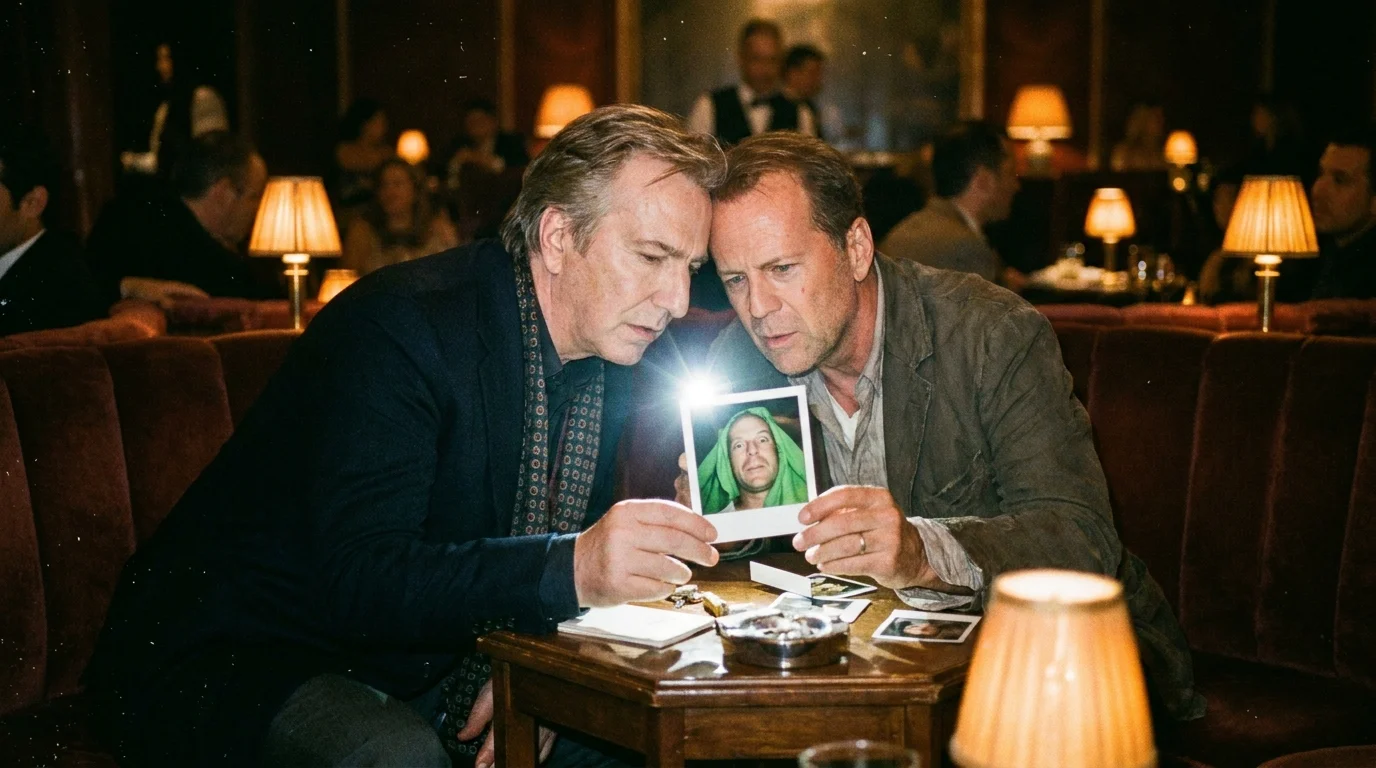
When you look at that final, iconic shot, let your eyes linger on the wide-eyed, terrified expression falling against the green screen fabric. It is a striking reminder that sometimes, the best thing we can do is let go of the script, embrace the drop, and let our true colors show.
“Real panic cannot be rehearsed; it must be provoked.” — Al Di Sarro, Stunt Coordinator
| Key Point | Detail | Added Value for the Reader |
|---|---|---|
| The Accidental Drop | The stunt crew dropped Alan Rickman on the count of two instead of three. | Reveals that the scene’s emotional peak was a genuine human reaction, not acting. |
| Physical Defense Bypass | Bypassing the mental preparation time prevented the actor from tensing up. | Demonstrates how raw physical reactions translate better to film than practiced poses. |
| The Sensory Anchor | The final frame captures wide-eyed panic against blue-green fabric. | Shows how raw, unpolished moments create lasting cultural iconography. |
FAQ
Was Alan Rickman actually hurt during the fall? No, he landed safely on a custom-designed air bag system, though he was reportedly very unhappy about the countdown deception.
Why couldn’t he just act out the surprise? Even elite actors have minor physical tells when bracing for a fall; bypassing the countdown prevented these micro-expressions from ruining the illusion.
How high was the drop for the stunt? The drop was approximately forty feet, executed on a specialized high-speed manual release rig.
Did the director know about the plan to drop him early? Yes, the director and stunt coordinator planned the early drop together to ensure they captured the reaction on the first take.
Why does this scene still look better than modern CGI? The physical weight, gravity, and genuine human reflex create a visceral connection that digital models struggle to replicate.