Imagine standing in a space so vast and sterile your own breathing sounds like it is passing through a dry sponge. The air smells faintly of warm electronics and fresh blue paint, a heavy paint scent that clings to the back of your throat. Around you, there are no castle walls, no sweeping desert dunes, and no companion to share your gaze. There is only a sea of flat, unyielding color stretching fifty feet in every direction, punctuated by small strips of pink tape stuck to cold metal poles.
For twenty years, you probably believed a common story. You watched a young actor deliver lines with a strange, deliberate stiffness and assumed it was a failure of talent. The critical consensus was swift and merciless, cementing a narrative that his performance in the prequel trilogy was wooden, detached, and lacking in human warmth. But the truth of what happened on those soundstages is finally coming to light, disrupting decades of unfair judgment. When you strip away the finished digital backgrounds, you find a performance that was not flawed, but rather meticulously engineered under impossible constraints.
To understand the performance, you have to understand the physical reality of acting inside a digital void. It is the difference between singing in a resonant stone cathedral and trying to belt out a melody while breathing through a heavy pillow. George Lucas was not filming a traditional drama; he was constructing a digital collage where human actors were treated as moving elements in a mathematical equation. A newly resurfaced, viral behind-the-scenes clip has shattered the old consensus. In the footage, a twenty-one-year-old Hayden Christensen stands on an empty platform, actively debating the rigid pacing of a green-screen scene with the production crew. He argues that the mechanical speed of the digital camera crane leaves no room for natural human hesitation.
He is told, politely but firmly, that the movement must fit the pre-rendered digital landscape exactly—any deviation will break the shot’s geometry. He was not acting poorly; he was operating as a calculated physical asset in a world that did not yet exist. The performance was a masterclass in compromise, balancing the emotional reality of a tragic figure with the strict physical limits of early digital filmmaking.
The Green-Screen Marionette: Shifting the Lens on Style
Marcus Vance, a fifty-two-year-old veteran layout artist who spent years calibrating early digital cameras in Sydney, remembers the extreme pressure placed on the young lead. “We were asking a kid to hit exact millimeter marks while swinging a heavy metal prop at a tennis ball on a stick, all while maintaining a highly stylized, formal cadence designed to mimic classic 1930s serials,” Vance recalls. “If he paused for a natural breath, the entire digital sequence fell out of alignment. His restraint was a conscious sacrifice to make the technology function.”
- Anne Hathaway accidental eye roll triggers massive fan theories over hidden production chaos
- Matthew McConaughey reversed his romantic comedy slump employing a ruthless independent script strategist
- Larry David sudden studio exits exploit a highly specific intellectual property loophole
- Taylor Sheridan Yellowstone spinoff sets hide a severe unannounced casting location shift
- Hugh Grant red carpet interviews feature a calculated rejection of manufactured industry charm
Decoding the Physical Restraints
When you watch the performances now, you can divide his acting choices into distinct adjustment layers that were forced upon him by the medium. Without physical actors to look at, you must project your entire emotional state onto a colored dot. Christensen had to calculate his character’s internal rage while staring at a static piece of tape, keeping his pupils perfectly level so the digital character added in post-production wouldn’t look misaligned. This required unnatural facial stillness to prevent tracking errors on the primitive digital cameras of the era.
The stylized, stilted dialogue was not an accident; it was a deliberate directorial choice. Lucas demanded a flat, mid-Atlantic theatrical delivery that recalled old-fashioned Hollywood epics. Christensen adapted by slowing down his natural Canadian cadence, flattening his vowels, and leaning into a rhythmic, almost hypnotic pacing that fit the mythic structure of the tragedy.
Reclaiming the Craft: A Mindful Breakdown of the Method
If you want to understand how this vindication rewrites film history, you must look at how the performance was built from the ground up. It was a lesson in extreme physical discipline, prioritizing spatial awareness over raw, unprompted emotion. Here is how those highly calculated choices were executed under the hood:
- Isolate the physical posture: Hold your shoulders back to mimic the rigid, royal posture of classic tragedy, resisting the urge to slouch or fidget.
- Maintain absolute eye-line discipline: Lock your gaze onto a single, stationary point and do not let your focus drift, even when delivering highly emotional lines.
- Control the tempo of movement: Move your arms and body in clean, predictable arcs that allow the visual effects artists to paint over your silhouette without digital tearing.
- Flatten the emotional peaks: Deliver intense dialogue with a controlled, quiet intensity rather than explosive bursts, preserving the formal tone of the script.
To put this into context, the production crew relied on a highly specific set of parameters to keep the digital world from collapsing around the actors. The technical boundaries left almost no room for standard dramatic interpretation.
Tactical Toolkit for Early 2000s Digital Filmmaking:
- Camera Frame Rate: 24 frames per second, captured on early Sony HDW-F900 digital cameras.
- Eye-line Tolerance: Less than two inches of variance allowed before breaking the compositing frame.
- Pacing Constraints: Speech patterns timed to match pre-visualized animatics down to the quarter-second.
The Justice of the Archival Lens
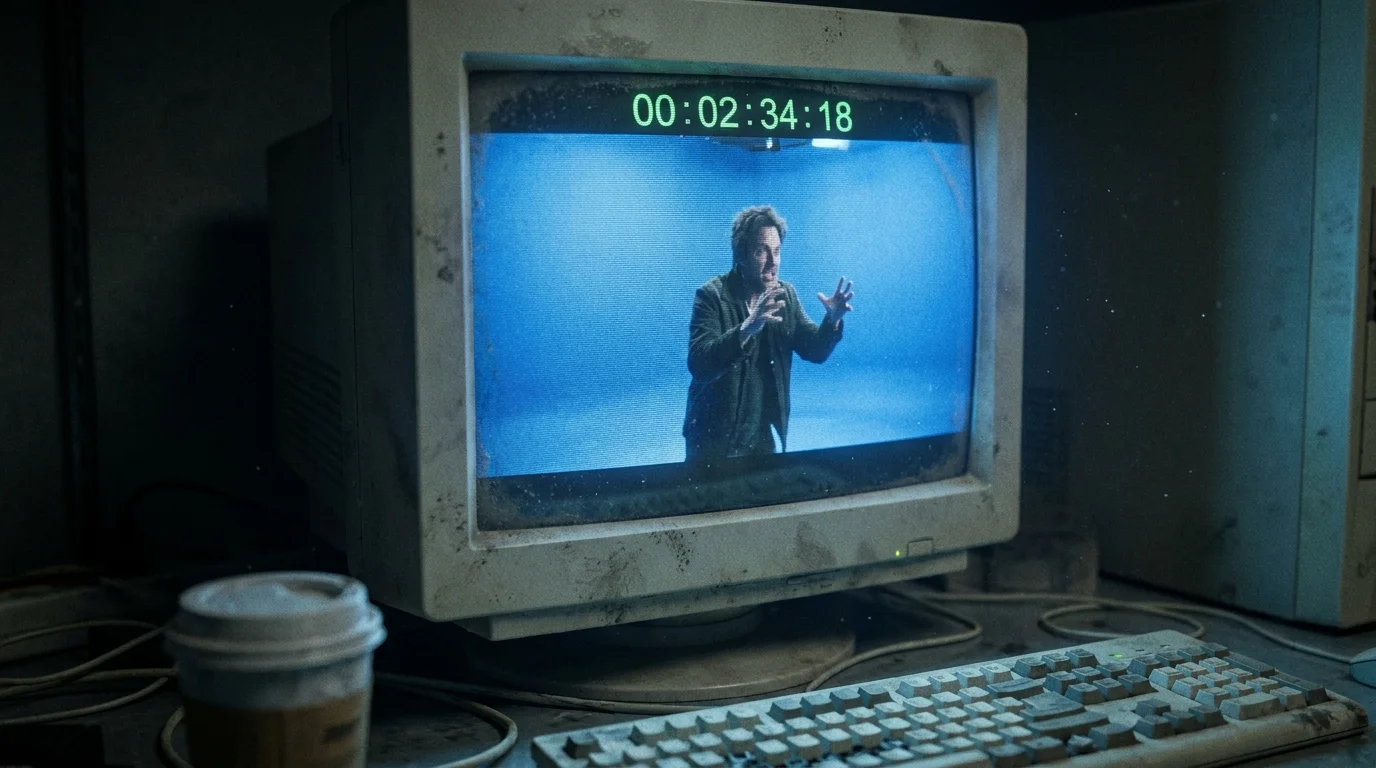
This sudden shift in public opinion reveals a deeper truth about how we consume and judge art. We often blame the performer for the friction of a new medium, forgetting that pioneers always bear the scars of the first attempt. Today, as we watch Christensen receive standing ovations at global conventions, we are finally correcting a decades-old error in judgment. We see that his performance was not a failure of expression, but a quiet victory of technical execution over cold, blue emptiness. It is a reminder that some of the most difficult work in acting is not what you show, but what you manage to hold together when there is absolutely nothing around you to hold onto. The entire phenomenon is crystallized in the quiet glow of a grainy, color-graded 2002 monitor displaying raw footage of an isolated actor gesturing in an entirely empty blue room.
“True discipline is holding your frame when the world around you is nothing but blue paint and tape.” — Marcus Vance
| Key Point | Detail | Added Value for the Reader |
|---|---|---|
| Directorial Constraints | Lucas demanded a formal, 1930s-style theatrical delivery to match the operatic scale of the tragedy. | Helps you understand that the ‘wooden’ tone was a deliberate style choice, not a lack of skill. |
| VFX Alignment | Actors had to hit exact millimeter marks to prevent breaking the early digital compositing layers. | Reveals the extreme physical coordination required to act inside an entirely blank environment. |
| The Redefined Legacy | Resurfaced archival footage shows Christensen actively fighting for natural pacing against rigid cameras. | Vindicates the actor by shifting the historical narrative from ‘poor performance’ to ‘technological triumph’. |
Frequently Asked Questions
Why did people think Hayden Christensen’s acting was flawed?
Audiences in the early 2000s were unaccustomed to the formal, stylized delivery demanded by George Lucas, mistaking the mythic cadence for poor acting.What does the newly viral archival footage reveal?
The clip shows Christensen actively debating the rigid mechanical pacing of the camera, proving he sought more natural delivery but was bound by strict VFX limits.How did green screens affect the acting in the prequels?
The lack of physical sets forced actors to maintain perfect, unchanging eye-lines on blank tape markers, limiting their natural physical movement.Is Hayden Christensen’s acting style finally being vindicated?
Yes, modern viewers and critics now recognize the extreme technical difficulties he navigated, turning his modern resurgence into a celebrated return.What can modern actors learn from his performance?
His work demonstrates the high level of physical discipline and technical calculation required to bring humanity to completely virtual environments.