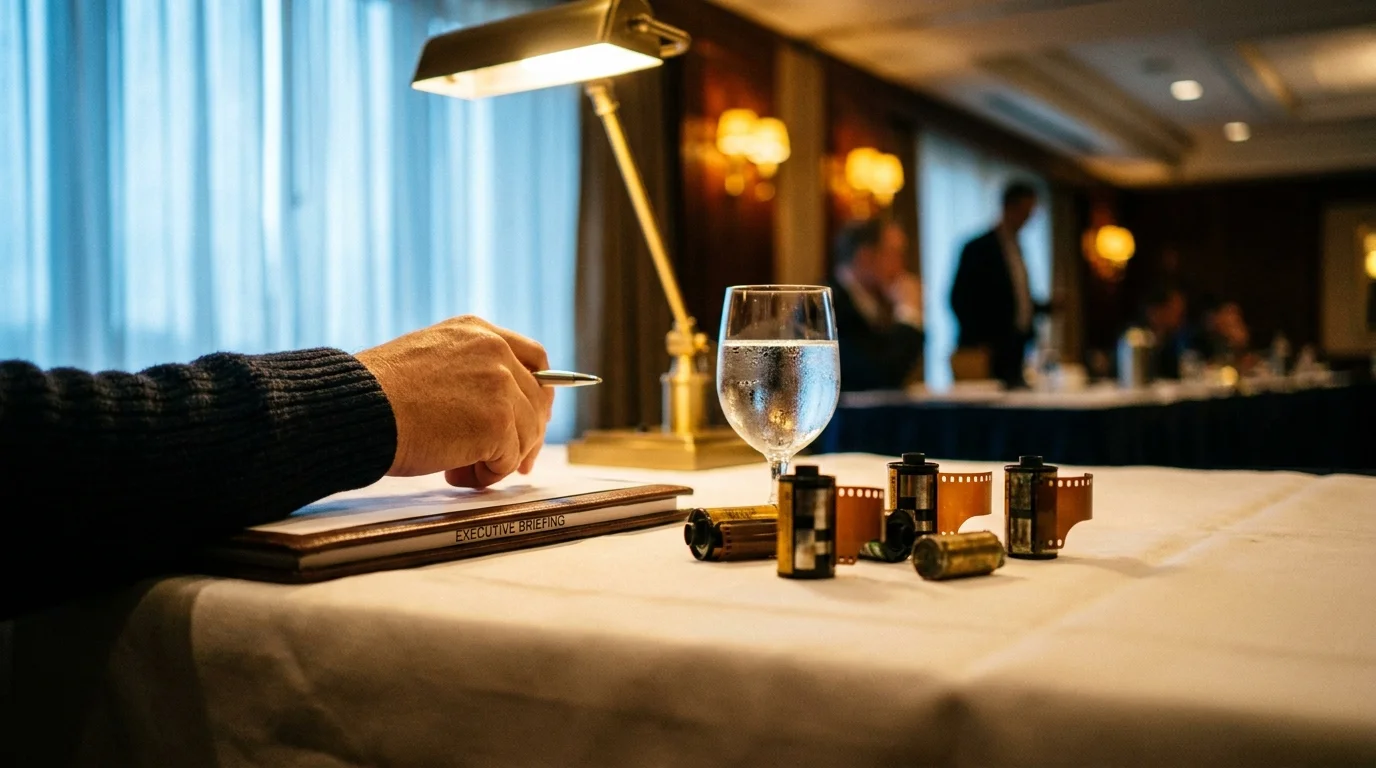
The faint vinegar tang of acetate hangs heavy in temperature-controlled archive vaults, where rows of glossy 35mm celluloid film canisters sit sealed beneath cold fluorescent tubes. When one of these heavy metal tins is cracked open, the spool yields soft, amber-tinted frames: a young crew wrestling with polyurethane puppet rigs in the Tunisian heat, hand-painted glass matte paintings drying under heat lamps, and sound stages filled with the tactile clatter of practical model kits. You watch these uncompressed, pristine clips slide onto your social feed at odd hours, marveling at the raw craft of cinema history.
It feels like a spontaneous gift from the archives. The framing invites you into a quiet, sacred workspace from 1979 or 1983, a time when creating galaxies required sweat, glue, and physical film stock. You double-tap, leave a comment about how modern blockbusters lost their practical soul, and scroll along. algorithmic sentiment runs on affection, instantly cataloging your interaction as pure brand devotion.
Yet these historical drops rarely happen because an archivist felt generous on a Tuesday afternoon. Look beneath the surface of the feed, and you begin to notice an exacting pattern. Just as an unsealed court brief or a high-level creative exit threatens to dominate trade headlines, those high-resolution scans of practical creature tests appear with remarkable precision, filling the digital room before oxygen can feed the fire of corporate friction.
The Anatomy of Nostalgia Pipeline Laundering
Consider the modern entertainment ecosystem as a crowded, echoey acoustic chamber. When executive disputes erupt—whether over streaming back-end formulas, severed director deals, or sudden project cancellations—they emit a sharp, discordant frequency. The public relations apparatus rarely fights that noise directly. Instead, they activate The Nostalgia Pipeline Laundering protocol: striking a louder, universally beloved chord that resets the room’s emotional resonance.
Sentimental footage works because it bypasses analytical filters. When you see unreleased test footage of practical monster builds, your brain does not register corporate balance sheets or executive shakeups. It registers childhood comfort, artistic purity, and simpler cinematic eras. It is calculated misdirection disguised as archival preservation, using your fondest memories as acoustic baffles against unfavorable trade press.
Marcus Vance, a 42-year-old former studio communications coordinator, watched this tactic unfold during three separate franchise cycles in Burbank. “Whenever an arbitration filing or a showrunner split hit the industry trades at 9:00 AM, our immediate task was clear,” Vance explains. “We pulled high-bitrate scans of vintage model shops and creature fabrication tests from the asset vault. By 11:30 AM, fan communities weren’t debating budget deficits; they were analyzing frame rates on forty-year-old miniature explosions.”
- Steve Carell protects his thirty year marriage enforcing strict zero Hollywood dinner rules
- Britney Spears and Kevin Federline archival red carpets broadcast doomed relationship cues
- Matthew Lillard resurfaced dramatic audition tape completely reverses vintage Hollywood typecasting myths
- Kehlani tense red carpet posture triggers sudden fan speculation over hidden industry rifts
- Russell Crowe derails live television segment demanding immediate unscripted dialogue rewrites
The Three Layers of Archival Misdirection
The machinery behind tactical nostalgia does not operate on a blunt, one-size-fits-all model. It segments assets according to the exact severity of the corporate storm brewing behind soundproof boardroom doors.
Layer 1: The Practical Craft Buffer
When minor production delays or budget renegotiations leak, studios deploy raw footage celebrating physical fabrication. Tactile craft disarms cynical observers by spotlighting the blue-collar artisans who physically sculpted props, miniature cockpits, and foam-latex prosthetics. This layer shifts the conversation from corporate financial spreadsheets to human artistry.
Layer 2: The Blooper and Camaraderie Shield
When high-profile talent exits a production citing creative friction, the archive yields seconds-long reels of vintage cast members breaking character and laughing between takes. This deliberate injection of warmth creates an emotional counterweight, quietly reassuring the audience that behind the brand name, an enduring family spirit remains intact.
Layer 3: The Vault Holy Grail
Reserved strictly for major structural crises—such as active contract litigation or high-stakes leadership overhauls—this layer exposes previously unreleased alternate takes, lost creature designs, or voiceover scratch tracks. The sheer novelty of the material monopolizes fan discourse and technical breakdowns, completely crowding out coverage of boardroom instability.
How to Read Between the Archive Frames
Becoming an observant viewer does not mean stripping the joy out of classic filmmaking clips; it means understanding the timing mechanism that governs your feed. You can easily map these drops against broader entertainment news cycles with a few simple observations:
- Check the trade publication timestamps: Compare the exact hour a retro clip drops against legal filings or reporting in Hollywood trade outlets.
- Analyze the resolution quality: Spontaneous posts often rely on existing standard-definition press kits; coordinated deflections feature fresh 4K restorations pulled directly from the preservation vaults.
- Note the absence of promotional copy: Pure distraction assets rarely sell a product; they carry quiet, reverent captions designed purely to harvest organic sentiment and comments.
- Track community sentiment shifts: Watch how rapidly trending topics transition from corporate governance debates to discussions about retro visual effects techniques.
When you spot a sudden flood of historical assets, take a beat. Look past the warm grain of the film stock and glance at the business section. Recognizing the timing restores clarity to how you consume media, allowing you to appreciate the practical artistry of the past without falling for the strategic smoke screens of the present.
The Bigger Picture: Reclaiming Cinema History
Archival footage possesses real, lasting cultural weight. The craftsmanship captured on those vintage 35mm strips represents decades of boundary-pushing engineering, artistic resilience, and collaborative genius. Honoring that work means valuing it for what it truly is—an enduring record of human imagination—rather than allowing it to function as corporate crisis collateral.
When you understand the mechanics of the nostalgia pipeline, you reclaim your relationship with the art. You can admire the hand-sewn seams on a vintage monster suit, marvel at the optical printer techniques of a bygone era, and still hold modern entertainment conglomerates accountable for their present-day decisions. Awareness clears the air, separating the true magic of the film reel from the noise of the boardroom.
“Archival cinema is the living memory of human craft, yet in the hands of modern PR, it becomes an emotional smoke screen.”
| Strategy Phase | Operational Detail | Reader Benefit |
|---|---|---|
| Asset Activation | High-res 35mm vault scans uploaded within hours of dispute leaks | Identifies deliberate PR misdirection instantly |
| Sentiment Reset | Bypasses critical analysis by evoking childhood emotional connection | Preserves objective perspective on studio health |
| Algorithmic Crowding | Floods feeds to suppress reporting on executive arbitration and walkouts | Enables conscious, informed media consumption |
Frequently Asked Questions
How do publicists decide which vintage clip to release?
Assets are categorized by emotional resonance; high-stakes executive disputes trigger unreleased alternate takes or rare bloopers to maximize engagement and drown out critical news.Are all archival film posts part of a corporate cover-up?
No. Studios regularly post historical content for anniversaries and film preservation initiatives, but sudden unscheduled drops often correlate directly with negative trade news.Why is 35mm practical effects footage so effective at shifting public mood?
Practical effects footage evokes genuine craft and nostalgic purity, triggering an emotional response that instantly cuts through cynical corporate debates.Where can fans track legitimate studio legal and executive disputes?
Independent trade publications, court docket databases, and entertainment labor union updates provide unfiltered reporting on studio operations.Can I enjoy vintage behind-the-scenes footage while recognizing the strategy?
Absolutely. Appreciating the historical artistry of practical filmmaking is entirely separate from recognizing how modern communications teams use those assets as timing tools.