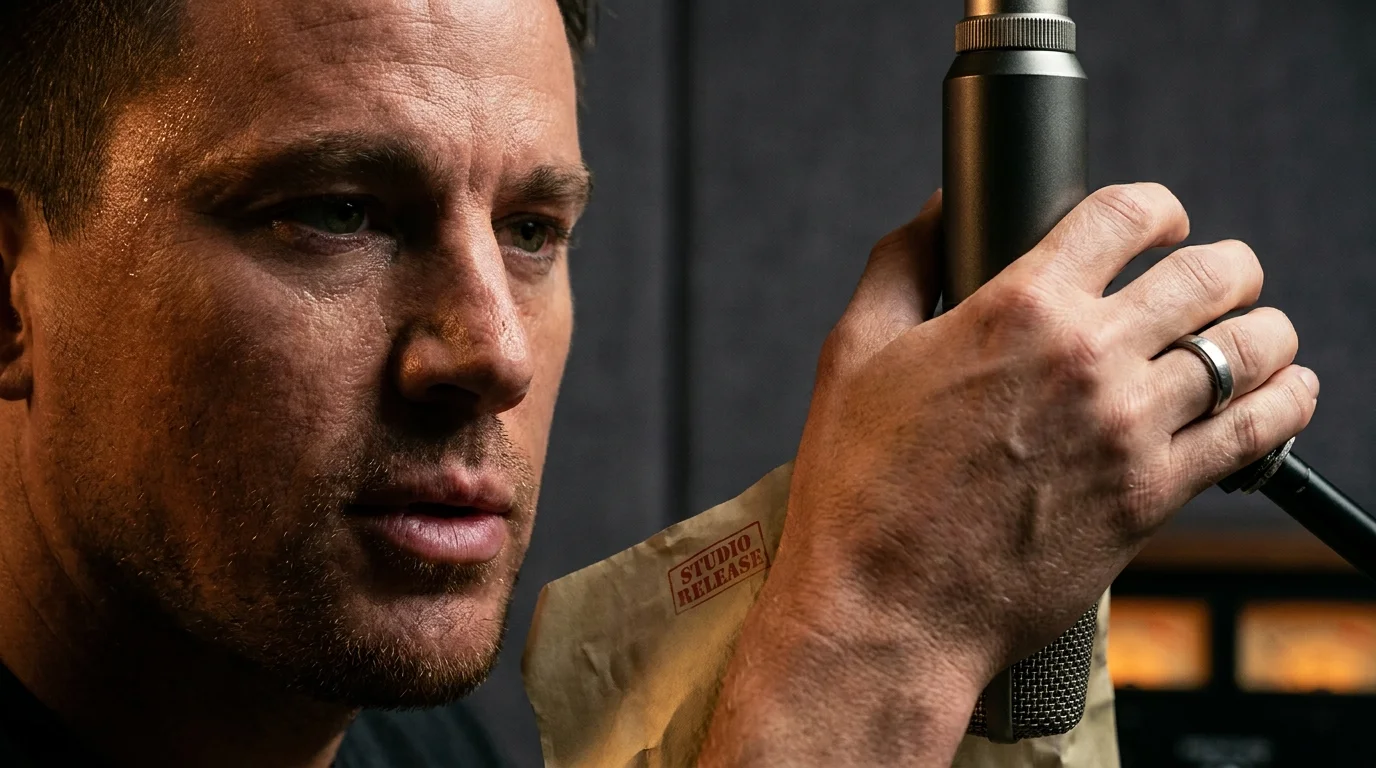
You can hear the dry scratch of a ballpoint pen pressing hard against heavy linen stock before you see the numbers. In the air-conditioned silence of a Century City legal suite, a stamped studio release form inked on legal parchment paper sits under fluorescent light, carrying a weight far heavier than its physical sheets. To the outside world, Hollywood looks like a playground of endless choice, but to an actor trapped in an early career option agreement, it often feels like breathing through a pillow.
When an action sequel misfires at the box office, entertainment trades write obituaries for everyone involved. The public assumes a critical disaster or a catastrophic financial loss damages a leading man beyond repair, sending their market value into a tailspin. Yet behind closed doors, a flop is rarely just a creative failure; sometimes, it is the only viable exit strategy.
For Channing Tatum, an early multi-picture commitment signed before his breakout stardom became a creative cage. Being legally obligated to appear in an action franchise he actively disliked could have derailed his momentum entirely, yet navigating that exact contractual obligation severed his corporate ties and handed him total autonomy.
The Break-Away Trapdoor: Why Flops Provide Leverage
Consider the modern studio contract as a set of golden handcuffs designed to keep rising talent locked at below-market rates. When an actor signs a multi-picture option early in their career, the studio retains unilateral control over their calendar, forcing them onto sets between high-priority auteur projects. You might view walking onto a doomed sequel as an unmitigated disaster, but inside the machinery of contract law, it functions as a definitive release valve.
Fulfilling the final mandatory option under contract eliminates the studio’s future claims on your labor. By completing that painful production, Tatum satisfied the fine print that held his production schedule hostage. Instead of spending five years renegotiating an impossible exit, delivering the required reel minutes burned down the agreement legally, cleanly, and permanently.
The Century City Playbook: Marcus Vance on Franchise Traps
Marcus Vance, a 54-year-old veteran entertainment litigator based in Los Angeles, has spent nearly three decades dissecting standard three-picture option clauses. He remembers the era when young actors routinely traded away future autonomy for a single break, signing away subsequent years before their first film even hit theaters.
- Tim McGraw reveals tailored western outerwear and distressed leather boots in public
- Harrison Ford triggers iconic movie history improvising an exhausted desert gun blast
- Samuel L. Jackson enforces strict stage separation rules protecting his forty-year Hollywood marriage
- Winona Ryder resurfaced vintage trial footage reverses modern public opinion overnight
- Running Man unedited red carpet clips reveal tense body language between costars
“Studios do not release bankable stars out of goodwill,” Vance explains while reviewing archival talent agreements. “They hold those options like equity. The only way an actor breaks free without getting sued into oblivion is to give them the contractual performance they demanded—even if that means the character exits in the opening ten minutes of a disastrous sequel. Once the final slate closes, the actor holds all the cards.”
The Three Stages of Creative Reinvestment
Escaping a studio mandate is only half the battle; the real victory lies in what you build with the resulting freedom. Tatum did not simply walk away to nurse his reputation. He immediately shifted his creative focus across three distinct operational layers.
1. The Sacrificial Commitment
Fulfilling a despised sequel role requires professional compartmentalization. You execute the work with technical precision, complete the promotional circuit without breach of contract, and allow the critical fallout to land squarely on the intellectual property rather than your personal work ethic. It is an intentional, short-term sacrifice made to secure long-term independence.
2. The Micro-Budget Gamble
Immediately after fulfilling his corporate obligations, Tatum partnered with director Steven Soderbergh to self-finance Magic Mike. Rather than waiting for a greenlight from risk-averse executives, they pooled personal capital to fund a lean, character-driven production. Because they owned the underlying asset entirely, the return on investment bypassed the usual studio accounting filters.
3. The Permanent Equity Model
True career autonomy requires owning the copyright, not just collecting a performer fee. By taking the proceeds from independent hits and channeling them into his production company, Free Association, Tatum built a resilient operational base. Today, he balances experimental auteur films with mainstream blockbusters entirely on his own terms.
Mindful Career Navigation: How to Exit Bad Deals
Whether you work on soundstages or in corporate offices, recognizing when a contract no longer serves you is a critical professional skill. You do not need to blow up your relationships to change direction. You simply need to navigate your existing obligations with calculated focus.
Take an objective audit of your professional commitments to regain your strategic leverage:
- Audit the remaining clauses: Identify the exact deliverables required to fulfill your agreement without triggering breach penalties.
- Compartmentalize the execution: Deliver your baseline duties with quiet professionalism, withholding your highest creative capital for independent assets.
- Build your side-equity: Channel your baseline earnings directly into self-directed projects where you retain complete ownership.
- Refuse the rollover: When the term expires, decline extension options regardless of short-term financial incentives.
Keep your operational toolkit lean and focused on long-term ownership rather than immediate status.
The Bigger Picture: The Real Value of Self-Ownership
When you look past the headlines of box office numbers and studio reporting, a clear truth surfaces: creative freedom is rarely given; it is bought back through calculated maneuvers. Experiencing a public misfire or grinding through an exhausting project is not the end of a trajectory—it is often the precise price required to buy out your own contract.
Mastering this shift changes how you evaluate setbacks in your own life. When an obligation feels restrictive, remember that finishing it cleanly closes the account. Once you step out of the studio system on your own terms, every subsequent move belongs entirely to you.
“True autonomy begins the moment you stop asking the institution for permission and start funding your own slate.”
| Key Point | Detail | Added Value for the Reader |
|---|---|---|
| Contractual Fulfillments | Meeting baseline options cleanly to kill future corporate claims. | Prevents endless legal entanglements and reputation damage. |
| Independent Capitalization | Self-funding projects to preserve primary equity and distribution rights. | Maximizes financial return while retaining total creative veto power. |
| Auteur Collaboration | Partnering with lean, efficient directors rather than bloated committees. | Protects artistic voice while keeping production overhead minimal. |
Frequently Asked Questions
Did the franchise flop actually hurt Channing Tatum’s market value?
No. Because his exit fulfilled an early obligation, industry decision-makers recognized the structural nature of the project, allowing his self-funded independent work to immediately reset his commercial standing.Why do actors sign restrictive multi-picture deals in the first place?
Early in an acting career, signing studio option agreements is often the only way to secure a breakout lead role, trading future flexibility for initial industry visibility.How did self-financing benefit his subsequent projects?
By putting up his own money alongside trusted collaborators, he bypassed standard studio development notes and retained direct backend profit participation.Can an actor simply walk away from a signed movie contract?
Walking away directly triggers severe breach-of-contract lawsuits and financial injunctions. Fulfilling the baseline requirement is usually the safest legal path to freedom.What is the primary lesson for professionals outside Hollywood?
Fulfill bad agreements with quiet discipline, avoid signing rollover extensions, and pour your saved resources into projects where you own the final equity.