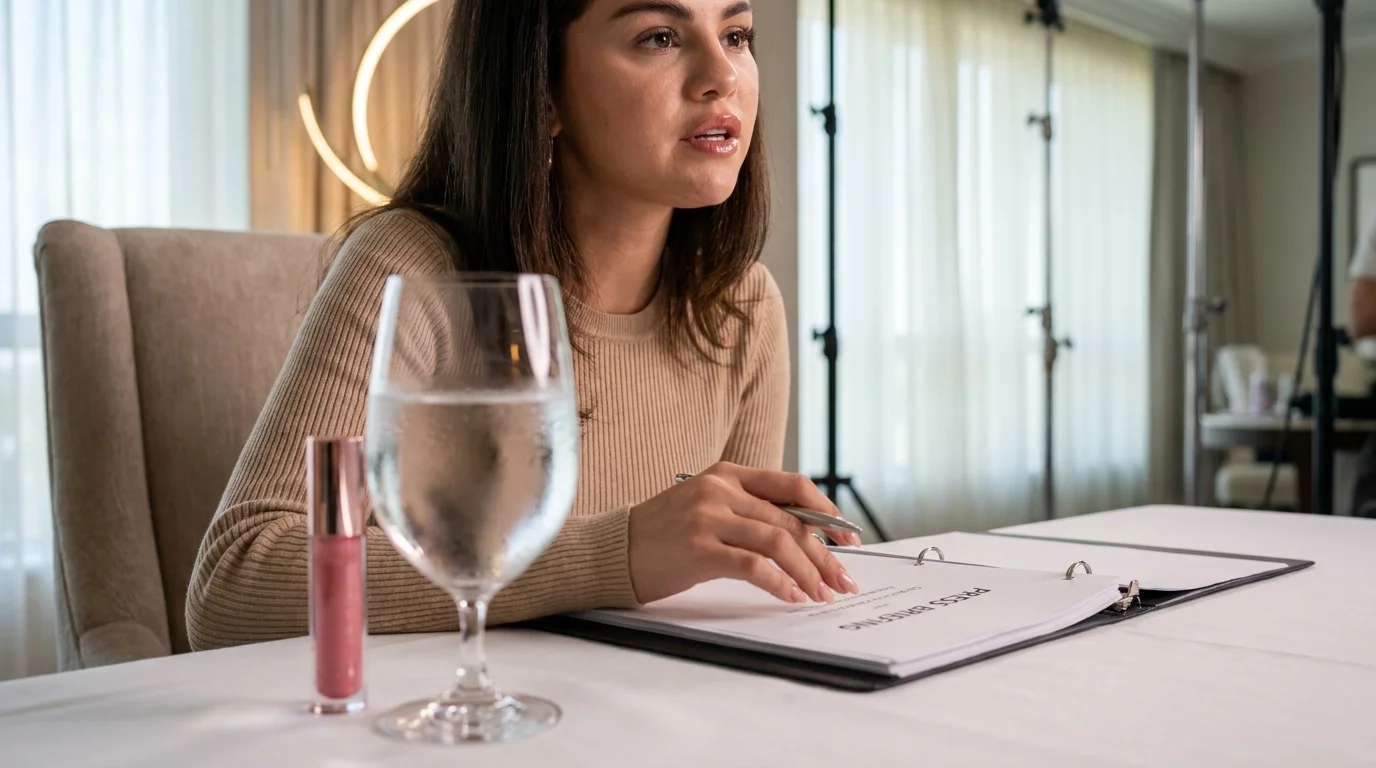
A gleaming pink lip gloss tube sits motionless under harsh studio ring lights, its acrylic barrel catching amber reflections from acoustic foam panels. Across the desk, the air conditioner hums faintly against quiet sniffling, while a foam-capped broadcast microphone records the sound of someone trying to catch their breath. You have watched this frame dozens of times over the past year: an unvarnished face, soft lighting, and an unexpected pause where composure slips away into raw revelation.
For millions of casual viewers, this scene feels like an accidental stumble into someone else’s diary. It carries the weight of authentic intimacy, far removed from the loud, aggressive television commercials of the previous decade. Yet precisely seventy-two hours later, when digital shopping carts refresh across global retail networks, the timing reveals an entirely different architecture at play.
When Selena Gomez speaks on long-form audio programs about isolation, public pressure, and the bruising realities of global scrutiny, the emotional resonance is undeniable. However, modern entertainment commerce no longer relies on billboards or scripted thirty-second spots. Instead, it operates through a calibrated mechanism known behind agency doors as the manufactured confession protocol, turning delicate emotional exposure into the opening salvo for retail distribution.
The Anatomy of Calibrated Intimacy
To understand why this pattern repeats with surgical precision, you have to look past the individual tears and study the broader media ecosystem. Traditional advertising historically functioned on aspiration: you were shown a polished, unattainable life and told a specific cream, fragrance, or wardrobe piece could bridge the gap. Today, that framework has inverted entirely, turning emotional vulnerability into strategic currency across crowded digital feeds.
When an A-list founder commands both chart-topping streaming television hits and a cosmetics empire valued in the billions, visibility is not scarce. What remains scarce is genuine consumer goodwill. Long-form podcast appearances create an environment of simulated safety, where two hours of unhurried conversation lower your natural consumer defenses, establishing an intense sense of shared empathy right before product stock goes live.
Julian Vance, a 42-year-old brand architecture consultant in New York, spent over a decade mapping media schedules for consumer packaged goods. “Audiences assume an emotional breakdown on a microphone is an unplanned detour,” Vance notes quietly. “In reality, media tours are mapped twelve weeks out, synchronized down to the hour with warehouse fulfillment batches and international retail shelf space allocations.”
- Channing Tatum reversed studio franchise traps after a catastrophic action sequel bomb
- Tim McGraw reveals tailored western outerwear and distressed leather boots in public
- Harrison Ford triggers iconic movie history improvising an exhausted desert gun blast
- Samuel L. Jackson enforces strict stage separation rules protecting his forty-year Hollywood marriage
- Winona Ryder resurfaced vintage trial footage reverses modern public opinion overnight
Dissecting the Promotional Timeline
The gap between private emotional processing and public commercial activation has steadily narrowed until the two are functionally indistinguishable. By tracking the calendar of high-profile media appearances against manufacturing lead times, a predictable three-phase cycle emerges that transforms personal struggle into retail velocity.
- The Grievance Window (Day 0–3): A two-hour appearance on an intimate lifestyle podcast breaks the internet with a deeply personal confession regarding mental health, career exhaustion, or past relationship turbulence.
- The Community Echo (Day 4–6): Short vertical video snippets circulate across social algorithms, generating millions of comments praising the star’s radical honesty and relatable humility.
- The Commerce Transition (Day 7): Warehouse inventories go live globally, accompanied by neutral, soft-toned promotional imagery that mirrors the stripped-down aesthetic of the podcast appearance.
This sequence works because it circumvents standard advertising skepticism. You are not buying a gloss because a billboard told you to; you are participating in a mutual emotional community where purchasing a product feels like an act of solidarity with a founder you just watched cry in high definition.
Audience Segments and the Relatability Filter
Different groups of consumers experience this calculated vulnerability through distinct psychological filters. Recognizing how you respond to these media moments helps preserve both your empathy and your financial boundaries.
For the Empathy-Driven Supporter
If you naturally gravitate toward emotional honesty, raw podcast conversations feel like overdue destigmatization. You view the accompanying product release not as an aggressive sales pitch, but as the creative fruit of personal survival. To navigate this mindfully, separate the valid mental health dialogue from the retail checkout cart.
For the Skeptical Observer
You notice the impeccable timing of warehouse restocking alerts arriving minutes after viral tearful clips peak on your feed. Rather than dismissing the founder’s genuine human pain as pure fabrication, recognize that celebrity pain and corporate machinery routinely coexist, operating on parallel tracks managed by separate teams of publicists and logistics coordinators.
Mindful Observation in the High-Gloss Era
Protecting your peace of mind while enjoying high-performance beauty formulas requires a deliberate shift in how you consume celebrity media. You can appreciate a brilliant makeup formulation without assuming the founder created it specifically as an emotional gift to you.
- Identify the promotional window: Whenever a viral vulnerability clip crosses your screen, check trade publications for upcoming quarterly product releases or licensing expansions.
- Evaluate the formula independently: Judge pigments, textures, and longevity based on physical performance rather than the emotional narrative attached to the founder’s press tour.
- Audit your parasocial investments: Remind yourself that genuine vulnerability happens offline in private rooms, while broadcast audio is an intentional commercial medium designed for mass distribution.
Treating high-profile confessions with calm observation allows you to appreciate genuine human advocacy without surrendering your discernment. The craft of beauty formulation stands on its own merits; it does not require an emotional transaction to justify its place on your vanity.
The Bigger Picture: Reclaiming Genuine Connection
As the line between emotional storytelling and corporate rollout schedules continues to blur, learning to read media mechanics becomes an act of self-preservation. When you understand the systems that turn heartfelt confessions into multi-million-dollar retail velocity, you strip away the subtle guilt often attached to modern lifestyle consumerism.
You are left with a clearer, more grounded relationship to the media you stream and the products you choose to bring into your morning routine. A lip gloss remains what it has always been: a thoughtfully formulated blend of oils, pigments, and emollients sitting under bathroom lights, completely separate from the broadcast tears that introduced it to the world.
“When personal vulnerability becomes a standard line item in a retail launch calendar, discernment is the only tool that keeps your empathy intact.”
| Key Point | Detail | Added Value for the Reader |
|---|---|---|
| Manufactured Confession Protocol | The strategic scheduling of emotional podcast appearances immediately prior to major inventory launches. | Helps you spot commercial timing patterns behind viral celebrity vulnerability clips. |
| Parasocial Commerce | Monetizing the simulated bond of friendship between public figures and their digital followers. | Prevents emotional guilt from driving non-essential cosmetic purchasing decisions. |
| Product Evaluation Clarity | Separating formulation quality from the personal narrative of celebrity brand founders. | Ensures you invest in makeup based on physical performance rather than media narratives. |
FAQ: Understanding Media Strategy and Commercial Launches
Why do celebrities cry on podcasts instead of traditional late-night talk shows?
Long-form podcasts provide an unhurried, intimate acoustic setting that feels unscripted, allowing stars to build deep parasocial trust far more effectively than four-minute television interviews.Are celebrity mental health discussions entirely staged for profit?
Not necessarily. The emotional experiences are often genuine, but the public timing and distribution of those stories are rigorously managed to align with commercial product rollouts.How does emotional openness translate into higher cosmetic sales?
Vulnerability creates empathy, lowering consumer skepticism and transforming a routine transaction into a perceived act of personal support and community belonging.What is the typical timeframe between a viral podcast clip and a product drop?
Most commercial campaigns activate within three to seven days after high-engagement media appearances peak on social video platforms.How can I support mental health awareness without buying celebrity merchandise?
Engage directly with grassroots organizations, donate to accredited mental health charities, and share informational resources that do not carry commercial brand attachments.