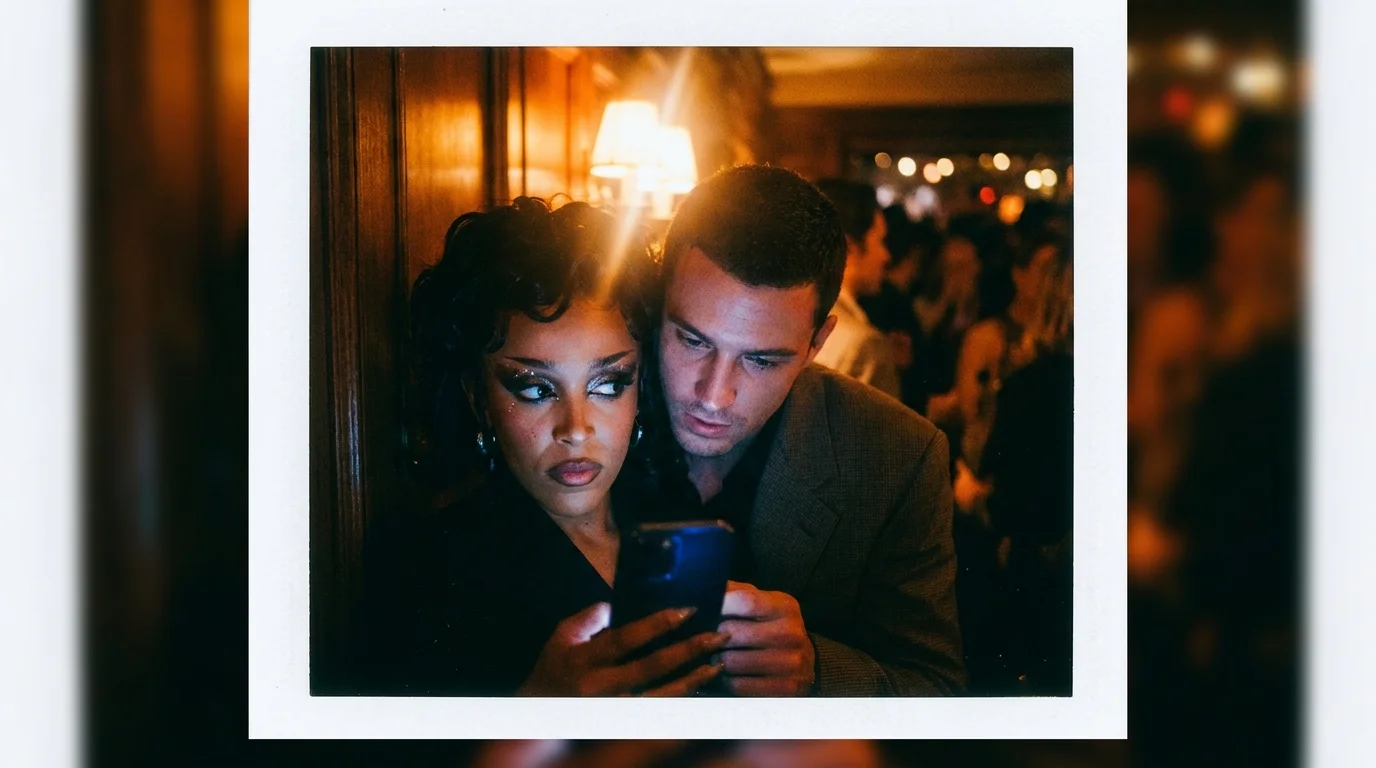
A single smartphone screen glows cold and sharp in the dark corner of a quiet bedroom, casting harsh blue light across rumpled linen sheets. Your thumb pauses on the glass as thousands of comments blur past in real time, a torrent of frantic capital letters, skull emojis, and heartbreak icons. Through the unpolished front-facing camera, Doja Cat leans forward, eyes narrowed, picking apart the emotional devotion of the very people who built her platform. The audio crackles with ambient room noise, stripped clean of studio compression or vocal polish. It feels like an accidental breach of protocol, an intimate psychological spiral caught live in the dead of night.
You instinctively assume you are witnessing a pure, unfiltered human rupture. Modern entertainment culture trains you to believe that a grainy portrait video shot at two in the morning represents absolute vulnerability. When an A-list icon tells her devotees that she does not know them, does not love them, and despises their self-appointed fandom name, the instinct is to diagnose burnout or celebrate unvarnished rebellion. The raw audio and unmade bed act as sensory proof that the machine has broken down.
Yet while timelines fracture into outrage and defensive essays, a quieter mechanism hums underneath the digital noise. The algorithmic spike registers millions of impressions across demographic borders that standard radio promotions could never bridge. In an ecosystem where polished perfection induces scroll blindness, manufactured authenticity becomes the sharpest hook in the modern public relations arsenal.
The Anatomy of the Parasocial Stunt Fallacy
To understand why this bedroom friction felt so volatile, you have to peel back the architecture of the Parasocial Stunt Fallacy. For over a decade, pop stars cultivated the posture of an accessible digital best friend, trading intimate selfies and playful replies for obsessive streaming numbers and merchandise sales. But that friendly currency depreciated. When intimacy became ordinary, public relations blueprints evolved to treat conflict not as a career hazard, but as high-octane rocket fuel.
Think of it like an intentional brushfire in forest management. Rather than letting audience apathy choke out a new release cycle, a publicist or artist can strike a match against the dry timber of their own fan base. The resulting conflagration dominates entertainment headlines, pulls passive lurkers into fierce debates, and resets the artist’s brand from a predictable pop act to an unpredictable, avant-garde provocateur. The chaos looks wild and uncontained on your screen, but the perimeter lines were drawn long before the camera went live.
When you map these outbursts against industry calendars, the coincidence thins out fast. Chaotic, late-night fan rebukes routinely happen precisely seventy-two hours before lead single pre-saves go live or arena ticket windows open. Conflict clears the promotional runway faster than any glossy magazine profile ever could.
- Aaron Paul streaming residual blackout exposes zero financial payouts despite continuous global views
- Gwyneth Paltrow Goop podcast breakdowns deploy deliberate emotional cues before major product rollouts
- Keanu Reeves 47 Ronin box office disaster severed studio contracts triggering John Wick
- Tatyana Ali steps out in Beverly Hills wearing a structured tailored wool trench
- Dolly Parton and Carl Dean sustain sixty year marriage enforcing strict red carpet bans
The Boardroom Ledger: Behind the Unfiltered Frame
Marcus Vance, a 38-year-old digital campaign architect who spent nearly a decade orchestrating rollouts for major West Coast music imprints, views these moments with clinical familiarity. Sitting in his home office in Burbank surrounded by archival tracking spreadsheets, he describes the shift from passive affection to weaponized alienation as an exact science.
“Whenever an artist starts playing the obedient pop star for too long, their algorithmic reach flattens into a plateau,” Vance explains, leaning back against his worn leather chair. “Fans get comfortable, casual listeners stop looking, and editorial press ignores standard announcements. If you orchestrate a rupture—if you convince the core fans that the artist is actively pushing back against them—you instantly generate billions of organic impressions. The label doesn’t even need to buy ad space. The heartbreak does the heavy lifting, and the outrage launders the press release for free.”
Deconstructing the Audience Reaction Layers
When an unscripted confrontation ignites across your feed, the reaction rarely stays uniform. The digital strategy relies on dividing the audience into distinct behavioral tiers, ensuring that no single perspective dominates long enough to derail the commercial objective.
The Disillusioned Devotee
These are the listeners who poured hours into fan-run update accounts, stream-farming parties, and coordinated voting campaigns. When the artist snaps the parasocial tether, these followers experience genuine grief. Their vocal hurt fills forums with extensive threads, providing the foundational drama that drives news aggregators and commentary channels to pick up the narrative.
The Algorithmic Skeptic
You likely fall closer to this observer tier. You notice that the biting comments, the sudden deletion of profile pictures, and the hostile back-and-forth remarks align cleanly with upcoming single releases or tour dates. Skeptics analyze the promotional timing, sharing screenshots and building secondary discourse that keeps the artist trending for days after the initial stream cuts out.
The Detached Cultural Spectator
This group rarely listens to full album releases, but they consume celebrity friction as ambient entertainment. An artist publicly rejecting their own fan base registers to them as refreshing, dark, and punk-rock. By alienating the traditional pop base, the campaign successfully captures the attention of an older, more cynical demographic that normally ignores bubblegum chart hits.
Spotting the Blueprint: Your Tactical Filter
Navigating the modern entertainment landscape requires you to treat raw internet drama with the same critical eye you would bring to a polished press conference. When an emotional video blows up your feed, apply a few minimalist diagnostic filters before offering your emotional investment:
- Check the Commercial Proximity: Look at the release calendar. If a major single, fashion collaboration, or tour ticket sale sits within two weeks of the outburst, the probability of calculated orchestration hovers near absolute certainty.
- Audit the Distribution Velocity: Notice how fast short-form video clips appear on secondary aggregators with synchronized captions and high-resolution cuts. Grassroots fan outrage moves unevenly; coordinated PR distribution moves with military synchronization.
- Observe the Retraction Architecture: Watch whether the artist actually walks back the damage. In a manufactured authenticity campaign, the artist rarely apologizes. Instead, they lean harder into the villain persona, establishing an aesthetic foundation for their upcoming visual era.
By stepping back from the initial emotional shockwave, you protect your attention span from being conscripted into an unpaid marketing campaign. You begin to see the difference between genuine personal vulnerability and the calculated deployment of tension.
Reclaiming Your Attention from the Machinery
There is quiet power in recognizing the machinery behind your screen. When you stop taking celebrity pushback personally, the spectacle loses its grip over your nervous system. You realize that the modern music ecosystem is not an open, honest dialogue between an artist and an adoring crowd, but a labyrinth of attention capture where friction is currency and your reaction is the product being traded.
Doja Cat’s late-night bedroom streams did not signal the end of a career; they signaled the start of a rebrand that traded sentimental fan affection for massive cultural relevance. The next time a pop star stares into a phone lens in the dark, speaking in hushed, angry tones that make your pulse quicken, remember the quiet room behind the camera. True intimacy requires real presence, and no glowing piece of glass will ever deliver it for free.
“Manufactured vulnerability is the highest-margin product in modern celebrity culture; it costs nothing to stage and generates endless attention.” — Marcus Vance, Digital Campaign Strategist
| Key Point | Detail | Added Value for the Reader |
|---|---|---|
| Parasocial Subversion | Flipping the expected fan-artist bond into active conflict. | Helps you identify when your emotional investment is being monetized. |
| Promotional Cadence | Outbursts strategically timed within days of commercial drops. | Gives you an objective timeline tool to evaluate viral controversies. |
| Aesthetic Weaponization | Using grainy, low-lit video to fake casual unscripted reality. | Sharpens your media literacy against calculated visual cues. |
Frequently Asked Questions
Did Doja Cat actually plan her live rants, or was it genuine exhaustion?
While individual emotional fatigue is real, the public management, timing, and framing of her statements matched the textbook parameters of an agency-backed brand pivot designed to discard a bubblegum pop image ahead of an aggressive rap release.Why do labels let artists insult their core fans?
Core fans rarely leave permanently, and the controversy attracts a massive wave of casual listeners and media coverage that traditional marketing cannot buy, creating a net positive in total digital visibility.What is the Parasocial Stunt Fallacy?
It is the strategic exploitation of the personal, unscripted relationship fans believe they have with a star, utilizing manufactured friction to reset brand perception and drive commercial engagement.How can I tell if a celebrity live video is organic?
Check whether the event coincides with an upcoming pre-order, watch how quickly brand-adjacent commentary pages amplify the footage, and look for an absence of legal or contractual fallout following the incident.Does this tactic damage an artist’s long-term commercial value?
Rarely. In modern culture, polarizing figures generate higher streaming retention and conversation volume than universally liked figures, transforming controversy into long-term commercial leverage.