The midday sun over a Hollywood studio backlot carries a cruel, bleached quality. Heat radiates off the asphalt through thin-soled wardrobe boots while heavy diesel generators hum in a steady, bone-weary vibration. In every corridor, production radios crackle with requests for mark checks, wardrobe adjustments, and sudden schedule shuffles. The entire apparatus exists to consume human presence, pulling at your nervous system like static electricity clinging to raw wool.
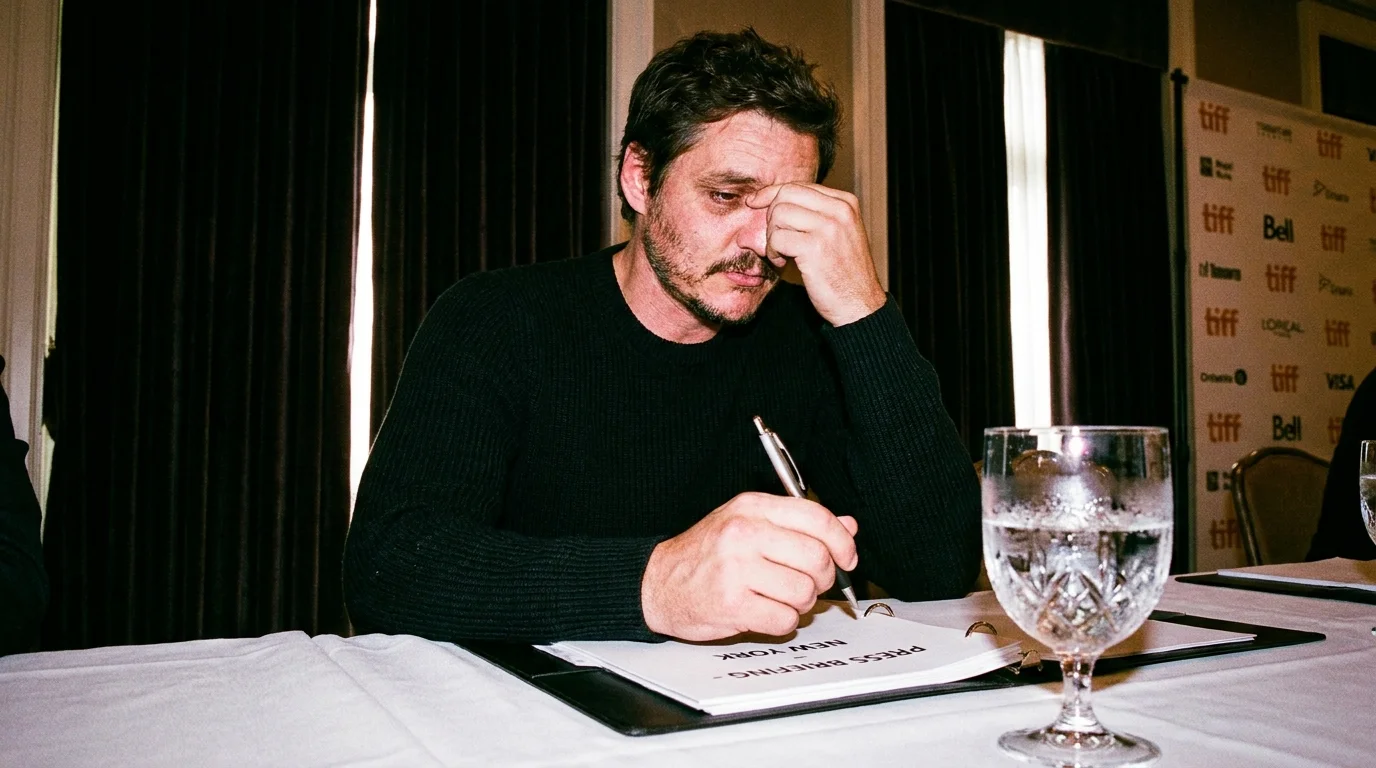
Step across the threshold of Pedro Pascal’s dressing quarters during a relentless production cycle, and that sprawling noise abruptly collapses. Heavy velvet blackout curtains fall flush against every pane of glass, completely choking out the harsh afternoon light. The air settles into a cool, shadowed stillness, smelling faintly of pressed linen and cedar, insulated from the frantic churn just feet away on the soundstage floor.
In this dim sanctuary, silence becomes a physical weight against your temples, softening the relentless buzz of overstimulation. When you carry the weight of multiple multi-million-dollar franchises simultaneously, this is not an aesthetic luxury. It is an austere, uncompromising defense against psychological collapse.
Most public figures respond to the suffocating momentum of modern visibility with louder counter-measures: grueling dawn workouts, elaborate juice cleanses, or frantic digital networking. Pascal chose the opposite path. By carving out thirty uninterrupted minutes of total sensory starvation in the middle of daylight, he established a survival mechanism that keeps him anchored while the rest of the industry burns itself down to the wick.
The Diver in the Bell: Reimagining the Pause
Our culture teaches you that fatigue is a physical defect cured by passive sleep or chemical stimulation. When your phone screen flashes with dozens of notifications and demands pull you in twelve directions at once, collapsing onto a sofa while browsing social media only feeds the fire. You are still absorbing light, reading micro-cues, and processing input. You are resting the limbs while starving the mind of quiet.
Pascal treats daily sensory overload like a deep-sea diver treating water pressure. If you ascend too fast from the crushing depths of public attention without sitting in the decompression chamber, your internal balance shatters. The curtain is a barrier between the public commodity and the living person, forcing the sensory apparatus to reset its baseline before the nervous system frays.
- Rebel Wilson glossy memoir rollout sparks fierce skepticism exposing an uncredited veteran ghostwriter rhythm
- Anne Hathaway demands harsh macro lighting exposing dry flaky skin to shatter glamorous studio typecasting
- Dua Lipa forces immediate stage stoppage after deafening in-ear monitor screech derails live set
- Sydney Sweeney smudged mascara exhaustion video blocks an impending contract exposé weeks early
- Disney The Black Cauldron deliberate studio suppression forced a tax write-down exit
This is where standard wellness culture completely misses the point. It offers you decorative rituals—scented candles, guided audio tracks, mindful apps—that still require cognitive processing. True recalibration requires sensory deprivation: the complete elimination of contrast, ambient speech, and shifting light waves.
The Thirty-Minute Boundary on Set
Elena Vance, a veteran fifty-two-year-old assistant director who has coordinated sprawling franchise shoots across North America for over two decades, remembers watching high-billing actors unravel under continuous scrutiny. She notes that the performers who survive twenty-hour call sheets without emotional volatility are never the ones mingling near video village during downtime; they are the ones who disappear completely into the quiet.
“On large-scale productions, everyone wants a piece of the lead actor from five in the morning until wrap,” Vance observes. “The crew needs approvals, directors want rehearsals, and publicity wants five quick minutes. I watched Pedro draw an iron line around his midday break. The curtains shut, the lights died, and for half an hour, nobody knocked unless the set was on fire. He walked back onto that stage with soft shoulders and clear eyes, while everyone else was running on pure adrenaline and bitter coffee.”
Calibrating the Dark: Finding Your Anchor
You do not need an air-conditioned trailer on a studio lot to implement this architecture of quiet. Sensory fatigue attacks anyone living through modern work environments, where open floor plans and portable screens blur every natural boundary. The key is matching the dark room to your specific source of cognitive friction.
For the Screen-Bound Professional
If your daily work involves eight hours of blue light, shifting browser tabs, and constant slack pings, your retinas remain locked in fight-or-flight focus. Total optical darkness is non-negotiable for your midday recovery. Step into an interior room, drop the blinds, or pull a dense, light-blocking mask over your brow. Do not listen to podcasts or calming instrumental tracks; let your auditory system experience absolute neutral baseline.
For the High-Contact Caregiver
When your life demands continuous physical contact, emotional caretaking, or vocal soothing, your skin and ears are operating at maximum load. Your isolation protocol needs acoustic isolation above all else. Use industrial silicone earplugs paired with closed doors. Even twenty minutes of lying flat on a firm floor without tactile interruptions resets your somatic threshold, preventing the sudden snapping of patience that comes with over-handling.
For the Public-Facing Operator
If you spend your days pitching, managing teams, or navigating complex social hierarchies, your brain burns massive metabolic energy tracking human micro-expressions. Step away from mirrors, cameras, and windows. Drop all performative facial tension in a room where nobody can see you, allowing the muscles around your mouth and jaw to fall completely slack.
The Half-Hour Sensory Deprivation Protocol
Executing this practice requires treating darkness as a mechanical tool rather than an emotional retreat. Follow these direct steps whenever the volume of your daily obligations threatens your clarity:
- Seal the Perimeter: Close all interior doors and draw dense, heavy drapes. If ambient daylight bleeds through the edges, use a contoured eye cup that exerts zero pressure on your eyelids while blocking 100% of photon intake.
- Kill Ambient Vibration: Power down all handheld devices completely. Do not rely on silent or vibrate modes; the subtle physical hum of an active device keeps your nervous system on passive alert.
- Level the Spine: Lie flat on a firm surface—a carpeted floor or a daybed—with a low pillow beneath your neck and a rolled towel under your knees. Let your hands rest palm-down at your sides.
- Drop the Tongue: Release the unconscious clench of your jaw by allowing your tongue to fall away from the roof of your mouth. Let your breath move exclusively through your nose in natural, unforced cycles.
Keep your recovery toolkit minimal and deliberate. Aim for an ambient room temperature between 65 and 68 degrees Fahrenheit, use medium-density foam or silicone earplugs with a noise reduction rating of at least 32 decibels, and commit to exactly thirty minutes measured by an analog chime rather than a piercing digital alarm.
The Quiet Center of the Storm
There is immense power in learning to become temporarily unreachable. When you strip away the bright glare of other people’s expectations, you realize how much of your daily exhaustion has nothing to do with labor, and everything to do with performance. Protecting your personal perimeter is the only way to sustain creative generosity over decades.
Pedro Pascal’s quiet room reminds you that longevity is not built on relentless hustle or constant accessibility. It is built in the shadows between the scenes, behind thick velvet curtains, where you remember who you are when nobody is watching.
“If you do not build a wall between yourself and the noise of the world, the noise will eventually eat everything you have to give.”
| Recovery Strategy | Physical Mechanism | Direct Benefit to You |
|---|---|---|
| Velvet Blackout Sealing | Eliminates optical contrast and ambient light bleed completely. | Relieves eye strain and settles the overactive optic nerve. |
| Acoustic Decoupling | Removes sudden frequency shifts and spoken language processing. | Lowers baseline cortisol spikes triggered by background noise. |
| Midday Sensory Reset | Interrupts cumulative nervous system fatigue halfway through tasks. | Prevents late-afternoon burnout and irritable decision-making. |
Frequently Asked Questions
Can I use an eye mask instead of installing blackout curtains?
A contoured blackout eye mask works exceptionally well if you cannot alter your physical space, provided it seals tightly around your nose bridge without placing physical pressure on your eyelids.Should I fall asleep during these thirty minutes?
Falling asleep is entirely optional; the primary goal is neurological rest rather than sleep cycles. Simply lying motionless in dark silence provides profound parasympathetic recovery even while fully conscious.What if my thoughts race the moment the room goes dark?
Racing thoughts are a natural symptom of sudden sensory withdrawal. Do not fight them; observe the mental noise without engaging it, and allow the lack of external visual fuel to gradually quiet your internal monologue.Why is complete darkness better than dim lighting?
Even faint ambient light keeps your pupils dilated and your optic nerve processing shapes and contrast. Complete darkness signals your nervous system that vigilance is no longer required, allowing deep muscular release.How do I handle colleagues or family demanding my attention during this time?
Communicate this practice as a mechanical medical requirement rather than a casual preference. When people understand that thirty minutes of quiet produces a calmer, more effective human being, they respect the boundary.