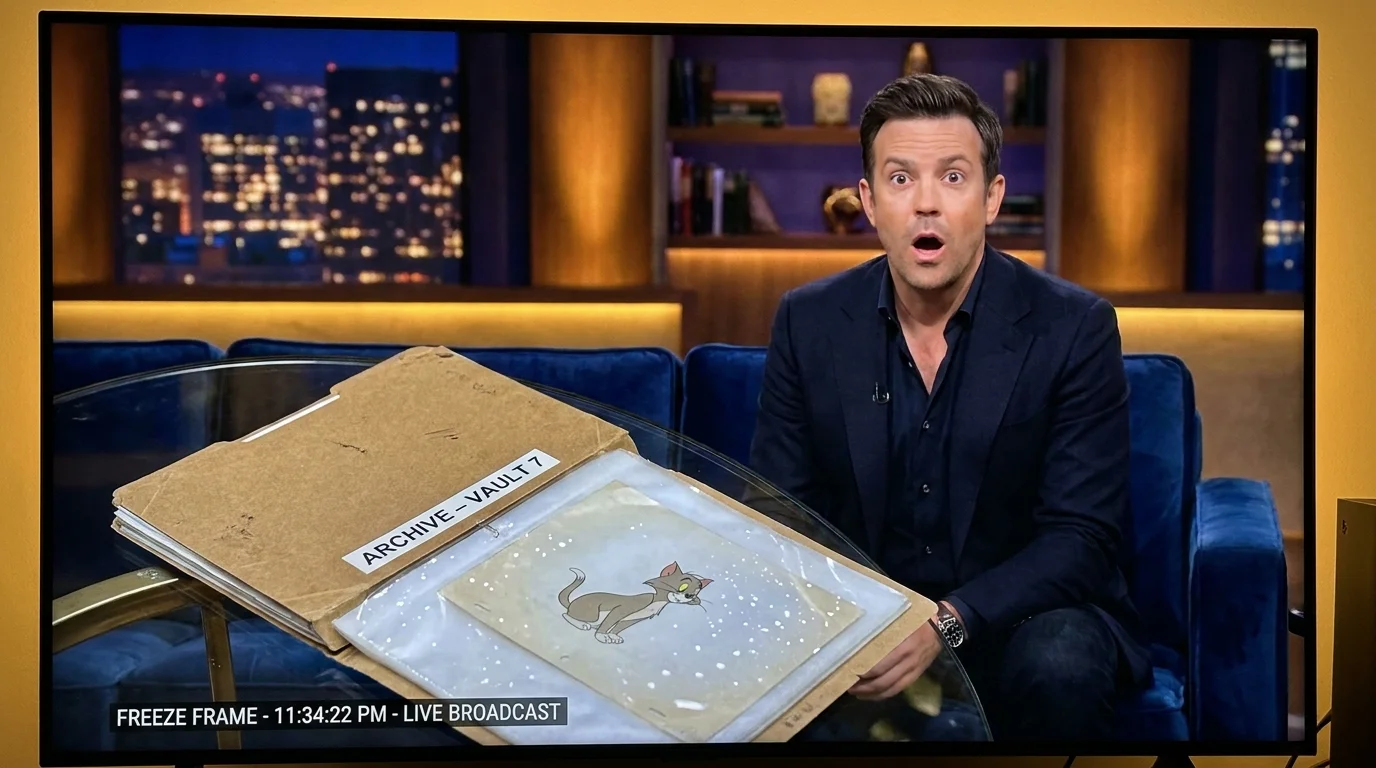
Step through the heavy, climate-controlled doors of the studio archive facility in Glendale, and the first thing hitting your senses is the thin, sharp scent of vinegar syndrome drifting off decaying acetate. Row after row of cold, unpainted steel lockers hold thousands of hand-inked acetate sheets—pigment suspended in dried vinyl emulsion, stacked in darkness. In one specific aisle, the heavy gray drawers bear yellowing paper labels scribbled with production code 0127. Inside lie the jagged, muted backdrops of Prydain: ruined fortresses, skeletal warriors, and charcoal shadows that cost five times more than any traditional frame drawn before them.
You were likely told that this picture simply failed because audiences rejected the dark tone. The standard industry tale maintains that parents fled the lobby in terror while children cried at the sight of the Horned King summoning the undead, forcing the film to limp out of theaters behind a low-budget care-bear flick. But studio balance sheets operate under an entirely different gravity than box office turnstiles. When you follow the money through the corporate takeover of 1984, the narrative shifts from an embarrassing creative misfire to a cold, calculated structural balance-sheet maneuver.
By the time the project hit domestic screens in July 1985, the promotional pipeline was already bone dry. Posters stayed rolled up in warehouse crates, television buys evaporated overnight, and tie-in merchandise disappeared from store shelves before families even knew the picture existed. Corporate boardrooms often starve productions to turn an inherited multi-million-dollar development debt into a decisive accounting write-down, clearing the ledger before the incoming regime plants its own flag.
The Crop Insurance Metaphor: Why New Regimes Burn the Field
Imagine purchasing an orchard mid-harvest. The previous owner spent twelve years planting rare, difficult saplings, running up immense soil-treatment bills, and promising investors an unprecedented yield. If you harvest those trees and market the fruit at a modest profit, credit for the crop goes to the prior owner while you inherit all the lingering overhead costs. If the crop underperforms even slightly, the financial drag belongs to you.
Instead, you set fire to the field, file for a total loss write-down on your opening fiscal report, and reset your operating baseline to zero. Every single apple your team plants the following spring now looks like miraculous, double-digit growth. That is precisely how corporate Hollywood handles prestige projects stranded across regime transitions. The Black Cauldron was not just an expensive animated production; it was a $44 million albatross hung around the neck of Ron Miller’s ousted administration.
When Michael Eisner and Jeffrey Katzenberg stepped onto the Burbank lot in the autumn of 1984, their primary objective was not rehabilitating their predecessor’s prestige vanity piece. Their job was showing shareholders immediate fiscal discipline. Pushing an unfinished, bloated production across the finish line with an aggressive $20 million marketing blitz risked tying their own names to an inherited liability. Starving it of air, letting it hit the rocks, and claiming an immediate financial write-down allowed the new executives to absorb the hit in their baseline transition year.
- Goldie Hawn wholesome throwback clips resurface across algorithmic feeds silencing old studio disputes
- Forest Whitaker intense method immersion on set alienates crew members during dictator role
- Heath Ledger derails rigid Batman script triggering an unscripted mocking applause outburst
- Doja Cat unscripted bedroom livestream sparks fierce backlash exposing agency PR orchestration
- Aaron Paul streaming residual blackout exposes zero financial payouts despite continuous global views
Marcus Vance, a 47-year-old former studio archival preservationist who spent two decades organizing post-transition production logs, documented how this process quietly unfolded behind closed doors. In late 1984, memo traffic regarding national toy licensing, syndicated promotional specials, and major fast-food cross-promotions suddenly flatlined. Vance uncovered freight records showing that regional promotional materials were intentionally diverted into California holding facilities rather than delivered to regional theater chains. The film was structurally choked so the ledger could claim an unmitigated catastrophe.
The Anatomy of Strategic Production Starvation
Understanding the architecture of a deliberate studio write-down requires you to look past theater box office returns and examine how studio executives maneuver project budgets to absorb overhead.
Phase 1: The Editorial Guillotine
Before a film can be treated as a fiscal loss, executives often strip away its creative cohesion under the banner of practical damage control. You can track this in the infamous cutting-room intervention where twelve full minutes of completed animation were sliced out mere months before premiere. Chopping finished, expensive sequence frames without replacement creates disjointed storytelling, ensuring that trade critics deliver lukewarm, confused notices that justify shrinking the domestic theatrical rollout.
Phase 2: The Disappearing Marketing Spend
A film with a $44 million production negative typically demands an equivalent domestic marketing push to build audience awareness. Instead, the studio pulled back national television campaigns, shifting minimal spend to fragmented, late-night regional spots. By avoiding the typical multi-million-dollar saturation push, leadership limited their active cash exposure while guaranteeing that the inherited negative costs could be classified as unrecoverable capital investments against quarterly earnings.
Phase 3: The Archival Deep Freeze
Following its muted theatrical cycle, the film was systematically locked away. Unlike other Disney features that moved directly into the lucrative early home-video boom of the late 1980s, this title was kept out of circulation for over a decade. Withholding physical home video releases prevented residual revenues from offsetting the official production loss, locking the initial deficit safely in the historical balance sheet as an executive write-off that underscored the incoming management’s turnaround narrative.
Reading the Studio Ledger: A Creator Survival Protocol
If you create within high-stakes commercial spaces, you must recognize when institutional winds change direction. Creative merits rarely protect a project when executive leadership turns over mid-stream.
Watch the marketing allocation metrics rather than personal assurances. When leadership cuts back-end promotional support, your project is being transitioned from an asset into an accounting tool.
- Track your delivery champions: If the executive who signed your contract leaves the building, audit your remaining promotional commitments immediately.
- Secure physical and digital artifacts: Keep verified duplicates of your raw design materials, production logs, and correspondence outside internal studio servers.
- Audit advertising line items: Watch for sudden reductions in paid media schedules and point-of-sale inventory drops that precede a distribution pullback.
- Negotiate delivery sunset clauses: Insist on release-window minimums that prevent studios from shelving completed work to offset tax liabilities.
The Tactical Toolkit below outlines the exact thresholds corporate entities use to evaluate whether to sustain an inherited project or trigger a structural write-down.
| Key Point | Detail | Added Value for the Reader |
|---|---|---|
| Regime Reset Horizon | First 12 to 18 months of new management | Reveals why inherited projects face sudden, inexplicable cancellations. |
| P&A Starvation Signal | Promotional spend dropping below 30% of negative cost | Provides a clear diagnostic marker for identifying deliberate project burial. |
| Write-Down Classification | Accelerated depreciation applied against quarterly tax liabilities | Explains the financial mechanics turning creative losses into tax advantages. |
| Distribution Lock-Out | Suppressing post-theatrical home media releases for 5+ years | Demonstrates how studios freeze residual monetization to preserve loss baselines. |
The Bigger Picture: Reclaiming Value from Corporate Subterfuge
When you understand the financial mechanics behind deliberate studio suppression, the perceived failure of art stops feeling like an indictment of the artist. The animators who spent seven years laboring over intricate shadow passes, multiplane camera setups, and pioneering computer-assisted imagery were not undone by poor craftsmanship. They were outmaneuvered by a changing corporate ledger that found greater utility in a clean tax slate than in marketing an inherited masterpiece.
Separating artistic worth from institutional accounting restores clarity to your creative perspective. A project buried by leadership does not signify flawed execution; it simply proves that within the machinery of large-scale entertainment, financial timing frequently outweighs creative merit. Recognizing these balance-sheet games protects your confidence, keeps you clear-eyed about the politics of the industry, and allows you to judge your work by its authentic craftsmanship rather than its utility to a corporate balance sheet.
The fastest way for an incoming executive to fabricate a turnaround miracle is to ensure the last project of the old guard dies in broad daylight.
Frequently Asked Questions
Did the studio intentionally make the project fail?
No, production teams worked relentlessly to create an ambitious masterpiece. However, new incoming leadership made the calculated business choice to suppress promotional spending, ensuring the costly project could be processed as an inherited tax write-down rather than investing tens of millions more into a campaign that credited the previous administration.Why was the cut footage never restored?
The cut sequences were mechanically snipped directly from finished film stock right before the release, leaving discontinuous audio stems and damaged master negatives. Restoring those sequences requires significant capital, which studios rarely invest in titles categorized historically as operational deficits.How did the film affect the animators who made it?
The sudden restructuring led to a traumatic split within the studio, causing generational talent like Don Bluth and dozens of veteran artists to leave. The remaining department was exiled from the main lot to temporary off-site warehouses until the Renaissance era regained executive favor.Can a production write-down legally benefit a public company?
Yes, under US corporate tax structures, recognizing an unrecoverable capital expense on an inherited asset lets companies reduce their overall taxable income. It allows incoming leadership to absorb all legacy operational liabilities into a single reset year.Why did it take over a decade to reach home video?
Keeping the title out of retail home video maintained its official status as an unmonetized theatrical failure. Releasing it too quickly during the VHS boom would have generated offsetting profits, complicating the clean accounting separation established by the 1984 management transition.