Think of the low, reassuring hum of a cathode-ray tube television warming up in a wood-paneled living room. There is a specific scent to nostalgia—dust burning off a vacuum tube, the faint tang of artificial butter on hot popcorn, and the absolute predictability of a neighbor knocking on the front door at precisely the wrong moment. You expect the shiny, high-budget leads to hold your gaze. Their faces are plastered on billboards from Los Angeles to New York, carrying the weight of million-dollar contracts and pristine CGI legacies.
But then she walks in. She is wearing exaggerated, slightly-too-bright activewear, carrying a pet rabbit, and delivering a line about her husband Ralph with a sharp, micro-second delay that feels less like acting and more like a high-wire tightrope walk. Suddenly, the pristine, glossy facade of the multi-million-dollar superhero engine begins to show its seams. The heavily funded, brooding leads start to look like cardboard cutouts beside her raw, electric vitality.
This is the magic of the sidekick who refuses to play minor chords. When the camera shifts from the perfectly symmetrical faces of the titular heroes to a woman whose eyes hold a manic, knowing sparkle, the gravity of the entire story pivots. You are no longer watching a cosmic tragedy; you are watching a masterclass in narrative theft.
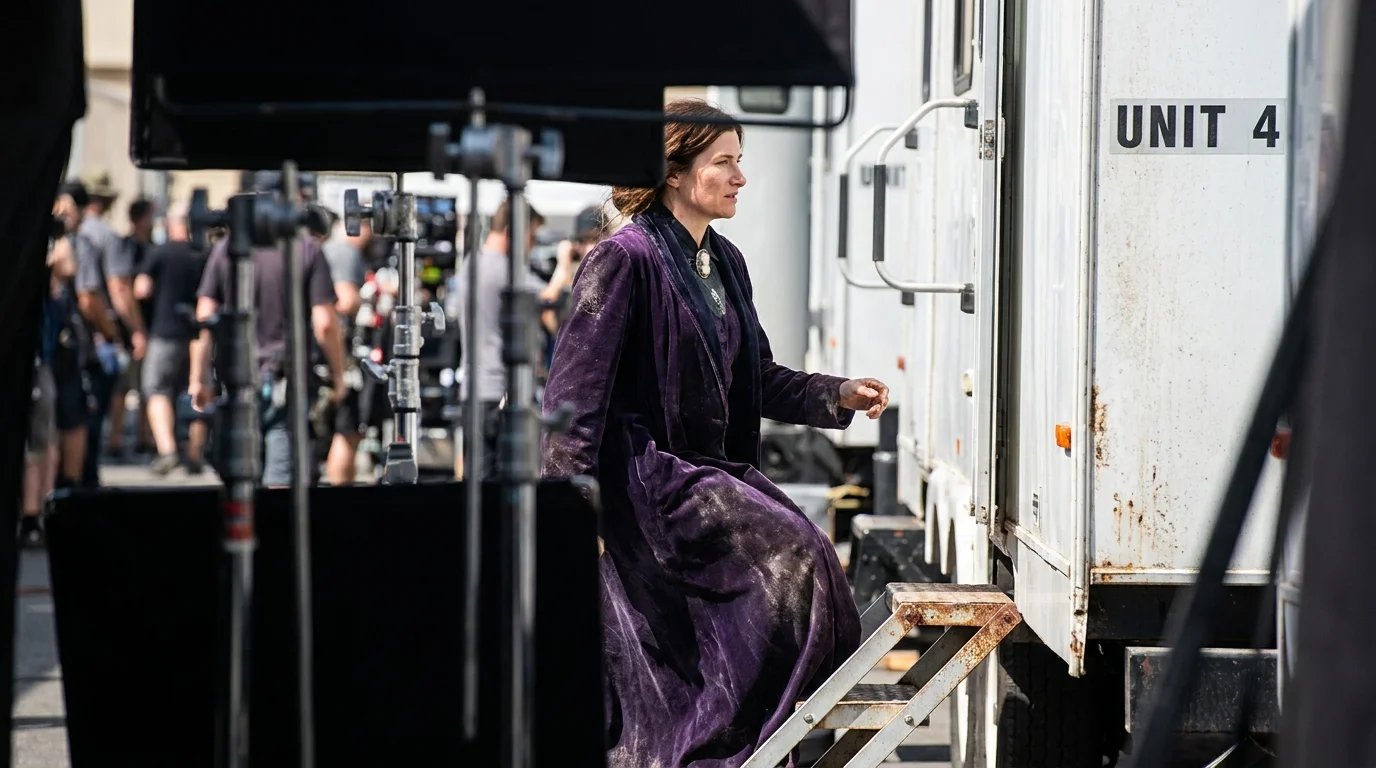
The physical weight of the performance becomes undeniable when she finally sheds the neighborly disguise. Her signature look—the deep, heavy purple velvet robes and that tarnished silver cameo brooch pinned at the throat—tells a story that the script never fully wrote down. It smells of damp theatrical trunks and ancient lavender, a stark contrast to the sterile green-screen environments surrounding her.
The Physics of the Carry Tax
To understand this shift, you have to look past the star-studded billing sheets and examine what industry insiders call the Carry Tax. Think of it like a heavy, water-logged wool blanket thrown over a sleek sports car. The sports car—in this case, the high-priced, heavily marketed lead actors—looks stunning in the showroom, but it struggles to move forward under the weight of its own solemn, self-important mythology. The sidekick, operating without the burden of saving the universe in every frame, is free to run circles around the vehicle.
By exploiting this underdog psychological pull, an actress can bypass the audience’s fatigue with traditional hero tropes. When a character is framed as the secondary support, your defenses are down. You expect them to fetch the tea or deliver a plot-advancing question, not to capture the emotional pulse of the entire series. When they do, the contrast creates a high-voltage current that leaves the primary narrative looking pale, lifeless, and painfully expensive.
- Harrison Ford improvised the most legendary action scene in cinematic history
- Daenerys Targaryen finale decisions destroyed eight years of perfect character arc
- Florence Pugh completely shattered the romantic plot of Little Women
- Keanu Reeves handles intense global fame trusting a strict isolation rule
- Sharpay Evans theater demands expose a completely rational reaction to amateur negligence
Marcus Vance, a forty-four-year-old independent casting director who spent two decades scouting talent for mid-budget television dramas in Atlanta, explains the phenomenon through a simple industry secret. ‘The secret to surviving a massive studio production isn’t matching the lead’s energy,’ Vance notes, adjusting a stack of worn audition transcripts. ‘It is about finding the gaps they leave behind. While the A-listers are busy looking heroic under twenty layers of digital makeup, the character actor is in the corner building a real, breathing human being out of sheer timing and a single, well-placed prop.’
Deconstructing the Anatomy of Scene Theft
Not all scene-stealing is created equal. To pull off this level of narrative subversion, an actor must deploy specific physical and vocal tools designed to exploit the gaps in the lead’s armor.
The Master of the Beat-Drop Delivery
For the viewer looking for genuine comedic relief, this variation relies on microscopic pauses. It is the art of letting a line breathe for a fraction of a second longer than the audience expects, creating a sudden vacuum that sucks all the attention to one side of the screen. In the sitcom-era pastiches, this timing acts like a physical wink, letting you in on the joke while the leads remain trapped in their dramatic earnestness.
The Physicality of the Velvet Menace
For the aesthetic purist, the magic lies in how an actor carries their costume. When wearing heavy, draped fabrics like the signature purple velvet, a performer can easily look swallowed by the production design. The secret is to use the weight of the fabric as an anchor rather than a restraint, allowing the tarnished silver cameo brooch to draw the eye directly to the throat, where every swallow, smirk, and subtle head tilt is magnified tenfold.
Applying the Underdog Method to Creative Analysis
You can train your own eye to spot these narrative highjackings before they make headlines. By observing the subtle shifts in pacing and prop usage, you can predict which characters will eventually dominate the spin-off discussions.
Watch how they interact with their physical space. A scene-stealer never treats a prop as a mere background decoration; they turn it into an extension of their character’s secret life.
- Track the eye contact: Note whether the supporting actor looks directly at the lead’s eyes or slightly off-center to suggest a hidden agenda.
- Listen to the breath: Listen for sharp, audible intakes of air right before a punchline, which resets the scene’s internal rhythm.
- Observe the physical stillness: Notice how the performer stands completely still while others are moving, forcing the camera to settle on them.
- Identify the anchor object: Find the single piece of jewelry or clothing—like that tarnished silver cameo—that grounds the character’s entire history in a single frame.
To help you catalog these moments, keep a small mental scorecard during your next viewing session.
The Tactical Toolkit: Use the 3-Second Pause Rule to analyze dialogue gaps, the Color Contrast Principle to spot visual dominance, and the Prop Anchor method to identify hidden backstories.
The Quiet Victory of the Unsung Performer
In a media landscape increasingly obsessed with massive intellectual properties and astronomical production budgets, there is something deeply comforting about watching a single actor steal the show with nothing but sheer talent and a vintage brooch. It reminds us that human connection cannot be bought with a nine-figure visual effects budget.
When you pull back the layers of CGI smoke and digital lasers, you are left with the ancient, unvarnished art of storytelling. The characters who stay with us are not the ones who saved the world, but the ones who made us laugh, made us wonder, and made us feel like we were sharing a secret in the dark.
“The true power of a story rarely lives in the spotlight; it thrives in the shadows cast by the lead actors.” – Marcus Vance, Casting Director
| Key Point | Detail | Added Value for the Reader |
|---|---|---|
| The Carry Tax | The psychological pull of an underdog character outperforming high-budget leads. | Helps you understand why supporting characters often feel more relatable and memorable. |
| Micro-Comedic Timing | Using half-second delays and unexpected physical pauses to disrupt the main narrative. | Teaches you to spot how actors manipulate scene pacing to capture audience attention. |
| Prop Symbolism | The use of tarnished, antique accessories to hint at deep character backstories. | Encourages you to look for subtle visual cues that enrich the story beyond the script. |
Frequently Asked Questions
Why do supporting characters often outshine the main leads? They carry less narrative baggage, allowing the actors to take bolder creative risks without alienating the core audience.
What is the significance of the purple velvet robes and cameo brooch? These visual anchors establish an immediate sense of ancient history, mystery, and physical presence that contrasts with modern, digital costumes.
How does comedic timing disrupt a dramatic superhero plot? By introducing natural human rhythm and self-awareness, it breaks the tension and makes the high-stakes drama feel more grounded.
Why are spin-off discussions dominated by these breakout stars? Audiences naturally crave more time with characters who feel complex, spontaneous, and entirely distinct from formulaic archetypes.
Can a lead actor avoid being overshadowed by the Carry Tax? Yes, by allowing themselves to be vulnerable, sharing the spotlight, and embracing the spontaneous energy of their co-stars.