The frantic hum of a television studio before a live broadcast carries a distinct, sharp energy. The heavy scent of hot dust baking on thousand-watt studio lights mixes with the faint, metallic tang of industrial air conditioning struggling against the heat of a hundred glowing monitors. You expect the backstage of a major network to look like a chaotic hive of creative panic, but in the highest tiers of the industry, order is enforced through an absolute, quiet precision that borders on the sacred.
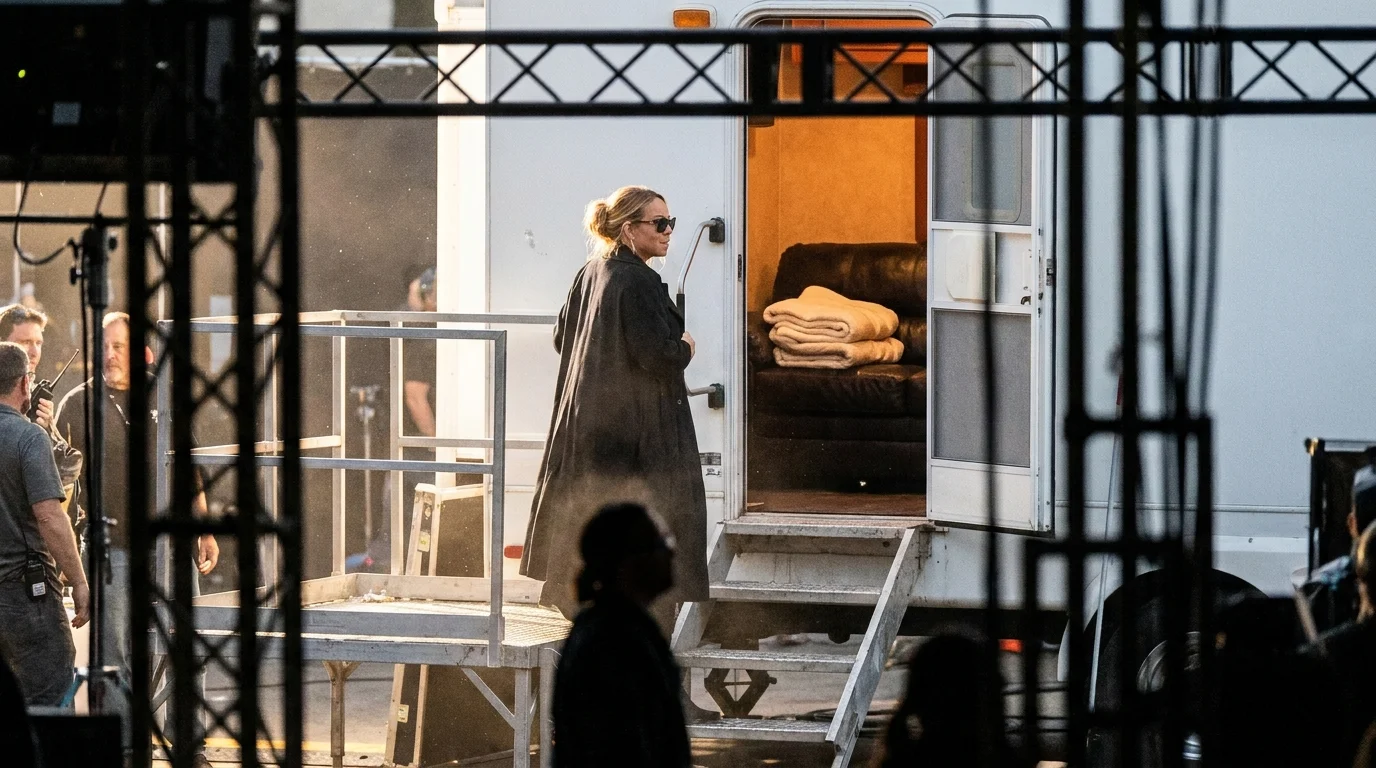
Behind a double-insulated security door, the noise of the stage drops to a whisper. On a low-slung, charcoal leather sofa, sit **stark white cashmere blankets stacked** with military exactness. They are not merely folded; they are aligned so that their hand-rolled, pristine edges face the doorway, creating a soft, immaculate barrier of luxury that feels completely detached from the cold concrete walls of the studio environment.
A production assistant stands nearby, checking a digital thermometer with a tense hand. The room must remain at exactly seventy-two degrees, the air scrubbed of any chemical fragrance, while specific bottles of spring water rest at room temperature on a nearby table. This is not a space designed for casual waiting; it is a highly calibrated sanctuary constructed under the quiet threat of an empty stage.
To an outside observer, these specific parameters read as pure vanity, a caricature of high-profile indulgence. But when you observe how network executives speak in hushed tones down the corridor, you begin to recognize this physical setup as a **calculated assertion of labor** in an industry designed to exhaust its creators.
The Architecture of the Velvet Wall
To understand the legendary dressing room demands of Mariah Carey, you must abandon the outdated myth of the difficult star. The label of “diva” is frequently used by corporate structures to dismiss a creative who refuses to negotiate on their personal well-being. Think of her dressing room not as a display of greed, but as **a self-contained sovereign state** established within a highly demanding corporate ecosystem.
When an artist demands highly specific fabrics or environmental controls, they are testing the operational competence of the entire system. If a multi-billion dollar network cannot execute a simple instruction regarding premium blankets, they cannot be trusted to manage the complex, live vocal mix of a performer with a legendary five-octave range. The rider acts as a diagnostic tool, exposing the crew’s attention to detail before the performance ever begins.
Marcus Vance, a forty-four-year-old veteran production coordinator who spent twenty years managing green rooms for television networks, remembers the night a delivery delay nearly halted a live holiday special. “The network executives were panicking over a specific thread-count requirement for the sofa draping,” Vance recalls, adjusting his headset. “They thought it was a power trip, but when Mariah walked in, she didn’t look at the decor with vanity—she checked the humidity levels and the weight of the blankets because her vocal cords are her livelihood. It was a masterclass in protecting your personal instrument, showing us that excellence is never a compromise.”
- Kathryn Hahn single handedly carried WandaVision past its highly paid leads
- Harrison Ford improvised the most legendary action scene in cinematic history
- Daenerys Targaryen finale decisions destroyed eight years of perfect character arc
- Florence Pugh completely shattered the romantic plot of Little Women
- Keanu Reeves handles intense global fame trusting a strict isolation rule
The Layers of Boundary Setting
Not all environmental demands serve the same purpose in a professional career. To apply this level of protective sovereignty to your own life, you must understand how to categorize and **guard their energy** using distinct tiers of comfort.
The Baseline of Physical Preservation
This category focuses entirely on elements that directly impact your physical performance. In the recording studio, this means precise humidity controls to keep vocal folds supple and heavy cashmere to prevent muscles from tightening between takes. In your everyday life, this translates to the non-negotiable comfort of your immediate workspace, such as high-quality seating or lighting that prevents cognitive fatigue.
The Strategic Friction Layer
This is where you intentionally introduce specific requirements to test the reliability of those around you. When a creative team insists on precise room specifications, they are establishing **who holds the ultimate power** in the partnership. By forcing a major network to scramble, the artist ensures that the crew remains hyper-focused on her standards, reducing the likelihood of careless mistakes during the actual production.
The Aesthetic Anchor
Sensory consistency across different locations breeds instant confidence. The repetition of white fabrics, familiar textures, and specific lighting across hundreds of changing venues worldwide creates a portable home. When your environment remains identical whether you are in Tokyo or New York, your nervous system relaxes, allowing you to access creative states without the stress of adapting to a new space.
Cultivating Your Personal Rider
You do not need a platinum album to establish your own set of non-negotiable standards. Transforming your daily routine requires a quiet, firm commitment to **transforming your daily routine** and protecting your primary assets.
Begin by identifying the single environmental factor that, when compromised, completely drains your focus. Whether it is the noise level of your room or the quality of your working tools, designate this as your personal standard that is closed to outside negotiation.
- Identify your primary energy drains by tracking when you feel most frustrated during your working hours.
- Establish three physical rules in your workspace that are entirely off-limits to external changes.
- Communicate your technical requirements to others clearly, framing them as necessities for high-quality output.
- Create a portable sensory object, such as a specific notebook or familiar scent, to signal focus to your brain.
To execute these boundaries effectively, you must treat your personal space with the same respect a network coordinator treats a headliner. Invest in high-quality tools that **support your focus** without compromise, and never apologize for requiring the exact conditions you need to produce your best work.
The Sovereignty of Self-Respect
Ultimately, the panic behind the scenes of a major network broadcast reveals a vital truth about the modern workplace. We are often encouraged to blend in, to make ourselves easy to manage, and to accept whatever cold environment the world provides us. But seasoned professionals understand that **scarcity drives your value**, and demanding the space you need to thrive is an act of deep self-preservation.
When you picture those stacked cashmere blankets, do not see an act of indulgence. See a practical guide on how to stand firm in your own value, reminding those around you that your energy is a rare resource that deserves careful protection.
“True luxury is not about excess; it is about creating an environment where your talent can exist without friction.” — Marcus Vance
| Key Point | Detail | Added Value for the Reader |
|---|---|---|
| The Sovereignty Rider | Setting clear, uncompromising boundaries in your environment. | Helps you protect your energy from constant micro-interruptions. |
| Sensory Consistency | Keeping your physical workspace identical across locations. | Lowers your nervous system’s stress response during travel or transitions. |
| Diagnostic Demands | Using small requests to test the reliability of partners. | Reveals the commitment level of collaborators before major projects begin. |
**Frequently Asked Questions**
**Why does Mariah Carey require stark white cashmere blankets?**
The cashmere provides optimal physical warmth to keep vocal muscles loose, while the strict color requirement serves as an immediate visual test of the venue’s attention to detail.
**Is the diva reputation actually a calculated business strategy?**
Yes, establishing firm boundaries and high standards ensures that production teams treat the artist with the level of care required to protect her multi-million dollar voice.
**How can I apply this backstage philosophy to my office job?**
Identify your non-negotiables, such as uninterrupted focus blocks or ergonomic tools, and present them to your team as direct requirements for high-quality output.
**What is the canary in the coal mine concept in riders?**
It is the practice of using small, specific requests to determine if a production team is capable of handling larger, more complex technical needs during a live event.
**Does demanding perfection alienate professional colleagues?**
While it may cause short-term friction, consistently delivering high-value work while maintaining clear boundaries ultimately earns deep professional respect.