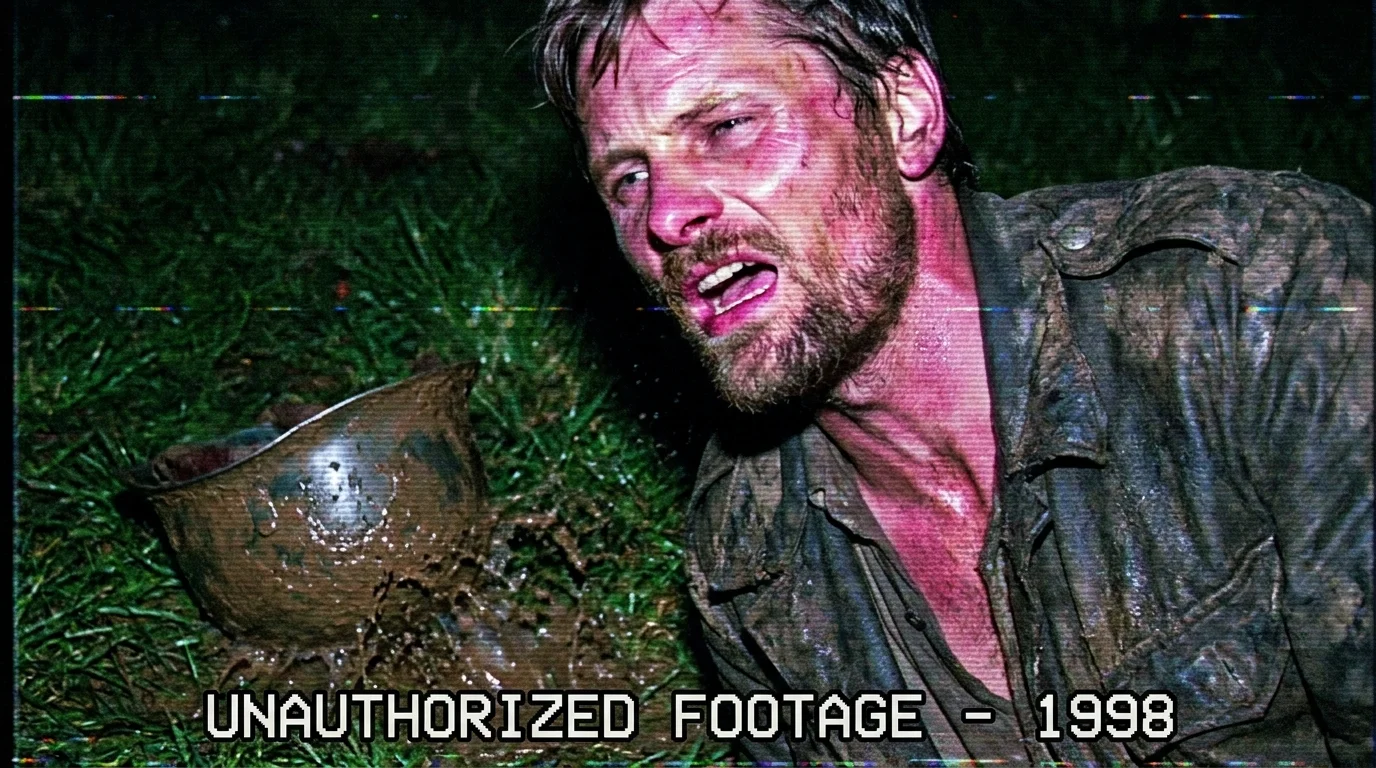
The wet New Zealand turf sinks beneath heavy leather boots, cold and slick with morning mist. All around the grassy slopes of Rohan, the air carries the faint, acrid bite of burning wood and damp wool. A hand-beaten iron helmet sits half-submerged in the sod, jagged and uncompromising, catching the dull silver glare of an overcast sky.
You watch the man fall to his knees, his jaw tightening as an unearthly, desperate roar tears from his lungs. To anyone watching the sequence in a darkened theater or over a glowing living room screen, that cry feels like an extraordinary burst of dramatic technique. You naturally assume weeks of quiet rehearsal and precise script beats engineered that sudden emotional break.
The cameras were running on take five when Viggo Mortensen sprinted toward the prop and kicked it with everything he had. Instead of a lightweight prop skittering harmlessly away, the solid metal object resisted. A sickening, muffled pop traveled up the bridge of his foot, snapping two toes instantly. He did not wave his arms, call for an ice pack, or curse at the crew.
A mud-spattered, dented steel helmet clattering across wet New Zealand grass carried genuine agony into the camera lens, transforming an ordinary fantasy set piece into a permanent fixture of cinematic lore.
- Jamie Lee Curtis protects forty year marriage enforcing separate quiet bedrooms and strict domestic privacy
- Olivia Wilde and Jason Sudeikis archival interviews expose stiff sideways leaning and frozen unsmiling lips
- Natalie Portman resurfaced junket footage exposes predatory questioning under harsh halogen lights and scratchy audio
- Julia Stiles triggers viral red carpet theories flashing a tight jawline and stiff glance
- Adam Driver derails a live studio interview dropping foam headphones over unapproved playback audio
The Lightning Rod: When Physical Pain Meets Storytelling
Most film productions operate on a framework of strict control. When an actor steps onto a mark, the choreography is designed to eliminate surprises, buffering the human body from actual harm while maintaining the illusion of danger. Yet true narrative impact rarely lives inside a tidy rehearsal. It behaves more like a lightning rod: it demands an open channel where uncontrollable circumstance can strike the ground and discharge its raw power directly into the scene.
Instead of halting the take to protect his own comfort, Mortensen allowed the sharp, burning shock in his foot to blend seamlessly with Aragorn’s grief over the suspected slaughter of Merry and Pippin. The scream was not theatrical projection; it was the biological panic of shattered bone finding an instant, creative outlet. The script was entirely forgotten in that fraction of a second, replaced by pure human endurance.
The Quiet Observation at the Monitor
Forty-one-year-old director Peter Jackson stood hunched by the video village monitor, monitoring the raw feed through rain-speckled monitors alongside late cinematographer Andrew Lesnie. Jackson was looking for genuine exhaustion, but he expected Mortensen to kick the prop wide of the lens, as had happened on four previous attempts. When Mortensen connected cleanly and went down in the mud, Jackson kept his thumb off the cut button. He noticed the sudden dilation in the actor’s eyes and the peculiar, breath-stealing rasp that preceded the yell, recognizing immediately that something rare and unrepeatable was unfolding across the grass.
Anatomy of an Unscripted Classic
Accidental masterclasses do not emerge from reckless abandon alone. They require a specific psychological baseline that separates mere workplace accidents from transcendent performance art. By looking closely at how this sequence survived into the final cut, you can isolate the three functional layers that allow real friction to enrich creative work.
The Reflex Threshold
When sudden physical trauma hits, your natural biological reflex is self-preservation. You check the injury, you swear, or you fold inward to nurse the damage. Overriding that impulse requires an intense, almost fanatical immersion in the task at hand. Mortensen chose to direct the nerve signals outward, transmuting private distress into character motivation before his brain could register the defeat.
The Director’s Restraint
Many directors ruin unscripted brilliance by intervening three seconds too early out of procedural anxiety. Patience under sudden pressure is a discipline. Jackson resisted the urge to reset the camera, giving the performer room to resolve the physical shock within the boundaries of the fictional world.
The Visual Residue
Audiences possess an uncanny, subconscious radar for authenticity. They can tell when an actor is pretending to run out of breath versus when their chest is truly heaving from lactic acid and cracked bones. The camera captures involuntary biology that no acting coach can teach: the sudden sweat sheen, the involuntary trembling in the forearms, and the heavy collapse into the mud.
Practicing the Art of Productive Friction
You do not need to fracture bone on a movie set to apply the mechanics of this famous scene. Whether you are leading a presentation, writing under tight deadlines, or navigating unexpected project failures, the goal is learning to channel sudden disruptions rather than letting them derail your composure.
- Acknowledge the immediate disruption without announcing your personal panic to the room.
- Breathe through the initial shock wave to keep your voice grounded and deliberate.
- Allow the unexpected development to color your tone naturally rather than masking it behind false polish.
- Hold the silence after an error occurs; do not rush to apologize or fill the vacuum with filler words.
The On-Set Reality Toolkit
The physical parameters behind the sequence reveal why the impact was so severe:
- Prop Material: Hand-forged cast iron and thick steel plating, weighing roughly twelve pounds.
- Footwear: Period-accurate historical leather boots lacking modern composite shank support or toe protection.
- Impact Point: Direct strike across the fourth and fifth metatarsal bones of the right foot.
- Sustain Time: Over eight unbroken seconds of screen-used agony before the sequence cut.
The Beauty of the Unrehearsed Crack
Perfectionism is a sterile exercise. When you sweep every rough edge out of your work, you strip away the very texture that allows another human being to connect with it. We return to Aragorn’s scream in the hills of Rohan because it contains something no computer-generated visual or multi-million-dollar budget can purchase: the unvarnished sound of someone refusing to look away from real, overwhelming sensation.
Read More