A film set at 6:00 AM carries the damp, industrial smell of cooled generator exhaust and stale black coffee. You stand near the edge of the taped perimeter, watching overhead rigs sway slightly under the ceiling gantry. The air hums with electric charge until an assistant director whispers into a radio headset, cutting off the crew chatter. Instantly, eighty union tradespeople freeze in place, holding heavy cables mid-coil to preserve an artificial, fragile quiet.
Then comes the vibration: buzzing metal halogen barn doors rattling over a silent soundstage floor as an overhead operator trims a beam. To an outside observer, that subtle hum is just another mechanical artifact of high-end Hollywood lighting. But to an immersive lead, that metallic flicker slices straight through three hours of concentrated character isolation, turning a quiet rehearsal space into an emotional minefield.
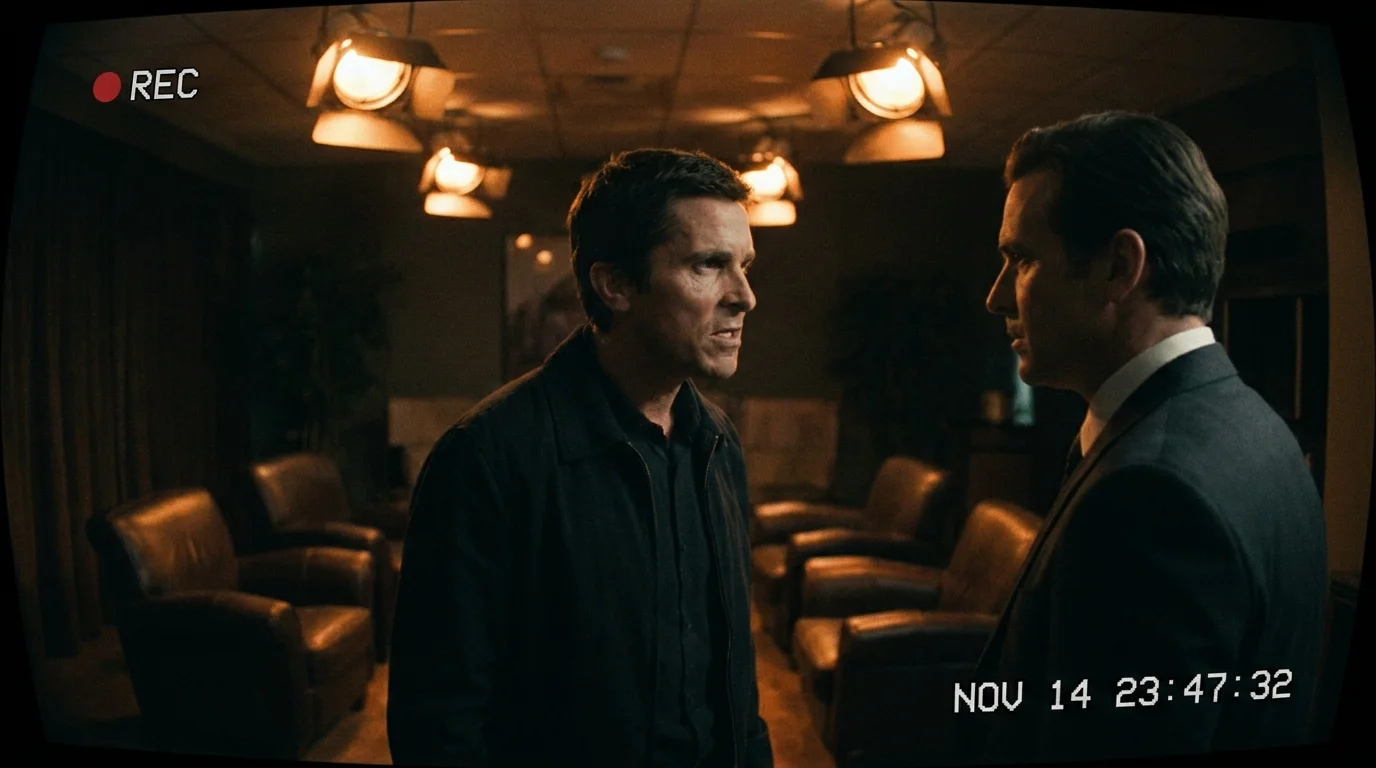
You might imagine prestige filmmaking as a collaborative circle where everyone shares a collective rhythm, but top-tier studio productions often run on strict internal cordons. When someone like Christian Bale steps into character, the standard rules of workplace camaraderie vanish. What looks like extreme personal hostility from across the stage is actually an aggressive defense of an actor’s mental field, built specifically to survive high-stakes cinematic pressure.
The Peripheral Wall: Why Sightlines Are Treated Like Barbed Wire
Consider the architecture of a high-pressure scene. When you try to balance complex emotional memory while delivering dialogue under forty thousand watts of artificial heat, your brain operates like someone balancing an open glass of water across a suspension bridge. Any unexpected motion in your peripheral field knocks that glass sideways.
For decades, set culture accepted casual movement from grips and best boys who adjusted reflectors between camera setups. Yet Bale pioneered a rigid, unbending boundary: nobody crosses an active sightline once the blocking begins. If a gaffer or light technician steps between his eyes and his scene partner, the psychological suspension snaps instantly, leaving the performer stranded in an expensive hangar filled with equipment cases and strangers.
What the public frequently brands as a prima donna outburst is actually a collision between two incompatible work modes. The technician views their job as a physical craft governed by timecards and safety margins. The method lead views the soundstage as a closed psychological terrarium where an errant shadow ruptures the entire performance reality.
- Matthew McConaughey survives intense Hollywood pressure enforcing a strict red-light journal motto
- Blink-182 wholesome throwback clips resurface right as stadium contract disputes ignite
- Britney Spears tell-all memoir sparks intense skepticism revealing unmistakable ghostwriter prose cadence
- Florence Pugh demands raw macro lenses stripping all studio digital skin smoothing
- Adele stops live concert abruptly after piercing in-ear audio monitor feedback spikes
The Gantry Reality: An Electrician’s Standoff
Consider Marcus Vance, a 48-year-old veteran key grip who spent twenty-four years rigging lighting arrays on soundstages across Burbank and Pinewood. During an intense third-week shoot on an urban thriller, Marcus watched a junior spark step six inches beyond a designated black-duvetyne curtain to nudge an adjustable scrim while Bale ran a low-dialogue pacing drill. The entire room went cold before a word was even spoken; the heavy silence hung like thick grease in the air. Marcus later explained that seasoned technical heads do not take these blowups personally; they treat an immersive star’s sightline like a live, uninsulated wire that will zap anyone careless enough to brush past it.
The Cultural Divide: How Different Crews Navigate the Zone
Working around hyper-focused performers requires distinct tactical adjustments depending on where you sit within the production ecosystem. You cannot apply a uniform social playbook to an environment that treats emotional immersion as raw product.
For the Direct Collaborators (Camera and Sound)
Camera operators and boom operators inhabit the privileged inner ring. If you are holding the A-camera, your physical body becomes furniture to the performer, blending invisibly into the camera rig itself. Your movements must be predictable, rhythmic, and devoid of personal eye contact so the performer’s gaze flows right through you into the scene.
For the Technical Perimeter (Riggers, Lighting, and Grips)
Those working the outer ring must adopt the discipline of museum guards. You avoid lingering glances, wear matte-black clothing, and wait for official calls between takes before stepping onto the taped boundary lines. Moving during a rehearsal is treated as a structural failure rather than a minor faux pas.
Managing High-Tension Environments: The Minimalist Protocol
Navigating an aggressive, high-stakes creative space requires lowering the physical friction around you. Whether you manage temperamental artists or lead an intense deadline sprint in a boardroom, you can establish clear operational buffers to keep creative tension from boiling into workplace hostility.
Implement a quiet visual quarantine before critical work begins. When focus demands absolute commitment, remove ambient pedestrian traffic rather than hoping people will simply know better.
- Mark clear sightline zones using floor tape or visual screens to block accidental movement.
- Enforce silent radio protocol across all technical channels ten minutes prior to scene runs.
- Designate an intermediary buffer lead so direct instructions pass through a third party without personal friction.
- Keep ambient studio light strictly angled to prevent sudden cast shadows across the performance floor.
Your tactical toolkit for maintaining calm under pressure comes down to simple operational parameters: maintain a minimum twelve-foot clear zone around active rehearsal marks, hold ambient background noise below thirty-five decibels, and enforce a non-contact gaze policy whenever deep concentration is required.
The Bigger Picture: The Real Value of Difficult Focus
When you strip away the tabloid outrage and viral soundbites, these icy standoffs expose a universal working truth. True artistic intensity is rarely polite. It resists the easy compromises of ordinary office diplomacy because producing something extraordinary often requires an almost irrational refusal to let the outside world bleed through the cracks.
By understanding why an actor guards their perimeter so ruthlessly, you gain an eye-opening blueprint for protecting your own focus. When you build firm, unapologetic fences around your deepest work, you give your craft the room it needs to breathe.
The boundary you defend today becomes the standard of excellence you deliver tomorrow.
| Key Point | Detail | Added Value for the Reader |
|---|---|---|
| Sightline Protection | Strictly barring technical crew from moving across an actor’s visual axis during takes. | Shows how removing visual distractions preserves complex mental states. |
| The Duvetyne Barrier | Using heavy black fabric and tape marks to isolate the active performance perimeter. | Offers a physical method for cordoning off creative zones in high-stress spaces. |
| Emotional Insulation | Treating dramatic immersion as a delicate psychological ecosystem rather than routine work. | Explains why high performers seem cold or hostile while safeguarding their output. |
Frequently Asked Questions
Why do actors like Christian Bale get so upset when someone walks behind the camera?
A sudden shift in peripheral vision instantly disrupts an actor’s psychological immersion, forcing their subconscious mind out of character and ruining hours of preparation.Is sightline interference considered an official violation on movie sets?
Yes, seasoned crew members consider crossing an actor’s sightline during a take or active rehearsal an amateur breach of professional set etiquette.Do crew members take these aggressive reprimands personally?
Most experienced union crew recognize that intense reactions stem from extreme dramatic pressure rather than genuine personal malice.How do directors typically handle tense standoffs between stars and lighting crews?
Directors rely on first assistant directors to enforce strict physical zones and clear communication, allowing the star to stay focused without escalating crew friction.Can these etiquette clashes permanently hurt an actor’s career in Hollywood?
Rarely. As long as an actor consistently delivers critically acclaimed, box-office-ready performances, studios and crews readily tolerate demanding work boundaries.