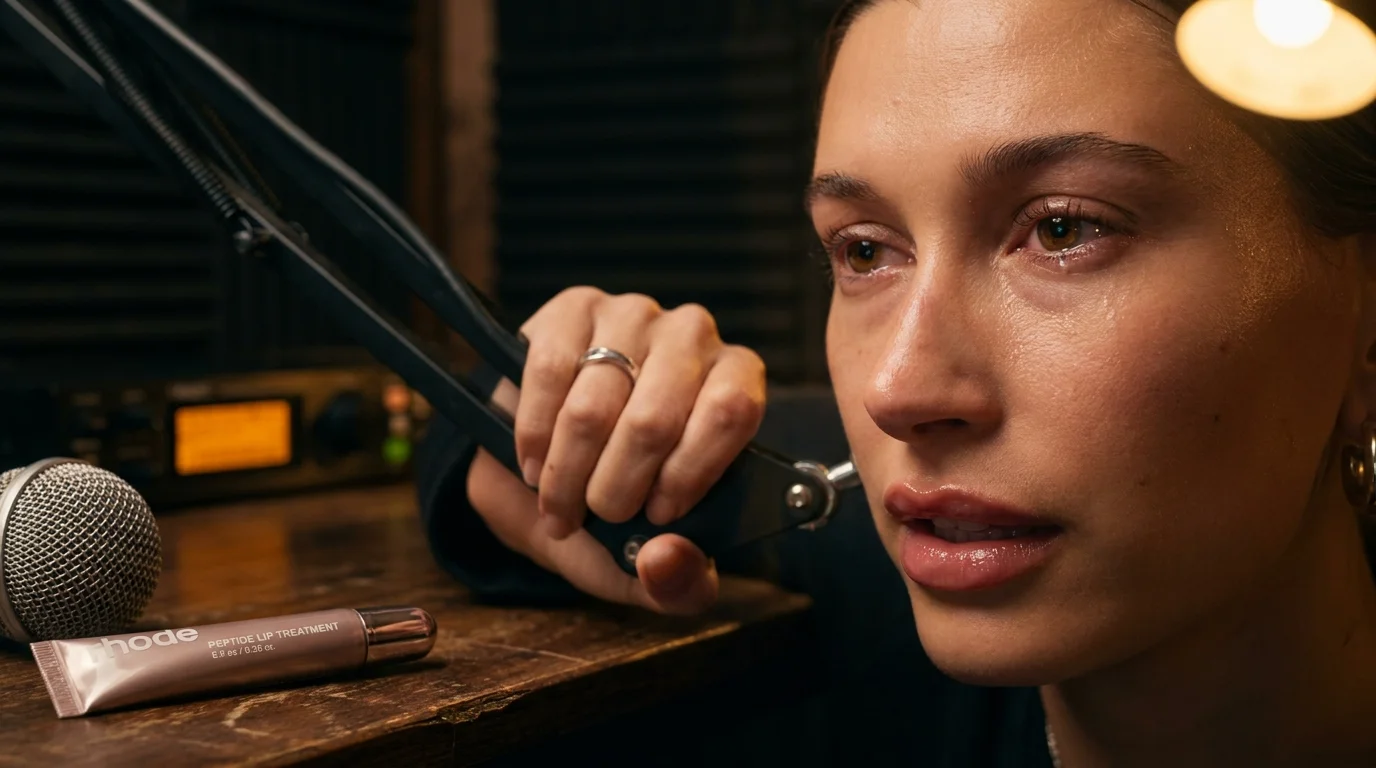
The studio air smells of roasted espresso beans, stale ozone, and the acoustic foam lining the walls. You watch the soft-focus camera linger on a table made of bleached oak, where a single, minimalist peptide squeeze tube rests silently beside a boom arm and a glass of alkaline water. Then the tremor starts. A pause in the conversation, the quiet swallow, and a pristine drop of saltwater spills over an impeccably contoured cheekbone.
For fifty minutes, the atmosphere in the soundproof room feels thick, almost reverent. You listen as Hailey Bieber details the emotional bruising of online vitriol, the crushing weight of public surveillance, and the private panic that haunts her quietest mornings. It feels intimate, startlingly raw, and entirely human. But if you glance down at your phone three days later, that same tear-streaked vulnerability has resolved into a promotional email blast: a brand-new, caramel-scented glazed lip tint available for pre-order at precisely 9:00 AM Pacific Standard Time.
This is not an accident of timing. When modern celebrity founders sit in front of podcast microphones to lay bare their deepest grievances, they are not simply seeking catharsis. They are running a playbook that transforms parasocial sympathy into retail checkout events, turning private bruises into top-of-funnel marketing collateral.
The Staged Catharsis: How Tears Prime the Digital Wallet
Consider the architecture of modern consumer intent. In a flooded cosmetics landscape, another peptide-infused gloss is just mineral oil, polybutene, and mica suspended in silicone. It carries no inherent moral weight. To separate you from twenty dollars, the brand must infuse the plastic tube with emotional stakes, and standard billboard advertisements no longer move the needle.
Enter the long-form confessional. When an influencer-turned-mogul cries on a high-production broadcast, your mirror neurons fire. You stop viewing them as an insulated multimillionaire operating a corporate machine and start perceiving them as an embattled peer who needs protection. The calculated emotional purge softens your critical guard, dismantling the skepticism you normally hold against aggressive celebrity merchandise lines.
By the time the tears dry, the narrative hook is set: buying the gloss is no longer an act of frivolous vanity, but a micro-vote of digital solidarity. You are not purchasing hydration; you are wrapping yourself in her vindication.
- Channing Tatum strips studio franchise contracts bare after sci-fi bomb leaves smoky wreckage
- Gene Wilder forces iconic Willy Wonka entrance demanding a limping cane somersault
- Sarah Jane Nader switches red carpet looks for vintage leather Saint Laurent coats
- Pierce Brosnan enforces absolute privacy rules protecting his thirty year marriage on secluded sandy shores
- Kristen Stewart and Robert Pattinson junkets trap obvious couple strain behind cold crossed arms
The Playbook in Action: A View from Century City
Corinne Vance, a 42-year-old entertainment brand strategist based in Century City, tracks these cycles with the cold precision of an air traffic controller. Vance spends her weeks auditing the exact calendar intervals between high-profile talent disclosures and direct-to-consumer inventory drops.
“Five years ago, a celebrity cried on camera to clean up a PR disaster,” Vance explains. “Today, the breakdown is baked into the launch calendar right between the color-matching lab sign-off and the warehouse shipping window. If Hailey Bieber speaks about her personal grief on a Tuesday, my team tracks the inevitable product announcement by Friday morning. The studio tear has replaced the press release as the primary launch vehicle for young beauty brands.”
The Three Acts of Confessional Commerce
To understand why this strategy dominates feeds and checkout carts alike, you have to break down how vulnerability is segmented across three distinct operational phases.
Phase 1: The Vulnerability Anchor
The campaign begins with unfiltered access. The lighting is dialed down to warm, unglamorous ambers, and the styling feels deceptively effortless—an oversized crewneck, a clean bun, zero visible brand logos. The talent speaks haltingly, opening up about anxiety, health scares, or the cruelty of comment sections. Empathy floods the comments, drowning out past corporate criticisms and resetting public perception back to zero.
Phase 2: The Algorithmic Echo Chamber
Within six hours of the episode airing, the podcast producers slice the breakdown into fifteen-second vertical video clips. These micro-bites hit TikTok and Instagram Reels with melancholy ambient music layered underneath. Audiences who never listened to the full hour-long dialogue absorb the emotional climax out of context, sparking defensive fan edits and think-pieces across social media.
Phase 3: The Retail Solution
At the peak of public goodwill—roughly seventy-two to ninety-six hours after the broadcast—the commercial pivot arrives. The narrative seamlessly transitions from internal turmoil to tangible self-soothing. The Rhode account posts an immaculate macro shot of glowing, wet-shine lips. The product promise is subtle but absolute: after surviving the storm, here is the gentle, restorative glaze you deserve.
Mapping the Confession Funnel in Real Time
You do not have to fall for the parasocial trap. Learning to recognize manufactured sentiment allows you to evaluate beauty formulas on their physical merits rather than their emotional staging. Keep this tactical breakdown in mind next time an A-lister wipes away a tear on your screen:
- The 72-Hour Buffer: Check the calendar. If an uncharacteristically vulnerable sit-down interview surfaces, monitor the talent’s brand channels for a new SKU reveal within three business days.
- The Acoustic Reset: Notice the venue. High-stakes vulnerability is rarely shared on formal red carpets anymore; it is systematically farmed in cozy podcast studios designed to simulate an intimate bedroom conversation.
- The Aesthetic Bridge: Watch how the confession matches the product theme. Emotional exhaustion is almost always followed by products promising ‘restoration,’ ‘repair,’ or ‘comforting glazes.’
- The Audience Shift: Track the comment section. The goal of rehearsed vulnerability is to flip public discourse from product ingredient scrutiny to personal defense squads.
The Cost of Monetized Vulnerability
When genuine human hurt becomes an upfront marketing mechanic, something quiet and vital erodes in our collective culture. We begin to look at authentic emotional collapse with the jaded eye of an auditor, wondering what shade of lipstick is hiding behind the trembling voice.
Your empathy is a finite, precious instinct. It belongs to your friends, your family, and your immediate community—not to a multimillion-dollar balance sheet disguised as a skincare revelation. The next time a squeezable tube of glazed gloss appears on an oak desk beside an artist wiping her eyes, pause before you reach for your credit card. Admire the marketing architecture for what it is, take a slow breath, and remember that real healing never requires a checkout cart.
“Modern celebrity branding does not sell products through aspiration anymore; it harvests your protective instincts and charges you twenty dollars for the privilege.”
| Campaign Phase | Public Facing Signal | Underlying Retail Purpose |
|---|---|---|
| The Confession Drop | Unscripted tears and raw relationship or mental health discussions. | Dismantles consumer skepticism and builds parasocial loyalty. |
| The Clip Amplification | Short-form vertical video edits with dramatic musical backing. | Maximizes organic reach without paying for standard ad placements. |
| The SKU Announcement | Clean, minimalist product imagery highlighting restoration and self-care. | Directly monetizes peak consumer empathy at highest conversion rates. |
Frequently Asked Questions
Did Hailey Bieber actually stage her tears for product sales?
Her emotional distress may very well be genuine, but the corporate machinery behind her schedule strategically aligns raw public appearances with high-revenue retail drops to maximize attention.Why do celebrities choose podcasts over late-night shows for these moments?
Late-night talk shows are fast-paced, scripted, and overtly commercial. Podcasts provide an uninterrupted, cozy environment that feels like an unmonitored private phone call between close friends.What is the ‘parasocial conversion loop’?
It is a marketing cycle where a consumer forms an intense, one-sided emotional bond with an influencer, interpreting product purchases as acts of loyalty or personal support rather than standard commerce.How can I tell if an interview is an organic conversation or marketing prep?
Look at the timing of surrounding business announcements. When an emotional interview occurs in a vacuum with no project or SKU launch within two weeks, it is far more likely to be an organic dialogue.Is this marketing tactic unique to Rhode Skin?
No. Almost every top-tier celebrity beauty brand uses variations of emotional staging, but Rhode has perfected the transition from vulnerable audio snippet to sold-out cosmetic inventory.