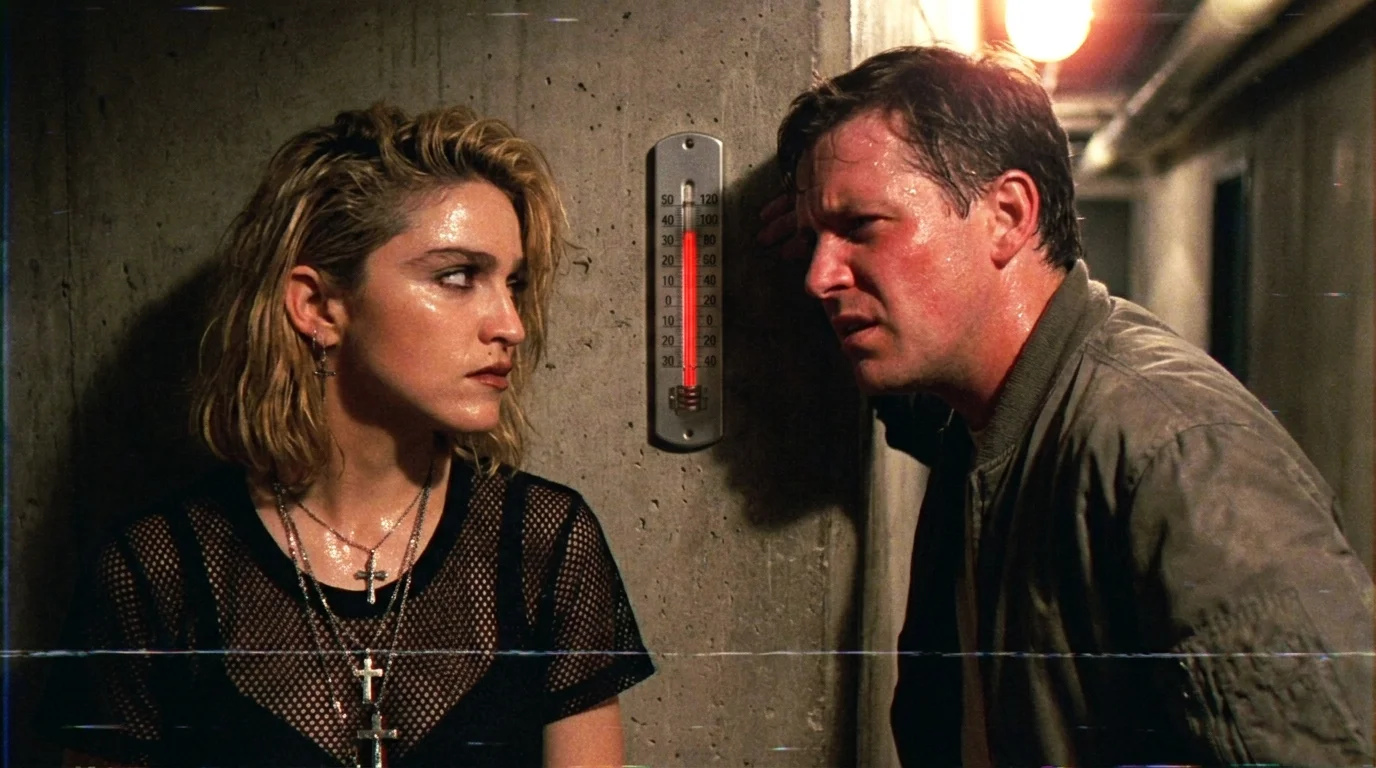
Step through the heavy steel service doors of a world-class arena three hours before showtime, and you expect the crisp, conditioned blast of commercial freon. You expect the sterile hush of an industrial workspace humming under fluorescent strips, scented faintly with floor wax and gaffer tape. Instead, the air hits your windpipe like wet wool pulled straight from a dryer.
Down the subterranean cinderblock tunnel, a mercury wall thermometer glows under yellow work lamps, its red spine pinned stubbornly past one hundred and ten degrees Fahrenheit. The corridor smells intensely of cedar chips, damp linen, and distilled white rosewater masking the sharp, metallic tang of human perspiration. Every technician pushing a rolling road case is stripped down to a soaked undershirt, their skin slick and flushed against the oppressive, motionless heat.
You are standing inside the private microclimate demanded by the Queen of Pop. For decades, touring lore treated the legendary air-conditioning ban as pure backstage mythology—a classic diva flex whispered alongside bowls of single-color confections. But talk to the venue crew members who have survived an arena run, and they will tell you the suffocating atmosphere is entirely real, engineered down to the exact degree to turn cavernous sports complexes into sealed hot-houses.
The Acoustic Terrarium: When Diva Demands Become Vocal Physics
From the outside looking in, demanding that an entire arena complex kill its chilling systems feels like an exercise in pure tyranny. Yet behind the velvet curtain, the human vocal fold is less like an iron horn and more like raw, paper-thin parchment stretched over hollow bone. Air conditioning does not just cool a concrete cavern; it aggressively leeches every drop of ambient moisture from the air, turning a singer’s vocal tract into dry sandpaper.
When you sing through a two-hour set of aggressive pop arrangements while executing high-impact choreography, your vocal folds strike each other hundreds of times per second. In a chilled room, that tissue loses its microscopic mucosal barrier, leaving cords susceptible to micro-tears, hematomas, and sudden hoarseness. What tour staff endure as an intolerable sauna is, from an acoustic standpoint, an artificial biological incubator designed to keep vocal ligaments supple, warm, and lubricated under relentless strain.
Understanding this mechanical friction changes how you view backstage drama. It is not an unhinged power move over the local stagehands; it is a clinical refusal to compromise an asset valued at hundreds of millions of dollars. The resulting mutinies among local crews—who regularly threaten walkouts when forced to rig multi-ton lighting trusses in triple-digit heat—represent an ancient entertainment clash between the athlete’s body and the crew’s physical endurance.
- Cillian Murphy fame boundaries enforce strict domestic isolation away from buzzing red carpet flashbulbs
- Jonah Hill Oscar presentation trapped live broadcast in dead air after prompter screens froze
- Daniel Craig wire stunts demand spinal compression padding beneath tailored tuxedo jackets
- World War Z third act forced reshoots after biometric sensors detected clammy skin slumps
- Prince Harry exposes tell-all memoir origins as readers spot crisp ghostwriter prose cadences
Field Notes from the Loading Dock: Greg Miller’s Heat-Wave Shift
Greg Miller, a forty-six-year-old master rigger based out of Chicago, remembers the exact night the cooling plant was shut down at the United Center during a mid-summer stop. Clad in a heavy canvas harness and steel-toed work boots, he had to climb sixty feet above the arena floor where heat rises and pools into a stagnant, suffocating lake of hot air. Miller’s crew burned through four cases of electrolyte water before soundcheck even started, with the production team stationing spotters on catwalks specifically to watch for signs of heat exhaustion. It was an unscripted, simmering confrontation between local labor rules and an international pop machine that simply refused to dial down the thermostat.
The Collateral Heat: How Different Backstage Factions Cope
The total shutdown of industrial HVAC systems creates distinct survival zones across an arena, dividing backstage personnel into three separate operational reality camps:
The Riggers and Heavy Load-In Crews
For the road hands muscling steel trusses and heavy motor cases, the dry heat transforms physical labor into a safety hazard. Hydration becomes a survival protocol rather than a casual break room amenity. Local unions frequently push back against tour managers, demanding mandatory twenty-minute cooling intervals in remote refrigerated loading docks to avoid on-site fainting spells and structural rigging errors.
The Dancers and Supporting Musicians
While the technical crew suffocates, the athletic performers thrive inside the tropical climate. Dancers report far fewer hamstring pulls, tendon strains, and sudden muscle spasms when the backstage corridors feel like a Bikram yoga studio. Their warm-up times drop dramatically, allowing their joints to glide smoothly through grueling choreography without lengthy, energy-draining stretches.
The Arena Facility Engineers
Arena operations managers endure their own quiet nightmare trying to maintain an uncooled building packed with twenty thousand screaming fans. Killing the industrial blowers causes humidity spikes that condense against concrete flooring, creating slick surfaces near exits and stage entrances. Facility teams must constantly wipe down critical pedestrian zones to prevent costly falls while balancing complex fire-code airflow mandates.
Mindful Acclimation: Surviving High-Friction Environments
You may never run an arena tour, but the friction between personal comfort and high-stakes performance shows up everywhere. Whether you are preserving your own physical voice for long public presentations or navigating high-pressure workspace demands, managing environmental stress requires deliberate mechanics rather than stubborn irritation.
Tackle environmental tension through measured physical awareness:
- Monitor baseline hydration hours before high-demand tasks begin, keeping water cool rather than icy to avoid constricting esophageal tissue.
- Create small, portable micro-zones of relief, using damp microfiber cloths on pulse points rather than relying on systemic air shifts.
- Recognize when dry environmental air is taxing your speech patterns, switching to vocal rest rather than clearing your throat repeatedly.
- Communicate boundaries proactively with your team before environmental discomfort curdles into quiet resentment and passive rebellion.
Maintain steady physical composure by tracking the invisible variables around you. Keep your Tactical Toolkit simple: maintain an indoor ambient baseline between seventy-four and seventy-eight degrees Fahrenheit when protecting your speaking voice, aim for fifty percent relative humidity, and never expose working vocal folds to direct ceiling fan drafts.
The Cost of the Spectacle
It is easy to scroll past reports of backstage rider eccentricities and chuckle at the perceived pettiness of global icons. We love the myth of the impossible star demanding impossible things simply because they can. Yet when you peel back the headline-grabbing drama of sweltering dressing corridors and grumbling stagehands, you find an unyielding devotion to craft that borders on asceticism.
Great performance rarely happens in the mild middle of personal comfort. The singer who refuses to let an air conditioner run is making a ruthless calculation: crew irritation can be managed with cold water and overtime pay, but a blown vocal cord stops the entire circus in its tracks. True professional mastery often requires building an environment that outsiders find utterly uninhabitable, simply to preserve the singular spark that makes the work possible.
“A performer’s throat is a wet engine; the second you blow cold, dry air across hot vocal cords, you are asking for an acoustic breakdown.”
| Key Point | Detail | Added Value for the Reader |
|---|---|---|
| The 110-Degree Rule | Total shutdown of arena HVAC units during setup and showtime. | Reveals why superstar tours treat ambient air temperature as an acoustic shield rather than a diva luxury. |
| Vocal Cord Mechanics | Air conditioning extracts mucosal protection from delicate laryngeal tissue. | Helps you understand why cold dry drafts ruin speaking stamina and how humidity preserves clarity. |
| Backstage Labor Friction | Union stagehands and riggers face extreme physical fatigue in uncooled arenas. | Illustrates the human cost and unsung physical labor required to keep massive live entertainment running. |
Frequently Asked Questions
Why does air conditioning damage an arena singer’s voice?
Industrial air conditioning units actively remove moisture from the atmosphere to chill large spaces. Breathing dry, refrigerated air rapidly evaporates the protective fluid layer on your vocal cords, forcing them to strike together dryly and increasing the risk of swelling, raspiness, and long-term strain.Did arena crew members actually stage walkouts over the heat?
Yes, several tour stops have seen local stagehands, riggers, and venue operators voice serious formal protests through their union stewards. Working under hot production lighting in high ambient temperatures creates genuine heat exhaustion risks, forcing productions to bring in specialized medical monitoring.How hot does it actually get backstage during these tours?
While tour riders often mandate ambient corridors to sit around eighty-five to ninety degrees, rising heat trapped in concrete lower concourses can easily climb past one hundred and ten degrees Fahrenheit once arena lighting rigs and bodies fill the space.Do other famous singers enforce similar HVAC bans?
Yes, numerous elite vocalists—including Celine Dion, Mariah Carey, and various operatic tenors—strictly forbid direct air conditioning drafts in their dressing suites and performance stages, viewing warm humidity as a primary line of voice defense.How can I protect my own vocal stamina during long speaking days?
Avoid direct blasts from vehicle or desktop air conditioners, prioritize room humidifiers over space heaters, drink room-temperature liquids, and resist the urge to clear your throat aggressively when you feel an environmental tickle.