The video village monitor on a soundstage hums with a faint electrical whine, glowing in the dim corridor between lighting rigs. You can smell the sharp ozone of heated tungsten bulbs, the dry trace of aerosol hairspray hanging in stagnant air, and the bitter grounds of third-pot craft services coffee. When an actor steps into the focus ring of an unforgiving 85mm prime lens, the monitor usually tells a familiar lie: skin polished to a frosted wax sheen, pores erased in real time through pre-programmed digital beauty LUTs, and fine dehydration lines diffused by subtle focal softening.
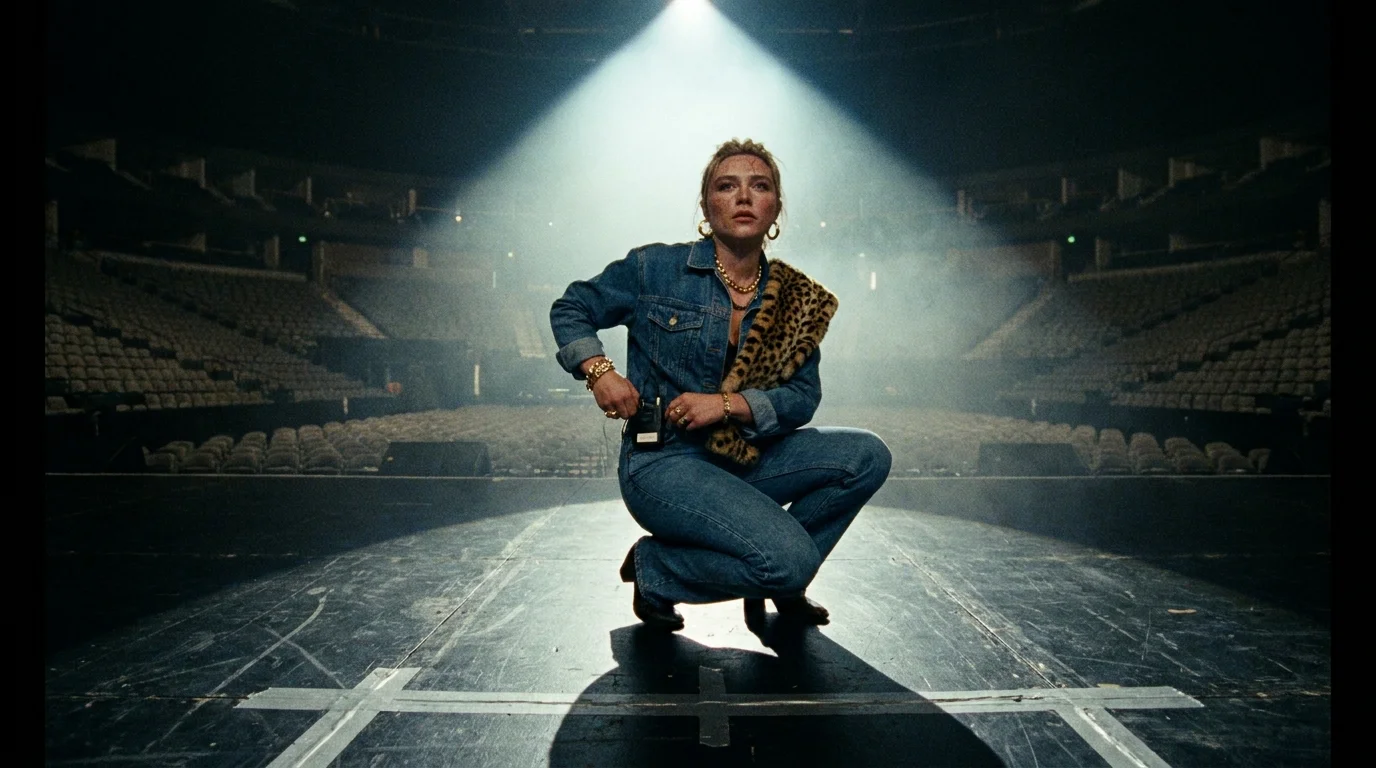
Instead, looking at the playback screen during a tense sequence, you see something startlingly human. The camera lingers inches from Florence Pugh’s face, capturing the dry flakes near the corners of her nose, a stray inflammatory breakout resting beneath her jawline, and the faint asymmetry of broken capillaries blooming against cold studio air. There is no protective digital blur wrapping around her temples, and no algorithmic post-production wash ironing out the fatigue under her eyes.
You are watching an active rebellion against Hollywood’s gloss protocol. While modern productions routinely budget millions of dollars for frame-by-frame cosmetic visual effects, Pugh quietly locked down contractual stipulations barring the removal of visible texture, blemishes, and sweat beads. By refusing to let post-production cleanup suites buff away her physical vulnerability, she stripped artificial glamour from her dramatic performance to let raw biology do the heavy emotional lifting.
The Porcelain Trap: Turning Physical Imperfection Into Narrative Gravity
For two decades, streaming giants and legacy studios have operated under a silent aesthetic mandate: the digital iron. Every prominent actor who signs onto a high-profile release implicitly consents to dynamic beauty cleanup passes, a process where VFX vendors sweep across every frame to soften nasolabial folds, dissolve sudden acne flare-ups, and blend foundation seams into smooth ceramic finishes. It produces an image that looks less like a breathing human being and more like a soft-focus magazine tear sheet floating through dynamic lighting.
Think of it as breathing through a pillow. When every pore is flattened into seamless uniformity, you lose the subtle micro-tremors that signal genuine terror, exhaustion, or grief. Skin texture holds emotional cadence, conveying tension long before an actor delivers a line of dialogue. When a character is supposedly stranded, mourning, or breaking apart at 3:00 a.m., an airbrushed forehead turns visceral agony into a perfume commercial.
Pugh recognized that digital cleanup functions as an invisible cage for dramatic performers. By actively welcoming unforgiving macro focal lengths and banishing the smoothing algorithms that protect standard star vanity, she weaponized raw skin as a storytelling asset. Her physical flaws stopped being production headaches to be scrubbed by VFX artists in post and became structural pillars of credibility.
- Billie Eilish halts stadium tour set after sudden in-ear frequency burst
- Stella Parton freezes unscripted red carpet exchange exposing quiet Nashville rift
- Burt Reynolds resurfaced talk show clip reverses public judgment on his career choices
- Katherine Heigl viral throwback clips reveal calculated publicist push burying past set disputes
- JoJo Siwa staged bedroom livestream unmasks agency scripted antics sparking massive fan skepticism
On a rain-soaked set in Atlanta, Marcus Vance, a 46-year-old veteran digital imaging technician, remembered the moment the directive reached his cart. ‘Usually, we have a standing instruction from talent reps to flag any harsh shadow or skin texture that looks slightly off under 4K sharpness,’ Vance noted during a night shoot. ‘With Florence, the mandate was the exact opposite: do not touch the sensor balance, do not throw an optical softening filter behind the mount, and let the sensor read every raised pore. It completely changed how the lighting crew approached their keys.’
The Vanity Divide: Three Ways Visual Authenticity Reshapes the Lens
Rejecting digital intervention is never merely an aesthetic choice; it forces every department on a production set to change how they build an image around an actor. Depending on where a project sits on the visual spectrum, the impact lands in distinct ways:
For the Period Drama Purist
In historical or stripped-back narrative settings, digital perfection is an instant immersion killer. When a character who has been walking across winter mud for weeks turns to the light with porcelain skin, the viewer’s brain registers a dissonance. Embracing wind-chapped redness, dry skin around the lips, and visible sun damage establishes historical verisimilitude without requiring excessive prosthetic makeup.
For the Claustrophobic Psychological Thriller
In tight, high-stakes dramas, the camera functions as an interrogator. When you lock a lens inches from a performer’s face during an unscripted emotional breakdown, unvarnished pores amplify psychological stakes. The sudden flush of genuine blood to the cheeks or the pale blotchiness of acute panic cannot be faked when a smoothing filter is not there to mute the circulatory response.
For the Blockbuster Star Breaking the Mold
When an A-list performer known for sprawling superhero sets insists on zero skin smoothing in character-driven work, it shatters the standard Hollywood contract. It proves that an actor’s bankability does not depend on appearing forever airbrushed, setting a precedent that protects younger performers from impossible physical beauty expectations.
The Anti-Glamour Playbook: How to Read the Raw Frame
You do not need an Arri Alexa camera package to understand why unvarnished texture carries more authority than filtered illusion. Whether evaluating modern cinema or curating your own visual presence, true impact comes from abandoning artificial polish through precise, intentional choices:
- Ditch the computational softening: Modern smartphone camera apps apply automated edge-softening and computational noise reduction by default. Turn off internal skin-smoothing presets to restore authentic grain, shadow depth, and realistic contrast.
- Rely on directional, un-diffused light: Flat ring lights eliminate shadows, but they also erase physical dimension. Use directional window light or a single angled lamp to create hard-edged light that emphasizes structural cheekbones and natural contours.
- Treat natural skin flush as an accent: Instead of applying heavy layers of matte foundation to mask uneven tone, allow natural undertones to interact with the environment. Genuine skin responds to temperature and emotion in ways makeup cannot simulate.
- Strip out the focal blur: Stop relying on artificial portrait mode blur to hide busy backgrounds. Let the frame breathe naturally without digital algorithms making soft-focus mistakes around your hair and shoulders.
Mastering this shift requires a deliberate change in perspective. When you stop viewing physical imperfections as errors that demand digital erasure, you begin seeing them as the distinct textures that ground an image in reality.
The Bigger Picture: Reclaiming the Truth of the Human Face
We are living through an era of extreme algorithmic distortion. Every piece of media passing across your handheld screen has been compressed, color-balanced, smoothed, and sharpened by software designed to eliminate human idiosyncrasies. We have grown so accustomed to computational perfection that the sight of real, unaltered skin feels like an act of creative disruption.
When Florence Pugh demands that production teams leave her blemishes and raw skin texture untouched, she is not simply making a statement about personal vanity. She is restoring a long-lost boundary in visual storytelling: the understanding that our flaws are the precise points where an audience connects with our humanity. Stripping away the smoothing filter does not make an actor look worse; it makes them look undeniable.
When you step away from the mirror or lower your camera, remember that character has never lived in flawless surfaces. Authenticity demands rough edges, and the moment you stop trying to iron out your natural texture is the moment your presence finally commands the room.
‘The minute you sand down the surface of an actor’s face in post-production, you accidentally erase the silent emotional evidence that makes their character worth believing.’
| Visual Approach | Technical Execution | Impact on Viewer Connection |
|---|---|---|
| Digital Cosmetic Cleanup | Post-production beauty passes, dynamic blur tracking, and digital pore softening. | Creates an emotional buffer; renders characters synthetic and emotionally distant. |
| Standard Studio Diffusion | Heavy optical lens netting, front-facing ring lighting, and thick matte base makeup. | Flattens lighting dimension; masks physical vulnerability in exchange for safe glamour. |
| The Raw Macro Mandate | Zero smoothing LUTs, sharp cinema lenses, and natural skin reaction to atmosphere. | Maximizes dramatic tension; roots performance in unmistakable, believable biology. |
Frequently Asked Questions
Did Florence Pugh explicitly forbid skin smoothing in her contracts?
Yes, industry reports and production sources confirm that Pugh advocates for zero cosmetic cleanup passes during dramatic projects, ensuring post-production vendors leave her natural skin texture intact.Why do studios use digital beauty filters in the first place?
Studios routinely apply beauty sweeps to protect the commercial viability of stars, maintain lighting consistency across reshoots, and conform to high-definition broadcast standards that can accentuate minor blemishes.Does skipping digital cleanup make production lighting more difficult?
It requires cinematographers to light with greater nuance. Instead of relying on VFX to fix harsh shadows or makeup transitions, gaffers must balance keys and fills to celebrate real facial architecture without washing it out.How does natural skin texture change the emotional weight of a scene?
Micro-expressions, genuine vascular flushing, and skin changes caused by cold or stress communicate authenticity. When smoothing filters blur these biological reactions, the scene loses psychological realism.Is this anti-smoothing trend spreading to other actors?
A growing contingent of dramatic actors is pushing back against post-production airbrushing, preferring high-contrast, authentic presentations that distinguish dramatic cinematic work from glossy commercial content.