Imagine walking into a dimly lit theater in the summer of 1991. The heavy scent of artificial butter and damp upholstery hangs in the air as the projector hums to life, casting a massive, flickering beam across the room. You expect a straightforward Hollywood epic, anchored by a newly minted Oscar winner who commands the screen with quiet, earnest heroism. Instead, you are met with a sprawling, slightly bloated period piece that seems to lose its footing every time the American-accented outlaw steps into the Sherwood forest.
Then, the temperature in the room changes. A sharp rustle of heavy black velvet cuts through the cinematic fog, accompanied by a voice that sounds like slowly poured molasses laced with crushed glass. Alan Rickman enters the frame, instantly rescuing the narrative from its own ponderous weight. He does not just play the Sheriff of Nottingham; he devours the scenery, injecting a dry, razor-sharp wit into a production that desperately needed a pulse.
This was not the movie the studio executives planned to sell. They bought high-dollar star power, but what actually kept audiences glued to their seats was a masterclass in scene-stealing. It is a quiet reminder that sometimes, the true anchor of a multi-million-dollar machine is not the person on the poster, but the antagonist working tirelessly in the shadows.
The Illusion of the Golden Marquee
To understand how this cinematic rescue happened, you must look past the glittering marketing campaigns and examine the structural ballast of storytelling. We often fall into the trap of believing that a massive budget and a top-billed star are enough to carry a narrative. This is the star-power fallacy, a belief that ignores how easily a heavy, earnest hero can sink a movie if there is no counterweight to balance the scale. Think of a classic pendulum: the higher the hero swings into self-righteous virtue, the more the narrative requires a sharp, chaotic force on the other side to keep the audience leaning forward.
Consider the perspective of Peter Barnes, a brilliant satirical British playwright who was then in his late fifties. One evening, in a quiet, wood-paneled London pub far from the anxious eyes of Hollywood executives, Rickman handed Barnes a copy of the sterile, humorless script. Over pints of warm bitter, the two men quietly carved up the dialogue, scratching out wooden lines and scribbling in dry, venomous quips on loose sheets of paper. They knew the studio wanted a paint-by-numbers villain, but Barnes and Rickman understood that audacious humor beats flat malice every single time. It was a secret alliance that bypassed the director, the producers, and the entire studio system to give the film its only surviving spark of genius.
- Harrison Ford improvised the legendary Cairo sword fight skipping a massive stunt
- Villanelle Killing Eve finale entirely erased three years of flawless character writing
- Kevin Bacon and Kyra Sedgwick survive Hollywood demanding separate working coasts
- Liam Hemsworth old red carpet interviews display glaring ignored behavioral warnings
- Margot Robbie corporate production maneuvers execute a flawless empire building strategy
The Anatomy of the Scene Stealer
For the Script Purist: The Art of the Secret Rewrite
You do not have to accept the hand you are dealt, especially when the writing lacks flavor. Rickman’s secret weapon was his refusal to play a cartoon caricature. By quietly collaborating with Barnes, he introduced lines that became legendary, such as the infamous threat to cut a heart out with a spoon because “it’s dull, you twit, it’ll hurt more.” This subtle injection of absurdism transformed a generic tyrant into a highly unpredictable, darkly comic force of nature.
For the Performance Observer: The Power of Physicality
When the leading man relies on sheer charm, the supporting actor must rely on meticulous physical precision. Every sweep of Rickman’s dark cloak, every dramatic pause before a cruel remark, and every sudden, explosive burst of temper was designed to disrupt the predictable rhythm of the scene. He understood that silence can be far more threatening than shouting, using his posture to command the camera even when standing completely still in the background.
For the Narrative Strategist: The Value of Contrast
A great antagonist does not try to match the hero’s energy; they offer the exact opposite. While the outlaw prince was played with sincere, straight-faced heroism, the Sheriff brought a cynical, modern irony to the medieval setting. This stark contrast made the hero’s path feel grounded, providing a necessary relief from the otherwise relentless, humorless tone of the production.
Applying the Rickman Method to Your Creative Work
You can use these exact same principles to bring life to any project, presentation, or role where you find yourself working within a rigid, uninspiring structure. It is about finding the small gaps in the system where you can insert your unique voice without disrupting the overall objective. Here is how you can quietly sharpen your presence and make an undeniable impact.
To start, focus on these deliberate, minimalist adjustments to your execution:
- Identify the empty spaces in the existing template where humor or sharp observation can fit naturally.
- Find a trusted, objective collaborator outside your immediate circle to review your ideas away from the pressure of the main project.
- Deliver your contributions with a controlled, steady pace rather than rushing to match the loudest voice in the room.
- Embrace the power of the unexpected pause to draw people in, forcing them to listen more closely to your delivery.
The Tactical Toolkit for Subversive Presence
Use this simple framework to measure and refine your performance, whether on screen, in a meeting, or on the page:
- Vocal Cadence: Lower your pitch by ten percent and double your pauses to create instant authority.
- Physical Stillness: Limit unnecessary hand gestures to fifty percent of your usual movement; let your eyes do the work.
- The Script Audit: Replace three generic, polite phrases with concise, highly specific observations to sharpen your message.
The Legacy of the Looseleaf Script
In the end, the success of any creative endeavor rarely belongs solely to the names written in the largest font on the poster. It belongs to those who care enough to look at a flawed canvas and quietly paint their own masterpiece in the margins. When you look back at the films that shaped a generation, it is often these unexpected bursts of raw, human personality that remain long after the special effects have faded.
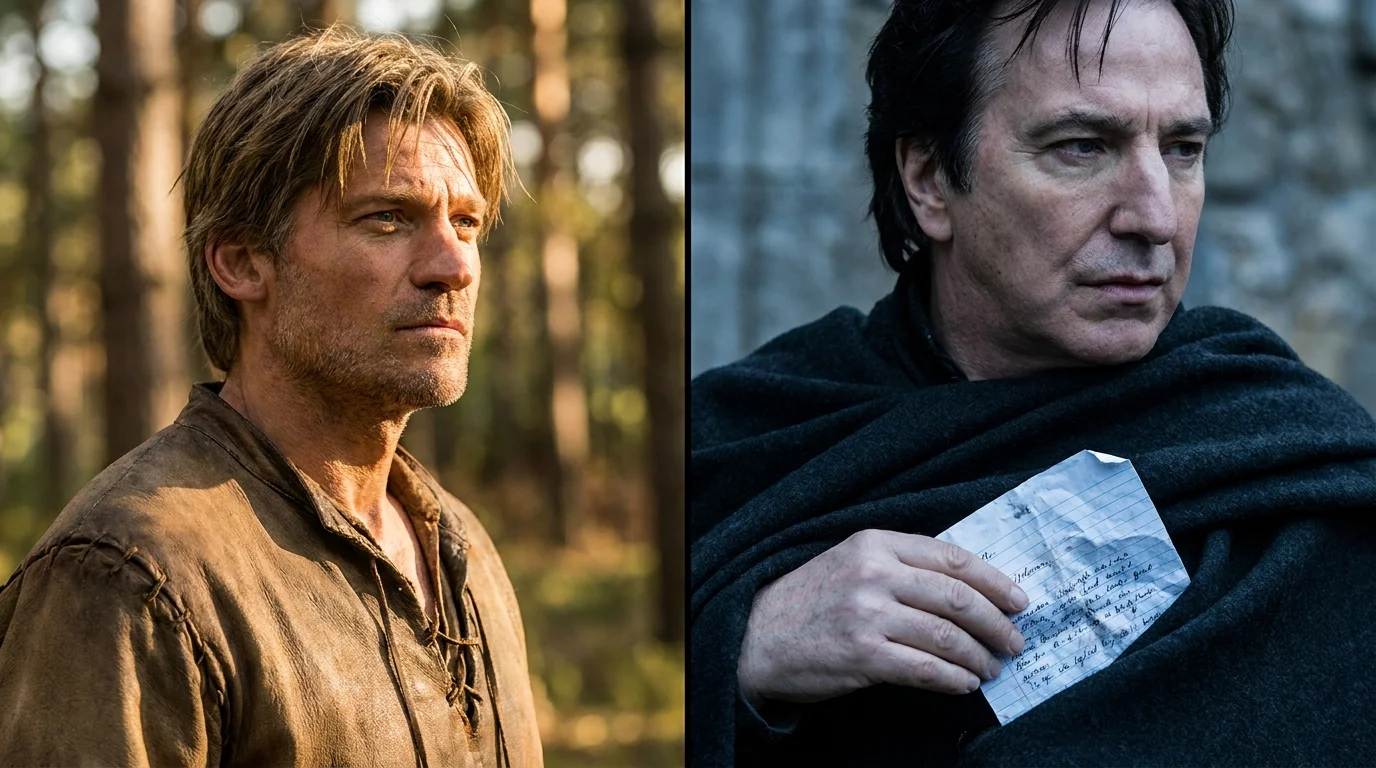
The true magic of performance lies in this quiet, stubborn refusal to be ordinary. Decades later, the definitive memory of that summer blockbuster is not the swelling orchestral theme or the earnest arrows flying through the trees. Instead, it is the image of a brilliant actor, standing in the cold English drizzle, holding a crumpled piece of looseleaf paper hidden inside a medieval wool cloak, ready to change the rules of the game.
“If you’re going to play a villain, you must make sure he has the best jokes, or else you are simply moving furniture.”
| Key Point | Detail | Added Value for the Reader |
|---|---|---|
| The Secret Collaboration | Alan Rickman and Peter Barnes rewrote the dialogue in a local pub. | Teaches the value of seeking external, trusted creative counsel to bypass bureaucratic stagnation. |
| The Power of Contrast | Ditched traditional villainy for dark, self-aware humor. | Demonstrates how offering an alternative energy can make you the focal point of any project. |
| Subversive Physicality | Utilized heavy garments and deliberate pauses to own the frame. | Shows how body language and vocal control command authority far better than loud displays. |
Did Alan Rickman actually rewrite his lines for Robin Hood?
Yes, Alan Rickman secretly took the script to his playwright friend Peter Barnes to add dry, comedic lines because he found the original dialogue incredibly bland.
Why didn’t the director stop him?
The production was already chaotic and behind schedule, meaning Rickman’s highly entertaining takes were embraced because they worked instantly on set.
How did this affect Kevin Costner’s role?
While Costner was the highly paid lead, Rickman’s magnetic performance overshadowed the hero, becoming the most memorable element of the film.
What can creators learn from this performance?
If you find yourself in a rigid or poorly written role, look for the quiet margins where you can inject genuine personality and wit.
Where did the rewritten lines end up during filming?
Rickman famously kept his custom lines scribbled on scraps of paper tucked safely inside his heavy, medieval costumes.