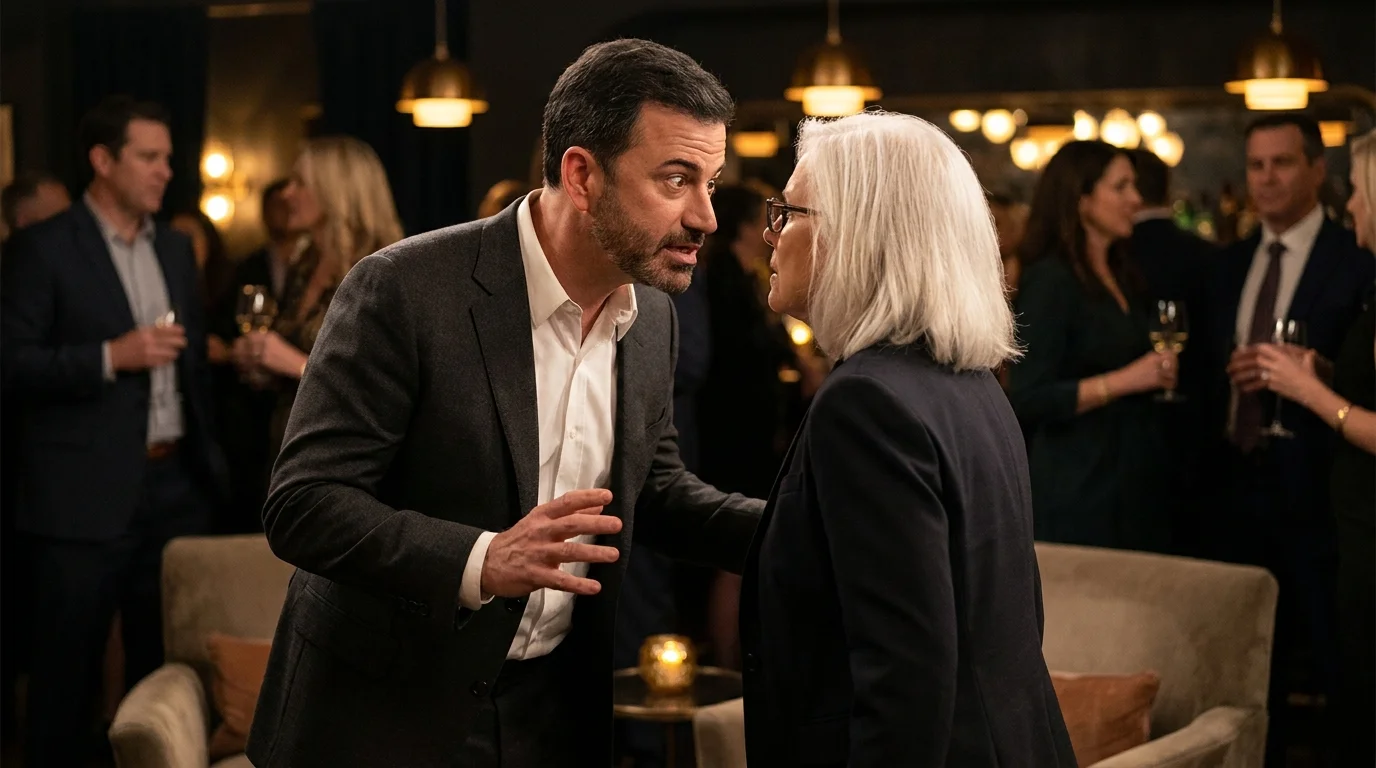
The studio floor of the El Capitan Theatre maintains a persistent, refrigerated chill, lingering around 64 degrees Fahrenheit to balance the blistering heat pouring off forty overhead softboxes. You can hear the low, hydraulic sigh of robotic pedestal cameras shifting on their tracks, punctuated only by the expectant rustle of four hundred tourists settling into cushioned theater seats. Under the studio glare, Jimmy Kimmel stands on his painted tape mark, impeccably tailored, eyes locked onto the dual seventy-percent reflective beamsplitter glass hovering just below camera one’s lens. The monologue rhythm is usually as mechanical as clockwork: setup, breath, punchline, wait for the floor laugh, roll into the next headline.
Then, midway through a punchline dissecting a fresh Washington subpoena, the luminous green 54-point text simply stops moving. It does not jitter or skip lines; it snaps into a static, dead-eyed freeze, marooning a sentence fragment right against the host’s optical center. For a split second, the human brain assumes the scroll operator’s foot pedal merely slipped, but the line remains stranded. Kimmel stops speaking mid-vowel, his shoulders locking into place as the studio monitors display a completely unscripted, six-second staredown between the host and the darkened glass.
In those six seconds, the ambient noise of a multi-million-dollar broadcast machine falls away like an engine cutting out at thirty thousand feet. You hear the faint, dry rustle of cue-card paper snapping across the riser nine feet away, followed by an imperceptible intake of breath from the control booth through the host’s custom in-ear monitor. There is no frantic waving or exaggerated comic grimace. Instead, a silent battle of nerves unfolds between a veteran broadcaster and the unseen crew members scrambling behind the control board.
What looked to casual home viewers like an intentional dramatic pause was actually a rare collision with the hard boundary of network late-night television. It revealed the sheer technical fragility underpinning what audiences assume is spontaneous, off-the-cuff comedy.
The Illusion of the Casual Chat: Deconstructing the Prompter Deadlock
Most viewers treat late-night monologues as relaxed, fireside conversations, imagining the host simply thinking out loud with exceptional timing. In reality, modern broadcast comedy operates more like flying an aircraft through zero-visibility fog using instrument panels. The teleprompter is not merely a memory crutch; it serves as a synchronized metronome that coordinates audio cues, lower-third graphics, regulatory legal clearance, and commercial break count-downs down to the frame.
When that screen locks up, the umbilical cord is severed instantly. The instinct for an untrained speaker is to instantly look down, break eye contact, or fill the sudden void with nervous chatter, but late-night television punishes undisciplined improvisation. Every single syllable spoken during an unscripted void bypasses the Standards and Practices legal buffer, leaving the host fully liable for unvetted network slander, accidental FCC violations, or ruined commercial timings. The frozen monitor creates a psychological canyon where staying completely still requires vastly more courage than desperately scrambling for an off-the-cuff joke.
- Tom Hardy reveals brutal spinal wire rig compression during high-velocity action stunts
- Ridley Scott confronts franchise studio chiefs over biometric test screening reshoot demands
- Jessica Chastain demands unedited macro lens framing stripping digital studio smoothing
- Beyoncé halts massive stadium concert after piercing in-ear audio monitor feedback spikes
- Tom Pelphrey unscripted red carpet flinch exposes tense television cast rift rumors
To understand the panic of that moment, consider fifty-four-year-old broadcast systems engineer Greg Vance, who has spent twenty-six years servicing multi-camera rigs on Los Angeles soundstages. “When a scroll software drops its cache during a live roll, the operator’s monitor usually goes solid grey before the talent glass does,” Vance notes. “The technician has maybe eight hundred milliseconds to decide whether to reboot the serial feed, force-scroll manual text, or scream into the intercom for the card guys to step into the light. If the host opens his mouth before the control room acknowledges the crash, everyone is driving blind.”
The Anatomy of the Freeze: The Three Layers of Broadcast Tension
When the screen froze during Kimmel’s broadcast, the deadlock triggered three simultaneous, invisible reactions across the studio floor, each dictating why the host remained locked in that six-second freeze rather than immediately breaking character.
1. The Legal and Standards Firewall
Late-night jokes targeting living figures, corporate sponsors, or active court proceedings pass through rigorous afternoon table reads with production attorneys. The teleprompter screen displays the legally vetted wording verbatim. When the words vanish, a host cannot simply substitute their own spontaneous phrasing without risking corporate broadcast liability. Kimmel’s prolonged silence was not intellectual paralysis; it was disciplined risk management while awaiting an all-clear from the booth.
2. The Cue-Card Hand-Off Gap
Every major network broadcast retains human cue-card writers standing directly beneath the lens barrel as an analog backup. Yet, switching optical focus from backlit glass to matte card stock requires an eye drop that immediately telegraphs panic to the audience. Holding optical dead-center while the floor crew frantically finds the correct physical card prevents the audience from realizing the structural failure has occurred until the host chooses to reveal it.
3. The Acoustic Room Bleed
Live theater crowds are hypersensitive to a performer’s physiological state. If Kimmel had twitched, broken posture, or stammered, the four hundred people in the El Capitan would have tightened up, killing the comedic energy for the rest of the hour. By converting the technical glitch into an apparent deadpan stare, he allowed the audience to assume the silence was an artistic choice, preserving the fragile social contract of the theater until the technical board rebooted.
The Recovery Blueprint: How Elite Communicators Reclaim Dead Air
Whether you are addressing national television cameras or managing a broken slide deck in an executive boardroom, losing your text exposes you to the exact same paralysis. The discipline displayed during Kimmel’s monitor blackout offers a masterclass in high-pressure recovery.
- Hold your eye-line steady: Avoid darting your eyes toward the floor or looking sideways at production staff, as rapid eye movement instantly signals panic to viewers.
- Engage the silence intentionally: Let the quiet linger for two full seconds longer than comfortable, transforming an accidental freeze into an apparent comedic beat or deliberate rhetorical pause.
- Acknowledge the physical reality: Once you determine the technology is dead, address the room directly instead of faking your way through half-remembered material.
- Reset your respiratory floor: Take a deep diaphragmatic breath through your nose while keeping your jaw loose to prevent your vocal register from spiking when speech resumes.
The Technical Toolkit of Live Screen Management
Behind the glossy exterior of late-night television lies a rigid set of operational tolerances designed to catch crashes before they hit the home screen:
- Scroll Velocity Buffer: Teleprompter software is manually calibrated to advance between 130 and 150 words per minute, matched precisely to the host’s respiratory cadences.
- The Seven-Second Network Delay: The control room operates with an electronic safety window, granting producers roughly seven seconds to dump an audio feed or cut to commercial if an unscripted remark breaches broadcast guidelines.
- Card-to-Glass Offset: Physical cue cards are held precisely 8.5 to 9 feet from the host’s pupils, slightly off-axis from camera one, demanding an intentional optical shift to switch reading mediums.
- Optical Glass Reflectivity: Studio prompters utilize a 70/30 beam-splitter glass, allowing seventy percent of incoming light to reach the camera sensor while reflecting thirty percent of the bright monitor feed to the talent.
The Unscripted Gap: Why Modern Audiences Crave the Flaw
We inhabit an entertainment landscape engineered to suffocating perfection. Audio tracks are pitch-corrected in real time, digital lenses scrub skin textures before the signal leaves the truck, and monologues are focus-grouped to eliminate cognitive friction. Yet, the moments that consistently capture cultural attention are precisely these micro-fractures in the machine.
When Kimmel held that six-second stare, the polished armor of late-night television cracked just enough to reveal the human being operating within it. The freeze stripped away the safety net of dozens of Emmy-winning writers, corporate legal filters, and robotic pedestal tracks, leaving only a lone performer standing on a tape mark under merciless lights. Learning to navigate those sudden, terrifying silences—without apologizing, without flinching, and with absolute comfort in the void—is the true hallmark of communication mastery.
“True broadcast authority isn’t proved when the prompter rolls smoothly; it is forged in the dead quiet when the screen goes dark and you refuse to panic.”
| Key Point | Technical Detail | Added Value for the Reader |
|---|---|---|
| The Freeze Interval | Six full seconds of zero monitor output and silence | Demonstrates why holding stillness conveys more control than frantic filler speech. |
| Dual Medium Redundancy | Physical cue cards positioned adjacent to digital prompters | Highlights the necessity of maintaining low-tech manual backups in automated workflows. |
| Audience Acoustic Control | Retaining unblinking facial posture during technical error | Shows how physical composure prevents room tension from destroying presentation momentum. |
| Legal Risk Mitigation | Holding speech to avoid unvetted network liability | Explains the unseen corporate boundaries governing high-stakes public communications. |
Frequently Asked Questions
What actually causes a studio teleprompter to freeze mid-monologue?
Most prompter crashes stem from serial communication dropouts between the floor foot pedal and the workstation software, or system cache bottlenecks caused by last-minute script edits uploaded during airtime.Why don’t late-night hosts just memorize their opening monologues?
Monologues undergo intense revisions up until minutes before taping to include breaking news; memorizing twelve minutes of brand-new, rapid-fire text daily is impractical and increases delivery errors.Are cue cards still used if digital teleprompters are present?
Yes, almost every major network production employs dedicated card writers who track the dialogue in real time just off-camera as an immediate, analog safeguard.How do producers communicate during an unexpected live freeze?
The executive producer and director speak directly into the host’s hidden in-ear monitor (IFB), delivering concise updates on whether to hold, vamp, or cut directly to commercial.How can public speakers apply this lesson to their own presentations?
When your slides fail or notes disappear, pause completely instead of rambling; establishing calm physical composure reassures the audience that you remain in command of the room.