The light coming off your smartphone screen at midnight has a very particular quality. It feels private, almost confessional, like a shared whisper across thousands of miles. When Charli D’Amelio flicked on her front-facing camera in an oversized hoodie, sitting cross-legged on a rumpled duvet, you thought you were stepping into a raw, unvarnished moment. There were no studio ring lights buzzing, no professional microphones hovering just outside the frame, and no commercial team in visible attendance. There was only the sound of quiet sniffling and the intimate thrum of an iPhone microphone scraping against cotton fleece.
For years, internet culture built an implicit social contract around the late-night bedroom broadcast. You tune in because you want the seams to show, craving an unfiltered antidote to polished public relations campaigns. When her eyes watered and her voice cracked over recent platform controversies, viewers leaned closer, offering comments of instant solidarity. The ambient hum of a personal space felt like an open diary, an undeniable signal that the twenty-something digital titan was finally letting down her guard to speak straight from the heart.
Then the angle shifted by three inches.
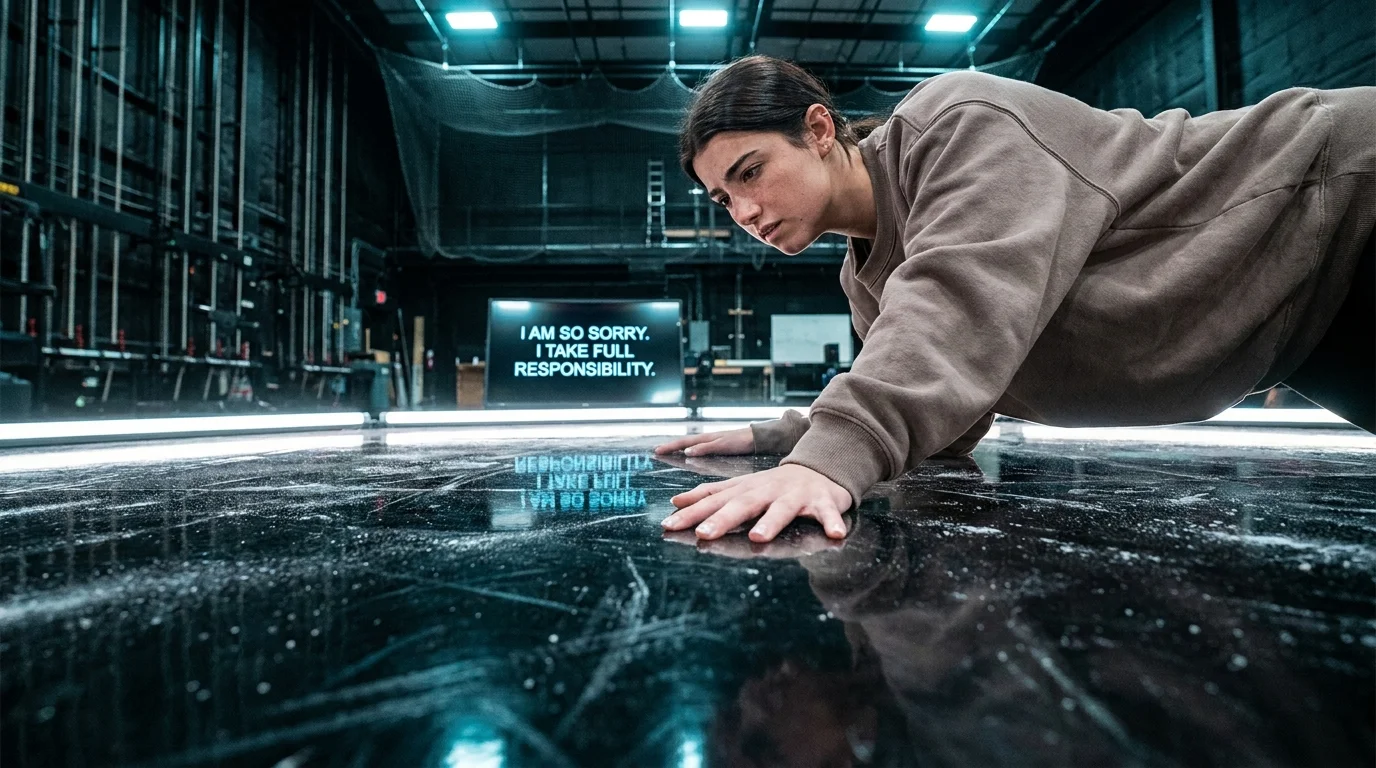
As she leaned forward to tuck a loose strand of hair behind her ear, her shoulder cleared the bevel of a decorative dressing mirror standing silently in the background. In that sliver of silvered glass, the reality of contemporary creator culture laid itself bare. Suspended just behind her tripod sat an illuminated tablet scrolling pale green lines of text against a dark screen. Each pause, each faltering sigh, and each self-deprecating turn of phrase had been timed to match a rolling script, complete with parenthetical cues indicating where to wipe away an unshed tear. In an instant, the illusion of vulnerability collapsed under the weight of executive choreography.
The Stagecraft of Spontaneous Tears
We often think of authenticity as an instinctive state of being, but digital talent infrastructure treats it as a precision manufacturing process. When a massive platform personality enters crisis territory, management teams do not simply hand them a phone and hope for emotional candor. Instead, they run an engine of **calculated emotional resonance designed to neutralize** critique before brand partners take notice.
Consider the architecture of modern vulnerability. The moment an influencer sits down in full makeup under controlled studio lighting, audiences suspect calculation and raise their critical defenses. To bypass that instinct, public relations strategists deliberately strip away the gloss. They choose the unmade bed, the dim overhead fixture, and the unwashed sweatshirt as carefully curated set dressings. By mimicking the sensory language of a private FaceTime call with a confidant, they manufacture an emotional shortcut directly into your empathy loop.
- Mickey Rourke extreme method acting stunts derailed major studio ensemble casting offers
- Shawn Mendes unscripted podcast breakdown shields calculated multi-million-dollar lifestyle product rollout
- Ciara Miller steps out wearing distressed leather bomber and tailored cargo trousers
- Anthony Hopkins improvised infamous cannibal slur shatters silence in legendary psychological thriller
- Steve Carell protects thirty-year marriage enforcing a strict zero-scandal Hollywood perimeter rule
Julian Vance, a 38-year-old former narrative strategist for Los Angeles digital talent agencies, knows this playbook inside out. “The bedroom live stream is the holy grail of modern image repair, but it is rarely left to chance,” Vance remarked during an industry panel on online perception. “The moment an account crosses thirty million followers, genuine spontaneity becomes an uninsurable business liability. Every ‘um,’ every downward glance, and every trembling intake of breath is drafted by committee. When viewers saw that teleprompter reflection, they were not just seeing a script—they were seeing the industrial scaffolding that keeps an eight-figure brand upright.”
The Audience Fracture: Anatomy of the Backlash
The outrage surrounding this unmasked live stream was not driven by anger over corporate public relations alone; it was sparked by the acute humiliation felt by the audience. Parasocial bonds thrive on reciprocal vulnerability. When that reciprocity is revealed to be a ghostwritten simulation, fans react across distinct emotional thresholds.
Understanding how different factions process this betrayal helps explain why the reaction ignited like wildfire across secondary platforms.
- The Devoted Core: Longtime followers who defended every misstep suddenly confront the reality that their emotional labor was invested in a hollow corporate persona. For these fans, the prompter text marks an irreversible loss of innocence.
- The Cynical Commentators: Online critics who long suspected industry puppetry seized on the mirror frame as undeniable proof, turning micro-second screen recordings into viral educational dissections on platform deceit.
- The Passive Observers: Casual viewers who did not track the initial controversy found themselves fascinated by the sheer logistical audacity of bringing teleprompter software into a pajama-clad confession.
The fracture runs deeper than a single weekend trend cycle. When an emotional confession is proven to be an agency assignment, **every future expression of honesty** becomes permanently suspect in the minds of the audience.
The Architecture of Manufactured Relatability
To understand why this moment triggered such immediate repulsion, you have to examine the technical mechanics of scripted spontaneity. Influencer management agencies have built specialized digital workflows designed specifically to make rehearsed rhetoric look accidental on vertical video screens.
Behind the glass of that bedroom reflection sits an entire industry operating with clinical precision, utilizing specific behavioral tactics to engineer intimacy:
- Algorithmic Micro-Pauses: Inserting calculated 3-second silences to simulate real-time thought processing and genuine personal hesitation.
- Parenthetical Somatic Cues: Script notes instructing the talent to lower their gaze, sniffle, or adjust their clothing precisely when addressing high-friction topics.
- Intentional Imperfection Framing: Positioning mobile cameras at slightly tilted, off-center angles to artificially downplay production value and hide technical rigs.
- Pacing Overrides: Utilizing variable-speed teleprompter software that slows its scroll speed to accommodate improvised, vocal filler words like ‘like’ and ‘you know.’
When these tactical elements function without error, the public never notices the puppeteer’s strings. But the human eye is remarkably adept at detecting dissonance. The split second viewers noticed her gaze tracking horizontal text lines rather than resting on the camera lens, the subconscious spell dissolved completely.
The Value of the Broken Mirror
Paradoxically, the exposure of an agency teleprompter in a bedroom mirror offers an invaluable gift to anyone navigating the digital age: an instant defense against manipulative parasocial marketing. For years, social platforms have conditioned you to equate low-fidelity camera footage with moral truth. You have been taught that if an image is grainy and an influencer is crying, the sentiment must be authentic.
This exposed mirror reflection dismantles that foundational myth entirely. It serves as a visual reminder that inside high-stakes entertainment ecosystems, vulnerability is rarely accidental. It is an operational asset traded, budgeted, and scripted to protect corporate equity. When you recognize the staging behind the sorrow, you regain your emotional autonomy.
Stepping back from the drama allows you to view digital creator spaces with clear-eyed discernment. You no longer have to carry the emotional weight of a millionaire’s carefully scripted tears, nor do you need to offer real-world empathy to an algorithmically optimized performance. The broken illusion does not mean you must become cynical about human connection; it simply reminds you to seek that connection in the physical rooms and living faces around you, where apologies are unscripted, eyes look directly into your own, and the mirrors reflect nothing more than ordinary life.
The most dangerous trick of digital fame is convincing you that an empire’s calculated survival script is an intimate friend’s quiet confession.
| Element | The Staged Aesthetic | The Audience Discovery |
|---|---|---|
| Visual Framing | Overhead bedroom bulb, off-angle iPhone mount, and worn loungewear. | Reveals deliberate art direction used to disarm critical consumer judgment. |
| Vocal Pacing | Frequent hesitations, choked breaths, and informal filler dialogue. | Demonstrates execution of agency cues designed to mimic real-time emotion. |
| Device Reflection | Unintended background mirror showing digital teleprompter text. | Shatters parasocial loyalty by exposing corporate crisis intervention in real time. |
Frequently Asked Questions
Was the teleprompter actually running an apology script?
High-definition screen grabs quickly matched the scrolling text in the mirror reflection to the exact phrases spoken moments later, confirming the performance was guided by written copy rather than unscripted candor.Why would a top creator use a teleprompter for a casual live stream?
Multi-million-dollar brand sponsorships and commercial licensing deals carry strict moral and behavioral clauses, making unscripted statements a massive financial risk for management teams managing crisis response.How did audiences distinguish reading from normal eye movement?
Human eye tracking displays a characteristic horizontal sweep when reading off-screen lines, contrasting sharply with the fixated or downward-drifting gaze typical of an authentic emotional state.Can creators recover from having manufactured vulnerability exposed?
Recovery requires an immediate abandonment of the staged humility playbook, forcing public figures to pivot toward candid, professional boundaries rather than simulating artificial friendship.What is the broader impact on future online apology videos?
This viral exposure permanently raises audience skepticism, meaning raw aesthetics, lack of makeup, and bedroom backdrops will now be scrutinized as corporate branding rather than accepted as spontaneous honesty.