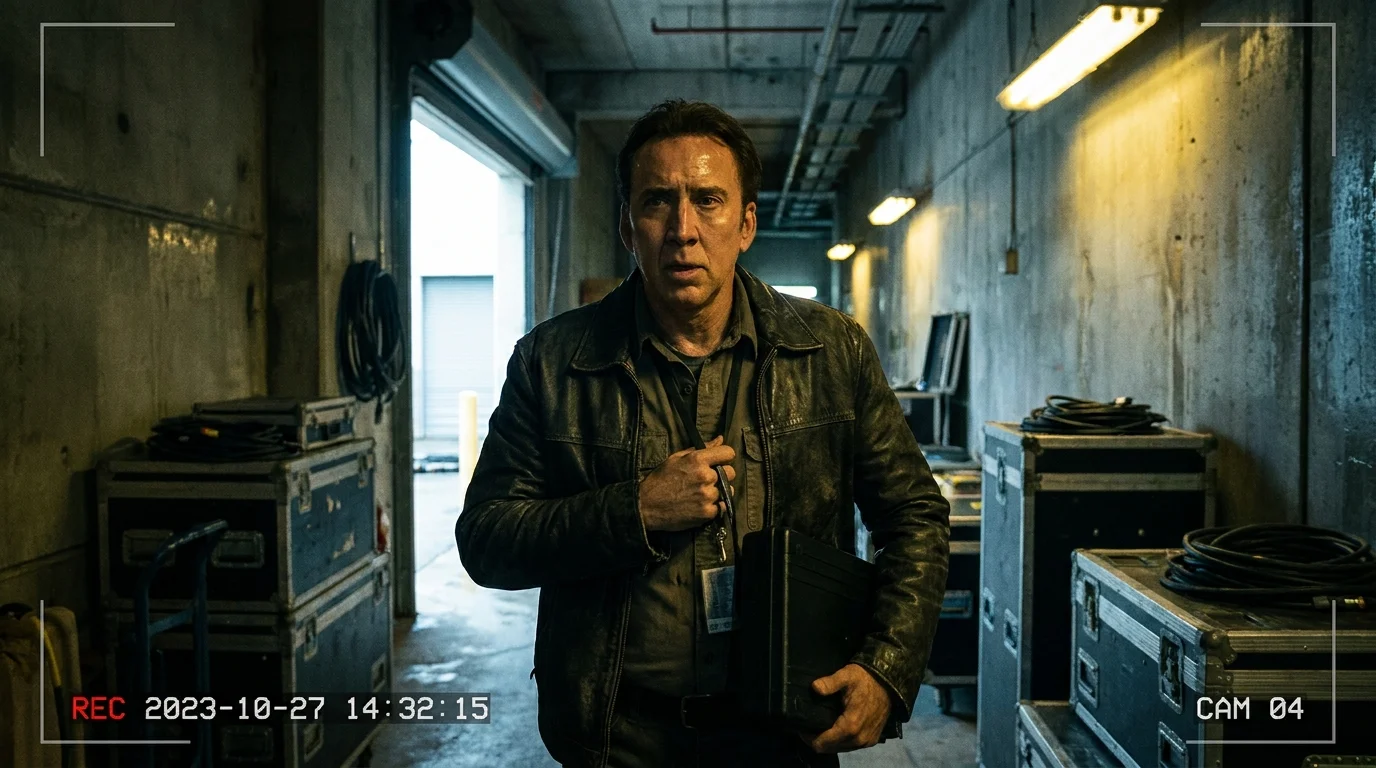
The cooling fan of an Avid workstation whirs in a windowless room somewhere off Santa Monica Boulevard, humming like an old refrigerator in an empty motel. On the desk sits a paper cup ringed with stale espresso, right next to an encrypted hard drive carrying an unmastered, timecoded workprint. You might picture movie rollouts as champagne-soaked evenings beneath the gentle glow of marquee bulbs, but the real machinery often smells of dry erase markers, cold takeout cartons, and pure tactical desperation.
On screen, Nicolas Cage is mid-monologue, his vocal delivery veering violently from a quiet whisper to an operatic roar that clips the digital audio meters into harsh red distortion. The color grade is flat, the sound foley feels hollow, and the pacing is intentionally jagged. To a novice filmmaker, this unfinished cut looks like a catastrophic slip in quality control; to the distribution team quietly packaging digital screeners for festival gatekeepers, it is an engineered fuse waiting to be lit.
For decades, standard industry wisdom dictated that you sheltered your fragile art, smoothing every rough edge before letting a single reviewer lay eyes on it. Yet in the modern entertainment arena, an unblemished four-star notice often induces nothing more than a quiet yawn and an algorithmic burial. When you drop an abrasive, disorienting rough cut into the laps of prestige tastemakers, you are not begging for approval; you are deliberately setting a trap designed to trigger a savage cultural counter-punch.
Weaponizing Critical Friction in the Algorithm Era
Consider the logic of a controlled burn in an overgrown forest: you do not wait for lightning to strike unpredictably; you lay the embers yourself so the flames move exactly where you need them. Studios distributing high-octane genre work have discovered that universal critical praise can actually neutralize the chaotic appeal of an actor whose brand is built on uncompromising, wild eccentricity.
When an uptown critic spends eight hundred words decrying a performance as unhinged, self-indulgent, and borderline unwatchable, those caustic words work wonders as pure, unadulterated catnip for a fiercely defensive audience. The casual spectator scrolls past polite compliments, but an inflamed headline declaring that an Oscar winner has completely lost his mind creates an immediate, irresistible urge to bear witness.
By intentionally slipping coarse, abrasive previews to reviewers known for their low tolerance of theatrical excess, production insiders trigger a wave of venomous, printable pull-quotes. This critical backlash does not suppress the film—it gives the core fanbase a villain to rally against, transforming a routine movie ticket into an act of cultural defiance.
- Gary Oldman confronts streaming studio after secret software overrides his spoken vocal timing
- The Weeknd masks live vocal slips under aggressive stadium sub-bass frequencies
- Henry Cavill exposes violent suspension rig drops compressing spine during action shoot
- Joaquin Phoenix confronts studio brass after biometric screen tests force sanitized reshoots
- Charlize Theron rejects digital skin smoothing demanding unforgiving raw macro framing
The Burbank Screen Test: A Distribution Secret
Marcus Vance, a 44-year-old independent distribution strategist based in Burbank, knows this calculus intimately. Late on a Tuesday evening three years ago, Vance watched studio executives debate over whether to polish the chaotic dialogue levels of a midnight thriller or ship the screener links raw to traditional metropolitan critics. “We knew the highbrow trade papers would hate it if the sound mix felt like getting slapped with a wet towel,” Vance recalls with a dry laugh. “So we left the jarring cuts untouched. Within forty-eight hours, two major outlets ran blistering takedowns calling it an unmitigated sensory assault. By Friday morning, social feeds were choked with fans defending Cage’s raw genius, and our midnight presales doubled because nobody wanted to miss a spectacle so aggressive it made establishment critics physically angry.”
The Anatomy of Manufactured Polarization
This deliberate strategy relies on understanding how different corners of the cinematic ecosystem digest controversy. The rollout is split across distinct tactical fronts to maximize friction:
The Prestige Irritant: By targeting legacy publications that pride themselves on measured, restrained pacing, publicists all but guarantee horrified reviews. A headline lamenting the “tragic derailment of an iconic career” acts as a bat-signal, confirming to underground film fans that the work has avoided the bland, committee-approved polish of mainstream streaming fodder.
The Grassroots Defense Shield: Modern fandom runs on protective loyalty. When fans read an establishment review mocking an actor’s deeply personal performance style, they mobilize with fierce passion across forums and community feeds. Buying a ticket is no longer just seeing a movie; it becomes an active vote against out-of-touch cultural gatekeepers.
The High-Variance Metric: On review aggregator portals, a split score—say, forty percent from verified critics paired with an eighty-nine percent audience rating—generates far more organic engagement than a uniform seventy percent across the board. The stark visual discrepancy provokes endless debates in comment sections, keeping the title trending without the studio spending an extra dime on digital ad buys.
Decoding the Rollout: A Field Manual for Savvy Viewers
Once you recognize the mechanics of manufactured polarization, you can spot the fingerprints of an intentional leak before the first public screening even begins. Here is how the mechanism operates behind the curtain:
- Unmatched Audio Spikes: Notice if early leaks feature dialogue mixed uncomfortably louder than ambient backing tracks, designed to sound jarring through consumer laptop speakers.
- The Rapid Pull-Quote Pivot: Watch how quickly marketing materials repurpose negative adjectives, transforming “abhorrent” or “chaotic” into rebellious badges of honor on teaser posters.
- Selective Screening Embargoes: Pay attention when review embargoes lift early exclusively for notoriously conservative trade critics, allowing their negative judgments to dominate the news cycle days before fan screenings open.
- The Leaked Screener Watermark: Observe how low-resolution, timecoded snippets mysteriously surface on social media just as promotional momentum begins to stall.
Recognizing these subtle industry maneuvers lets you bypass the synthetic noise of online discourse. Rather than getting swept into an artificial war between haughty critics and wounded fans, you can evaluate the performance on your own aesthetic terms, free from the invisible strings of distribution engineers.
Reclaiming Your Cinematic Instincts
In an ecosystem governed by aggregate scores and safe, sanitized formulas, friction is the only currency that consistently breaks through the digital haze. Studios understand that love and hate produce identical revenue at the box office turnstile, so long as apathy is thoroughly kept at bay.
When you sit down in the dark and watch Nicolas Cage chew through scenery with unbridled fury, remember that the shockwaves rippling across your social feed were drawn up months ago in quiet conference rooms. Stepping back from the outrage machine grants you a rare kind of peace: you stop acting as a defensive foot soldier in a studio’s guerilla marketing campaign, and you finally get to enjoy the raw, messy audacity of the art itself.
“True cinema does not beg for a polite round of applause; it throws a rock through your window and dares you to look away.”
| Key Point | Detail | Added Value for the Reader |
|---|---|---|
| Engineered Abrasiveness | Distributing unfinished sound mixes and harsh color grades to traditional review outlets. | Helps you identify when sensory discomfort in early clips is deliberate marketing rather than poor filmmaking. |
| Aggregator Split Optimization | Cultivating a vast gulf between critic scores and audience sentiment to fuel debate. | Prevents you from taking Rotten Tomatoes discrepancy metrics at simple face value. |
| Defensive Fan Mobilization | Using caustic critical commentary to inspire grassroots support and boost opening night attendance. | Saves you from emotional manipulation by studio publicists orchestrating online tribalism. |
Frequently Asked Questions
Did the studio genuinely intend to hurt Nicolas Cage’s reputation?
No. The goal is never to destroy an actor’s credibility, but rather to lean into Cage’s well-established reputation as a fearless boundary-pusher, knowing his loyal fanbase cherishes polarizing work.How can you tell an intentional rough cut from a genuine leak?
Intentional leaks typically target specific trade journalists who have a history of panning expressive genre films, while ensuring the footage contains zero major narrative plot spoilers.Why do harsh reviews generate more ticket sales than mediocre positive ones?
Mediocre reviews cause films to fade into the background, whereas intensely negative reviews spark curiosity and provoke defensive fans to buy tickets immediately to prove the critics wrong.Does this strategy work for every Hollywood star?
No. This maneuver only succeeds with performers who possess cult status and distinct artistic voices; applying it to conventional blockbuster stars often leads to catastrophic financial loss.Are critics aware that they are being played by distribution teams?
Most veteran reviewers understand the publicity game, but their professional duty requires them to review the cut placed directly in front of them, regardless of studio motivations.