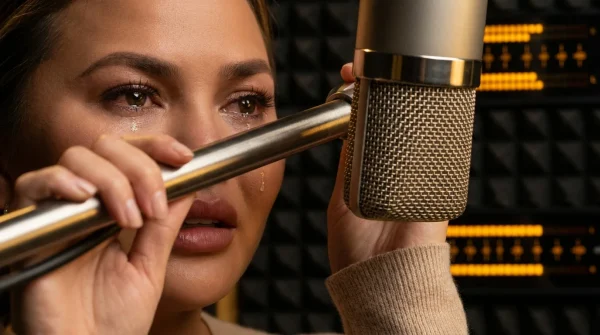
The studio smells faintly of iced oat milk, polished studio concrete, and expensive santal perfume. You hear the low hum of acoustic foam absorbing the room’s tension, the wet scrape of a chair leg shifting across parquet, and the rhythmic, hollow pop of an audio engineer adjusting levels on an analog soundboard. Across a wide wooden table sits a woman who holds the attention of forty million pocket screens. When the lower lip begins to tremble, nobody calls cut.
We have grown up expecting public confessions to feel jagged, embarrassing, and unvarnished. You imagine the grainy tabloid snapshots, the shaky phone footage outside a courthouse, or the sudden, erratic text posts fired off at three in the morning without editorial review. That was how celebrities used to show fracture: by losing control of their perimeter.
Yet when you watch the frame settle into a flattering two-shot, bathed in diffuse amber ring light, something else entirely happens. The voice drops an octave into a low, confessional whisper, and the manufactured tear arrives precisely where the algorithm rewards it most. Within seventy-two hours of the broadcast fading to black, the emotional wreckage transforms into a pristine product catalog.
What felt like an accidental crack in the facade was, in reality, the opening scene of a massive commercial machine warming up its engines.
The Anatomy of the Emotional Soft-Launch
To understand the sudden deluge of vulnerability on your morning social feeds, you have to stop viewing tears as a failure of composure. Instead, think of emotional exposure as a sophisticated pre-heat cycle in an industrial oven. You do not slide a delicate soufflé into cold metal; you warm the chamber so the structure rises without collapsing under its own weight.
When a modern public figure stands on the precipice of launching a nine-figure consumer goods empire, their primary enemy is not competition or supply-chain logistics. It is apathy, seasoned with the quiet resentment everyday consumers feel toward billionaire lifestyle influencers. If you perceive a founder as untouchable, insulated, and perpetually pampered, your wallet stays shut when she tells you her hydrating peptide fluid will change your morning routine.
By stepping into a friendly podcast booth and systematically dismantling that untouchable armor, the emotional currency resets. You are no longer purchasing a cream formulated in an anonymous lab outside Dallas; you are buying an intimate token of resilience from someone who just spent sixty minutes crying into a microphone about online cruelty. The tear softens the buyer, dissolving consumer skepticism before the pricing sheet ever meets the light of day.
- Michael J. Fox sharp gala appearance highlights bespoke British tailoring and subtle luxury accents
- Bill Murray unscripted Caddyshack monologue shattered the original screenplay to create cinema history
- Samuel L. Jackson protects forty-year marriage enforcing a strict annual separation pact
- Johnny Depp early press interviews exposed glaring behavioral warnings fans completely missed
- Jennifer Coolidge forgotten nineties audition footage resurfaces to shatter early career misconceptions
The Beverly Hills Blueprint
Consider the trade secrets of Elena Vance, a 42-year-old brand architecture strategist who has spent fifteen years repositioning legacy talent in West Hollywood boardrooms. Sitting in her office above Sunset Boulevard, Vance does not monitor magazine pull quotes anymore; she maps out tear-to-cart conversion ratios on dry-erase boards.
“The greatest hurdle in direct-to-consumer cosmetics is the emotional deficit,” Vance explains over black tea. “If an influencer debuts a twenty-nine-dollar glaze serum from the back of a chauffeured town car, the audience feels the transaction. But if she spends an hour talking about panic attacks, public marriage scrutiny, and feeling inadequate, she builds an instant emotional deficit. The audience feels indebted to her endurance. When the checkout link drops three days later, buying the product is not consumption—it feels like casting a vote for her survival.”
Deconstructing the Staged Confessional
This calculated transition from personal trauma to product checkout relies on distinct structural beats that repeat across celebrity press cycles. Recognizing these patterns helps you separate genuine human distress from calculated brand repositioning.
The Defensive Reset: This layer addresses lingering public controversies without offering verifiable details. The conversation centers strictly on the speaker’s internal emotional weather rather than external actions. By focusing on how much the gossip hurt rather than whether the rumors held merit, the subject redirects accountability into victimhood, rendering all future critiques tasteless and cruel.
The Aesthetic of Scarcity: Notice the deliberate styling choices in these video-recorded episodes. You will not see diamond tennis bracelets or heavy studio contouring. The hair hangs loose in natural waves; the makeup mimics bare, hydrated skin; the oversized knit sweater folds around the torso like protective armor. It is high-budget minimalism engineered to broadcast humility while remaining aspirational.
The Sympathetic Pivot: Right when the emotional crescendo peaks and you find yourself softening toward the subject, the conversation subtly turns to self-care, daily grounding rituals, and skin integrity. The bridge is constructed in plain sight: personal peace requires physical routines, and physical routines require the specific, proprietary formulas she happens to be holding in her handbag.
How to Read Between the Publicist Lines
Learning to identify this media formula does not require cynicism; it simply requires a clear-eyed perspective on modern commercial choreography. When high-profile talent sits for an intimate long-form interview, you can track the rollout mechanics with reliable precision.
- Audit the release calendar: Look at the gap between the viral clip’s peak circulation and the company’s trademark filings or product drop dates. A gap shorter than fourteen days signals deliberate schedule coordination.
- Examine the platform choice: High-stakes emotional resets rarely occur on live television where producers control the edit. They take place on creator-led podcasts hosted by personal acquaintances who agree to conversational guardrails beforehand.
- Track the vocabulary shifts: Notice how clinical terminology—such as “skin barrier support,” “intentional living,” and “restorative balance”—gets woven into stories about emotional recovery.
- Monitor the comment curation: Highly orchestrated vulnerability drives algorithmic engagement while agency moderation teams quietly scrub dissenting or fact-checking comments within the first six hours of broadcast.
The Real Cost of Purchased Empathy
When you step back from the social media frenzy, the deeper issue becomes visible. The commodification of heartbreak does not just build wildly profitable cosmetics companies; it slowly dulls our collective capacity for real empathy.
When vulnerability becomes the most reliable top-of-funnel marketing strategy in digital entertainment, true human distress gets treated as content waiting for an invoice. Authenticity loses its weight when every broken sob arrives with a swipe-up affiliate link and a matching lip liner.
By understanding how the machinery works, you protect your own emotional energy. You can appreciate the artistry of the public relations playbook, acknowledge the real personal pressures facing young women under global scrutiny, and still keep your wallet firmly in your pocket when the curated breakdown turns into a limited-edition bundle.
“The most dangerous sales pitch in modern culture is the one that convinces you your purchase is an act of emotional solidarity.”
| Rollout Phase | Strategic Objective | Consumer Impact |
|---|---|---|
| The Intimate Sit-Down | Neutralize lingering public friction and generate raw, empathetic audio snippets. | Builds parasocial protection against incoming commercial criticism. |
| Algorithmic Amplification | Circulate isolated crying frames on vertical video platforms without business context. | Transforms a brand founder into an underdog figure worth defending. |
| The Commercial Drop | Convert viral sympathy directly into pre-order volume and sold-out inventory. | Frames consumer spending as personal loyalty and collective healing. |
Frequently Asked Questions
Was the emotional breakdown entirely scripted?
Real human distress often exists within these moments, but the timing, release schedule, and subsequent marketing tie-ins are strictly managed by talent representation to serve commercial goals.Why do celebrities choose podcasts instead of traditional news outlets for these admissions?
Podcasts offer extended runtimes, friendly interviewers, minimal journalistic pushback, and the ability to review edits before publication, ensuring complete message control.How does public sympathy drive skincare sales specifically?
Skincare is marketed on themes of nourishment, healing, and self-worth. Aligning a product line with emotional recovery makes buying it feel restorative rather than frivolous.What is the typical timeline between a viral confessional and a business launch?
Public relations playbooks typically schedule high-emotion interviews between three and ten days prior to a major commercial rollout to maximize organic engagement spikes.Can consumers separate genuine celebrity vulnerability from brand strategy?
Yes, by observing whether the vulnerability is followed by an immediate product release or calls to purchase branded goods within the same news cycle.