The arena floor hums with the low, physical rumble of eighteen thousand voices bouncing off steel girders and cold concrete. From where you stand in the crowd, the wall of sound feels massive yet safely distant, cushioned by thousands of bodies and drifting ribbons of atmospheric stage haze. Up on the catwalk, washed in searing amber light, Lorde moves through the cresting chorus of a stadium anthem, completely absorbed in the collective pulse of the room.
You see her head snap sideways before your brain registers what happened. In a fraction of a second, the microphone slips from her fingers, striking the stage floor with a muffled, hollow thud that reverberates through the subwoofers. Her hands tear instantly at her ears, yanking away the skin-toned, custom-molded silicone earpieces that anchor her to the band’s tempo. For three agonizing seconds, the music grinds into chaotic silence as the singer doubles over, eyes squeezed shut, bracing against an invisible, blinding impact that nobody in the twentieth row could hear.
What the crowd witnessed was not theatrical choreography or sudden exhaustion. It was the terrifying reality of an in-ear acoustic frequency spike—a catastrophic audio feedback loop that turned a delicate monitoring tool into a direct sonic weapon against the performer’s inner ear.
To understand the danger, you have to realize that modern arena vocalists do not hear the room the way you do. They sing inside a quiet, hermetically sealed bubble, relying entirely on micro-transducers resting less than an inch from their eardrums. When that digital stream glitches, the result is violently physical.
The Fragile Physics of Stadium Foldback Systems
For decades, live music relied on heavy wedge monitors angled up from the stage lip, washing performers in a shared wall of raw sound. Today, modern touring demands clinical precision, replacing those noisy stage speakers with custom-poured acrylic monitors that block out up to twenty-six decibels of ambient room noise. You are effectively isolating the artist inside a private recording studio while they stand in front of a jet engine.
Think of an in-ear monitor as a high-pressure garden hose clamped directly onto an open spigot. When an analog wireless frequency experiences an unexpected burst of interference, or when a digital signal path drops its master clock, the audio console does not merely distort. It can generate a full-scale, zero-decibel digital square wave—an instantaneous burst of raw voltage that snaps the tiny balanced-armature drivers past their excursion limit. Hearing damage happens in milliseconds when an acoustic shock bypasses the ear canal’s natural acoustic dispersion.
- Madison Beer accidental bedroom livestream sparks fierce fan backlash after agency scripting leaks
- Hailey Bieber tearful podcast breakdown fuels massive scrutiny ahead of lucrative skincare venture
- Michael J. Fox sharp gala appearance highlights bespoke British tailoring and subtle luxury accents
- Bill Murray unscripted Caddyshack monologue shattered the original screenplay to create cinema history
- Samuel L. Jackson protects forty-year marriage enforcing a strict annual separation pact
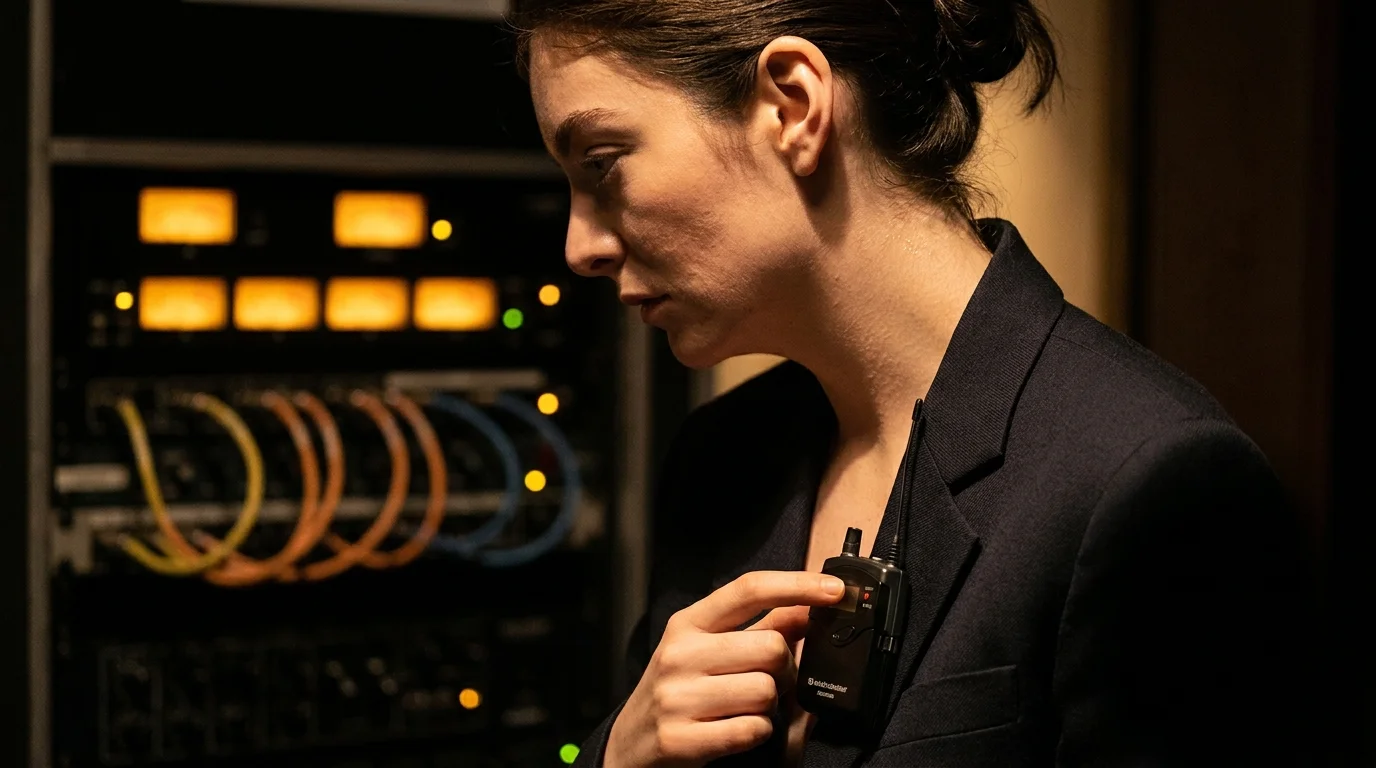
During Lorde’s sudden stoppage, the internal audio feed encountered a rogue resonant loop. Rather than the warm, balanced foldback of her own vocals, an explosive high-mid frequency squeal surged through the receiver pack clipped to her waistband. Dropping the microphone was not a dramatic choice; it was an involuntary survival reflex to sever the feedback loop and preserve her lifelong hearing.
The Cold Reality from Behind the Mixing Console
Marcus Vance, a 46-year-old touring audio engineer who has managed monitor mixes for some of the world’s most demanding stadium pop acts, knows that exact dread intimately. He explains that an artist’s ears are their primary livelihood, yet touring environments present an increasingly hostile radio-frequency battlefield where wireless bandwidth shrinks every single year.
“People think stage monitoring is about making things sound pretty for the singer, but it is actually about threat mitigation,” Vance notes during a rehearsal breakdown. “You have hundreds of municipal radio frequencies, broadcast television signals, and thousands of audience smartphones pinging nearby cell towers. If a backup transceiver fails or an inline safety limiter misses an instantaneous transient peak by even three milliseconds, you are sending 125 decibels of unshielded, high-pitched feedback straight into a human being’s tympanic membrane. Lorde dropping the mic on the spot was textbook survival instinct.”
Three Vulnerability Points in Modern Arena Audio
When you watch an arena show from the stands, the performance appears seamless, but underneath the polished presentation sits an intricate, highly volatile audio network. Understanding these technical friction points reveals why sudden tour stoppages are becoming more frequent for major artists.
1. Radio Frequency Congestion
Major cities have auctioned off vast swaths of UHF spectrum to cellular providers over the past decade. Touring crews must navigate an intensely narrow window of clean airwaves to broadcast clear audio to the singer’s bodypack. If a rogue signal bleeds across an uncoordinated channel, it manifests not as gentle static, but as harsh, full-volume digital hash.
2. The Hardware Limiter Threshold
Sound desks employ specialized peak limiters designed to act as digital brick walls, clamping any audio signal that exceeds safe exposure levels. Yet fast transients—such as an accidental dropped microphone or an abrupt digital clock error—can occasionally slip through before the compressor’s detector circuit clamps down. A split-second volume spike can overwhelm the inner ear before the engineer’s hands can even reach a mute switch.
3. The Occlusion Hazard
Because custom silicone earpieces fit airtight inside the ear canal, sound waves have nowhere to dissipate. When a sudden frequency burst occurs inside an open room, your ear canal benefits from acoustic air displacement. Inside a sealed ear canal, that explosive pressure wave pushes directly against your eardrum with unrelenting hydraulic force, risking acute acoustic trauma, sudden tinnitus, and vertigo.
Mindful Protocols: How Touring Pros Defend Their Hearing
Audio teams do not leave an artist’s hearing to chance. In the wake of high-profile incidents like Lorde’s stage halt, professional production crews implement meticulous failsafes to keep performers safe without compromising performance quality.
The recovery process following an acoustic shock requires calculated patience rather than rushed troubleshooting. Engineers isolate the source channel immediately while the performer steps away from active transmitter zones to allow their acoustic reflex—the tiny stapedius muscle that locks up to protect the inner ear—to relax.
- Analog Inline Attenuators: Technicians install passive, physical resistors directly between the wireless receiver and the earphone cable to cap absolute voltage output, ensuring no sound can physically exceed 105 decibels.
- Automated Spectrum Analyzers: Dedicated radio-frequency technicians scan the venue’s electromagnetic landscape every sixty seconds, dynamically shifting monitor channels away from incoming interference.
- Dual-Driver Isolation Testing: Artists verify their baseline foldback mixes during dry soundchecks without ambient hall reverb, guaranteeing that critical vocal cues remain intelligible at remarkably low monitor volumes.
- Mandatory Decibel Ceilings: Front-of-house teams lock master auxiliary sends to a rigid ceiling of 85 dBA averaged over the performance, keeping vocalists far below dangerous exposure zones.
The Human Fragility Behind the Spectacle
We often treat arena-level pop stars as indestructible icons, expecting them to command towering sets, intricate lighting rigs, and deafening crowds without breaking character. Yet behind the dazzling stage architecture, an artist remains an ordinary human navigating fragile biological limits. A single rogue sound wave can end a career just as swiftly as a snapped tendon or a fractured vocal cord.
When Lorde dropped her microphone, she punctured the grand illusion of effortless arena entertainment. She reminded everyone watching that true artistic longevity requires drawing an immediate line between the show and one’s physical health. Protecting your sensory boundaries is not an act of unprofessionalism; it is the fundamental discipline that makes great art sustainable across an entire lifetime.
“In a high-gain arena environment, your ears do not negotiate with volume spikes; you either silence the feed instantly or pay for the hesitation for the rest of your life.”
| Key Point | Detail | Added Value for the Reader |
|---|---|---|
| Acoustic Shock Reflex | Sudden involuntary physical reaction to severe, instantaneous audio spikes. | Helps you identify how unexpected digital feedback triggers an immediate physical survival response. |
| Custom IEM Seal | Airtight silicone molds isolating the performer from up to 26 dB of room noise. | Explains why sealed ear canals amplify internal audio pressure far more intensely than ambient stage volume. |
| Radio Frequency Cram | Touring wireless channels competing against crowded metropolitan telecommunications. | Reveals the hidden electromagnetic congestion that causes unpredictable digital glitches during live tours. |
| Passive Limiting Protection | Physical hardware attenuators that cap electrical voltage before reaching drivers. | Provides an actionable safeguard example for studio musicians and live performers seeking hearing defense. |
Frequently Asked Questions
What is acoustic shock in live performance?
Acoustic shock is a neuro-physiological condition triggered by sudden, unexpected exposure to high-intensity, high-frequency sound bursts. It frequently causes immediate ear pain, disorientation, temporary hearing loss, and long-term sensitivity.Why don’t in-ear monitors protect artists from feedback?
While in-ear monitors block outside room noise, they directly broadcast any internal system feedback straight into the ear canal. If a digital error or rogue signal generates feedback inside the foldback line, the earpiece delivers that energy directly against the eardrum.Did Lorde suffer permanent hearing damage?
By immediately dropping her microphone and pulling the earpieces from her ears, Lorde minimized her exposure time to mere fractions of a second, significantly reducing the likelihood of lasting cochlear trauma.Why do stadium shows experience audio spikes more frequently now?
The wireless frequency spectrum has shrunk dramatically due to commercial telecommunications expansion. Live production crews have fewer clean channels to operate on, increasing the risk of unexpected interference and signal corruption.How do everyday concertgoers protect themselves against acoustic spikes?
Wearing high-fidelity acoustic filter earplugs lowers overall sound pressure by fifteen to twenty decibels evenly across all frequencies, keeping sudden venue volume surges well below hazardous acoustic thresholds.