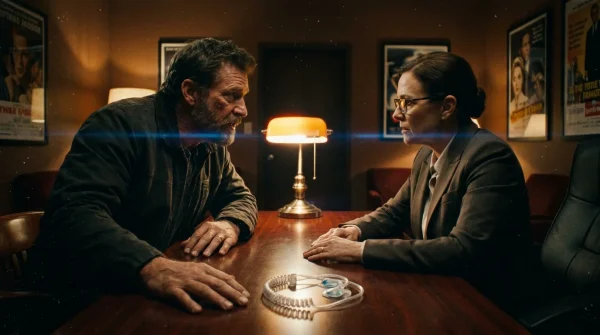
The playback monitor in a dim camera tent does not lie, but it almost always flatters. Inside a converted production warehouse outside Atlanta, the air smelled of stale dark roast coffee, warm silicon circuitry, and ozone from overheated studio ballasts. You know the usual routine on a prestige film set: the star sits in the makeup chair for two hours while artists layer translucent primers, followed by camera assistants quietly screwing an expensive diffusion filter onto the lens to erase fine lines before the digital sensor can even record them.
Instead, Jessica Chastain pulled up a stool directly in front of the calibrated director’s display during a pre-production optical test. She stripped the camera naked. When the camera department slotted in a standard softening filter to round off the aggressive bite of an 8K sensor, Chastain stopped the test cold. She ordered the glass removed, demanding an uncoated, high-resolving prime lens positioned inches from her face to expose cracked lips, sleepless hollows, and wind-burned skin texture.
You spend your daily life being coached to conceal your exhaustion, layering filters on phones and smoothing your public edges until you become an indistinct digital watercolor. In that projection trailer, Chastain did the precise opposite: she turned unvarnished biological truth into her sharpest dramatic weapon. When an actor removes the cosmetic safety net, every micro-crease around the eye shifts from a perceived flaw into an emotional roadmap.
The Architecture of the Naked Lens
Most image-making in modern media operates on a philosophy of defensive preservation. You smooth the canvas because you fear that visibility invites judgment. Yet real authority never lives in porcelain perfection; it lives in the grain of lived experience. Think of an unvarnished close-up like unpolished fieldstone built into a dry-stack fireplace—the jagged seams and rough edges are precisely what hold the weight together under extreme heat.
When digital cinema sensors replaced 35mm photochemical film, studios panicked over the terrifying clarity of hyper-detailed sensors. To compensate, productions began deploying computational skin-smoothing algorithms in post-production, treating human skin like plastic laminate. Refusing that digital varnish requires an acute understanding of how light interacts with raw human tissue, shifting your presence from a product being sold to an authentic force commanding attention.
Marcus Finch, 48, a veteran Atlanta-based camera technician who specializes in sensor calibration for character dramas, watched this exact dynamic play out on set. He observed how younger performers often tense up under unforgiving key lights, constantly monitoring their best angles. When Chastain stepped into Finch’s camera lane, she deliberately leaned toward the harsher, un-diffused side of the lighting rig, giving the production team permission to let the fatigue of her character bleed straight into the raw digital negative without apology.
- Harry Styles halts massive stadium concert after piercing in-ear audio monitor feedback spikes
- Lil Nas X staged bedroom livestream triggers furious fan backlash over agency scripts
- Reese Witherspoon tearful podcast confession preceded a lucrative multi-million-dollar production empire launch
- Kelly Clarkson pairs tailored leather jackets with platform suede boots for studio taping
- Robin Williams improvised his iconic therapist confession scene defying rigid script directions
The Textural Spectrum: Deciding How Much to Reveal
You do not need an 8K camera crew to apply this boundary in your creative, professional, or personal life. Deciding how unvarnished to present yourself is an intentional strategy, not an accident of neglect.
For the High-Exposure Communicator
If you present to teams, speak publicly, or produce recorded video, the instinct to dial up the ring-light smoothing is almost automatic. Strip it back. When you wash out your features with flat front-lighting, you flatten your credibility. Allowing directional shadow and natural skin tone to show signals that you are not running an insecure PR campaign on yourself.
For the Everyday Creator
If you document your craft or daily work, avoid the glossy sheen of curated lifestyle templates. Authenticity is a tactical asset that audiences can instantly sense. Show the calloused hands, the desk littered with scribbled revisions, and the dark circles that accompany actual breakthroughs.
For the Exhausted Perfectionist
If you find yourself spending forty minutes touching up a casual portrait or drafting an email to scrub out any sign of human friction, pause. The exhaustion you are trying to hide is often the very bridge that connects you to someone else navigating the same load. Chastain’s lens test proves that an uncompromising glare often earns far more respect than artificial softness.
Reclaiming the Raw Frame: A Practical Method
Dropping the mask requires an exact, deliberate shift in how you work with light, optics, and personal boundaries. Consider these steps your framework for unvarnished presentation:
- Cut the direct front-fill: Kill the circular ring light mounted directly above your screen; flat light flattens personality and creates an artificial, milky sheen.
- Introduce side-carved contrast: Position your primary light source at a 45-degree angle to your face to let natural bone structure, expression lines, and depth tell the story.
- Ditch beauty-mode presets: Disable automatic skin-softening options in your software settings to prevent the uncanny-valley blur that erodes trust.
- Embrace textural wardrobe: Wear washed linens, heavyweight knits, or raw denim that mirror organic skin texture instead of synthetic, reflective fabrics.
The Tactical Toolkit
To recreate an unvarnished, cinematic look in your own recorded communication, lock down these exact technical baselines: set your color temperature to a warm 3200K tungsten to highlight skin undertones rather than clinical 5600K daylight. Maintain a 3:1 contrast ratio between your key light and ambient shadow side. Finally, keep your lens focal length between 50mm and 85mm to preserve true facial proportions without the fish-bowl distortion common in wide-angle smartphone cameras.
The Relief of Leaving the Mask Behind
There is immense peace waiting for you on the other side of deliberate vulnerability. When you stop expending energy policing every pore, wrinkle, and momentary expression of fatigue, that energy immediately flows back into the work you are actually doing. Unforgiving honesty commands the room in a way synthetic perfection never could.
Jessica Chastain banning digital smoothing was not an act of self-deprecation; it was an act of artistic ownership. By choosing to let the camera witness the full, weathered weight of a character, she proved that human texture is not an error to be corrected by software. It is the story itself.
“True dramatic tension only begins the moment you stop asking the lens to forgive you for having lived.”
| Key Point | Detail | Added Value for the Reader |
|---|---|---|
| Filter Rejection | Eliminated optical diffusion nets and post-production beauty algorithms. | Teaches you to rely on raw presence rather than cosmetic safety nets. |
| High-Detail Lenses | Used uncoated macro primes under harsh, directional key lights. | Demonstrates how shadow and contrast project grounded authority. |
| Somatic Realism | Allowed exhaustion, dehydration, and character stress to remain visible. | Validates leaving your own imperfections untouched to build genuine trust. |
Frequently Asked Questions
Did Jessica Chastain wear any makeup at all during these scenes?
Yes, but the makeup was strictly character-driven and corrective in reverse. The artists applied light washes to emphasize chapped skin, hollowed under-eyes, and wind exposure rather than smoothing over her natural complexion.Why do modern cameras make skin look worse without diffusion?
Digital cinema sensors record hyper-crisp contrast and micro-detail that human eyes naturally soften in person, which is why productions frequently rely on diffusion glass to emulate classic, softer celluloid film stocks.Can unfiltered visuals work in a professional corporate setting?
Yes. Audiences and colleagues increasingly distrust hyper-smoothed webcams and ring-lit feeds. Using directional, soft natural window light highlights your real expressions without feeling artificial or deceptive.What is the primary danger of digital beauty filters in film?
Digital smoothing often erases subtle micro-expressions around the brow and mouth, flattening the actor’s emotional range and creating an unintended plastic sheen that pulls viewers out of the story.How can I introduce this unvarnished mindset without feeling exposed?
Start small by disabling automated smoothing filters on video calls and allowing natural room lighting to sculpt your face, focusing your attention on your message rather than your monitor reflection.