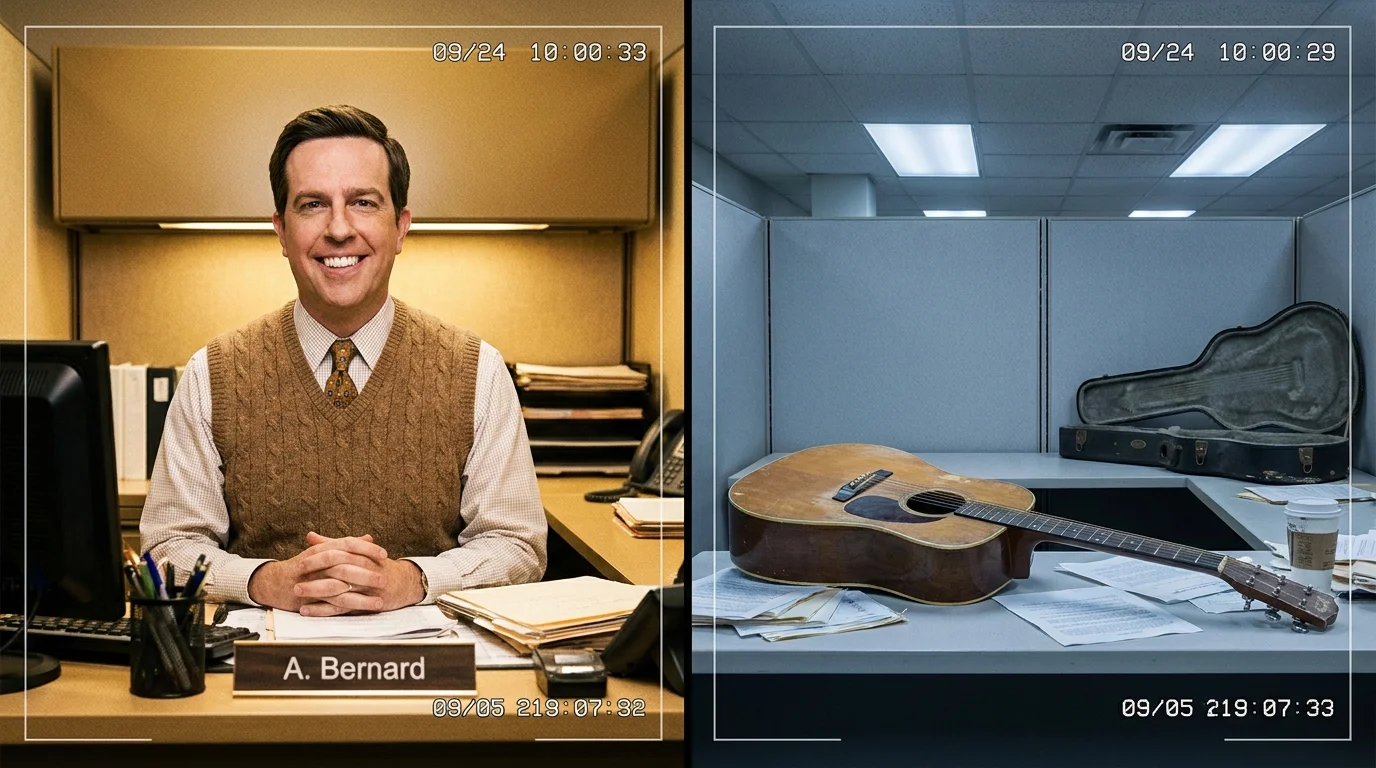
Imagine the low, steady hum of fluorescent bulbs in Scranton, Pennsylvania. You can almost smell the stale breakroom coffee and the faint scent of paper dust. On a corner desk sits a wooden acoustic guitar, its neck slightly scuffed, resting awkwardly against a metal filing cabinet. It was once a tool of desperate, earnest connection—a way for a deeply flawed man to sing his way into a room’s good graces. Now, it sits abandoned, a quiet relic of a creative promise that was abruptly broken.
For years, watching comedy television meant trusting that characters would grow, even if they stumbled. You expected the angry, punch-happy Ivy Leaguer to slowly peel back his layers, revealing a sweet, vulnerable core that just wanted to belong. Instead, the final episodes of this beloved mockumentary delivered something far colder: a deliberate dismantling of empathy.
When a character’s hard-won growth is suddenly erased, it feels like a personal betrayal to the audience. It is not just bad writing; it is a structural collapse that makes reinvesting in the early seasons feel foolish. The acoustic guitar left on the desk is not just a prop, but a symbol of a narrative machine that decided to punish its own creation.
The Whiplash of Narrative Retrofitting
To understand why this character collapse hurts so deeply, you have to look at storytelling as a delicate suspension bridge. Every small moment of vulnerability—anger management therapy, a sincere romance, the quiet support of coworkers—acts as a support cable. But in the final stretch of the show, the writers did not just neglect the bridge; they actively cut the cables to serve a hasty production reality. The classic metaphor here is the sinking ship of convenience.
- Ian Somerhalder accidental on screen chemistry forced network executives to rewrite the entire series
- Miranda Priestly actions in The Devil Wears Prada actually make perfect professional sense
- Adam Sandler marriage survives decades of Hollywood pressure using one strict casting rule
- Tom Cruise and Katie Holmes old interviews expose glaring behavioral warnings fans ignored
- Ryan Reynolds and Blake Lively treat red carpet appearances as calculated corporate mergers
Instead of letting the character’s growth unfold naturally, the show fell victim to a creative panic. When an actor’s real-life schedule conflicts with the production, rather than writing a graceful temporary exit, the narrative is often warped to punish the character for the actor’s absence. You are no longer watching a human being grow; you are watching a room of frustrated writers take their frustrations out on a fictional canvas. It teaches us a harsh lesson about industry dynamics: when real-world production demands collide with narrative logic, the art is almost always the first thing sacrificed to the gods of convenience.
Consider the perspective of Sarah Jenkins, a 34-year-old television historian and media consultant who has spent a decade analyzing sitcom pacing. She points out that the sudden pivot in season nine was not an organic evolution, but a sharp creative emergency measure. “When Ed Helms had to film the third installment of his hit comedy franchise, the writing team faced a choice,” Jenkins explains. “They could have kept his character off-screen with a supportive, warm narrative excuse, but instead, they chose a path of systemic destruction, transforming a reformed underdog back into an unlikable caricature to justify his physical absence.”
The Three Eras of the Cornell Alumnus
To truly unpack the tragedy of this writing choice, we must dissect the character’s evolution into three distinct, conflicting phases. Each represents a different creative philosophy behind the scenes.
The Volatile Intruder (Seasons 3-4)
Initially, the character was designed as a temporary antagonist—a loud, hyper-competitive nuisance with severe anger issues. His personality was a wall of defense mechanisms, built on parental neglect and country-club elitism. Yet, even in his worst moments, like punching a hole through the drywall, there was a pathetic charm that made him impossible to completely write off. You saw a man who simply wanted to be seen, whose obnoxious singing and constant name-dropping were desperate bids for basic human validation.
The Earnest Manager (Seasons 5-8)
This is where the magic happened. After returning from anger management, he became the beating heart of the office. He was a champion of small victories, a loyal friend, and a man who desperately wanted to make his coworkers proud. His sweet, awkward gestures made him the ultimate underdog you could not help but root for. When he stood up to his abusive father or fought to win back his job by getting a tattoo on his rear end to motivate his team, he earned your respect because his struggles were profoundly human.
The Sailboat Castaway (Season 9)
Then came the three-month Caribbean boat trip on the family yacht. This single plotline systematically dismantled years of emotional maturity in a matter of episodes. By abandoning his partner, ignoring his job, and returning as an arrogant, petulant snob, the character did not just regress—he became entirely unrecognizable. He withheld pay from employees, treated those who helped him with unprovoked malice, and discarded the very person who had waited for his return, transforming our empathy into raw disgust.
How to Analyze a Character’s Narrative Integrity
Evaluating a story’s structural integrity requires a mindful, diagnostic approach rather than just reacting to emotional frustration. You can train your analytical eye to spot when a show prioritizes production logistics over narrative truth.
- Track the Consistency of Motivations: Ensure a character’s choices align with their established core fears and desires, rather than sudden plot convenience.
- Observe the Treatment of Key Props: Notice how personal items—like that discarded acoustic guitar—are used to signal emotional states or abandoned storylines.
- Evaluate the Dialogue Rhythm: Watch for sudden shifts from supportive, collaborative speech to isolated, self-centered monologues.
- Measure the Weight of Off-Screen Events: Analyze if major off-screen developments are used to bypass organic, on-screen character work.
To help you map these structural shifts in your favorite media, use this Tactical Narrative Toolkit:
- Optimal Observation Interval: 22-minute episode blocks.
- Key Indicator: Ratio of selfless actions to selfish outbursts.
- The Red Flag Threshold: More than three unprovoked cruel remarks per episode.
The Lasting Toll of Creative Betrayal
Why does a fictional character’s downfall continue to spark such intense debate years after the cameras stopped rolling? It is because great stories serve as mirrors for our own capacity to change. When we watch someone work through their anger, seek therapy, and strive to become a kinder person, we are validating our own quiet efforts to grow.
When a writing room cynically erases that progress for a cheap gag or a behind-the-scenes grudge, it breaks a sacred contract with the viewer. It suggests that our worst traits are permanent, and that regression is inevitable. By standing up for the character that should have been, we are actually defending the belief that people can change for the better, even when the world around them refuses to notice.
“The moment a writer uses a character’s history as a weapon against them rather than a foundation, the trust with the audience is permanently broken.” — Sarah Jenkins, Television Historian
| Narrative Phase | Character Behavior | Added Value for the Reader |
|---|---|---|
| The Redemption Arc | Sincere, vulnerable, musically expressive | Provides a blueprint for authentic, earned personal growth on screen. |
| The Boat Trip Shift | Absent, cold, neglectful, arrogant | Illustrates how real-world logistics can derail years of storytelling. |
| The Final Humiliation | Pathetic, public mockery, career failure | Validates why audiences feel emotionally cheated by sudden regressions. |
FAQ
Why did the writers change Andy’s character so drastically in Season 9?
The shift was largely driven by production logistics, as actor Ed Helms had to leave temporarily to film a movie, prompting writers to create the controversial boat trip storyline.What was the turning point that ruined his redemption?
The turning point was his decision to take his family’s sailboat to the Bahamas for three months, completely ignoring his girlfriend and his managerial responsibilities.How did the fans react to his audition storyline?
Fans found the viral audition and the subsequent crying-baby meme to be a cruel and unnecessary humiliation for a character who had worked so hard to grow.Is Season 9 Andy considered canon by most fans?
While technically canon, many viewers and critics mentally separate his final season behavior from his earlier, beloved character development.What does the acoustic guitar symbolize in his arc?
The acoustic guitar represents his desire for connection, creativity, and simple joy, which was ultimately abandoned as his character turned bitter.