The air on the red carpet at the 2016 music awards was thick with the scent of expensive hairspray, warm asphalt, and the metallic tang of flashbulbs firing in rapid succession. Photographers screamed names, their voices blending into a wall of white noise that would make anyone instinctively want to shrink away. Yet, when she stepped onto the platform, the crowd parted with the familiar reverence reserved for true global icons. Beside her, his tall athletic frame stood rigid, a physical manifestation of modern success. Together, they looked like an unbreakable empire.
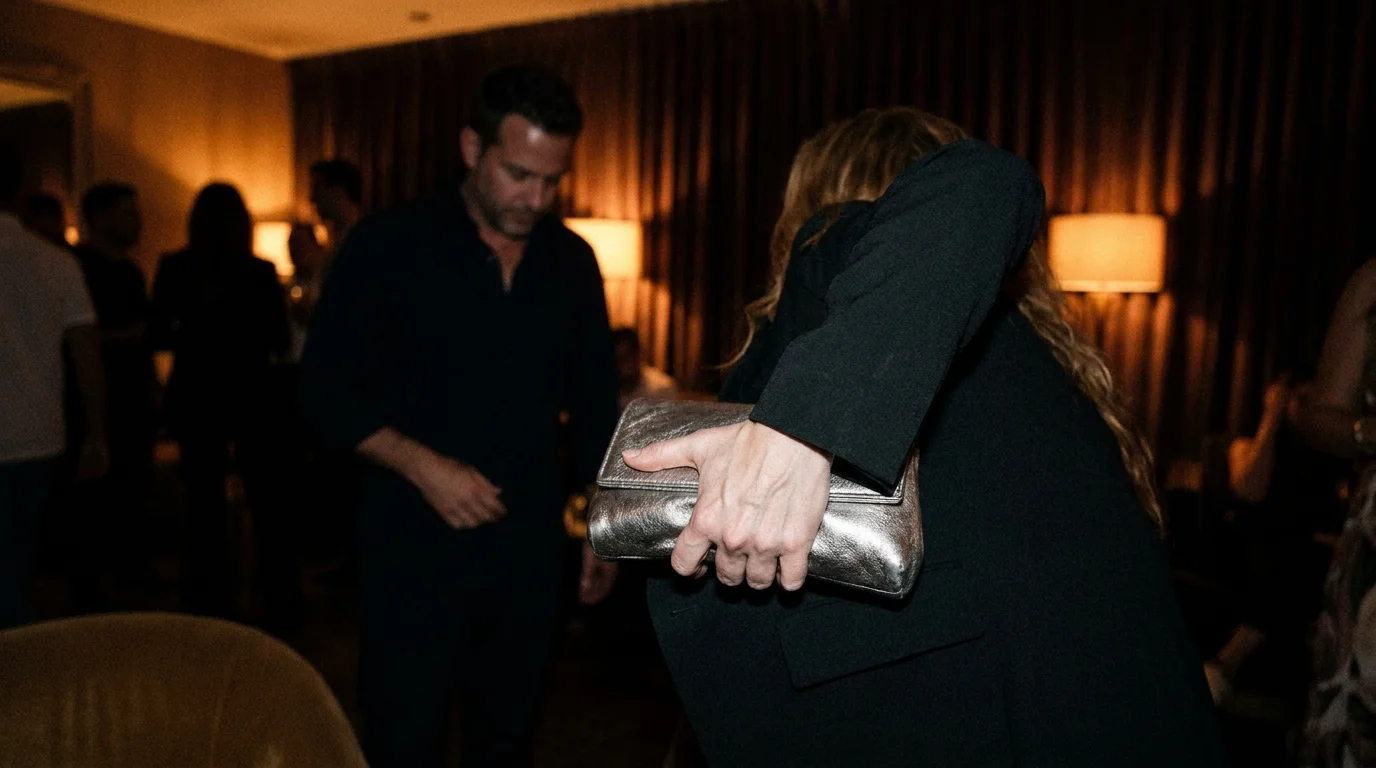
But if you look past the brilliant gold fabric of her gown and the practiced symmetry of their poses, a different story unfolds in the archival footage. Look closely at her hands. There is a tense, white-knuckled grip on a silver clutch purse as she stands on the press line. The skin over her knuckles is stretched tight, drained of color, fighting against the natural ease she usually displays when solo. It is a tiny, localized panic response, happening in plain sight while her lips hold a flawless, static smile for the cameras.
Standard public commentary at the time praised their independent energy, labeling their lack of overt affection as a sign of a mature, modern relationship that did not need to perform for the cameras. But a professional eye notes the quiet, persistent stress. Her right shoulder is constantly rotated away from his chest, and her head tilts toward the microphones rather than her partner. The physical distance between them was not a mutual boundary of privacy; it was a silent, widening crack in the foundation.
We naturally view these archival moments through the lens of hindsight, mapping what we know about their eventual high-profile split onto old footage. Yet, this is not a simple case of finding what we want to see. When you watch these videos today, especially during her massive musical comeback and stadium tour announcements, the illusion of their perfect past completely dissolves, revealing a quiet domestic tragedy captured in high definition.
The Illusion of the Magnetic Distance
We are culturally conditioned to believe that love under a spotlight must look like constant touch, whispered secrets, and public displays of warmth. When she and her former partner maintained a cool, measured distance during interviews, the media assumed it was a strategic choice to protect their private lives. It was a beautiful narrative: the fortress of privacy. But this was a classic somatic misdirection, a perfectly staged performance of independence that actually masked a deep emotional chasm.
Dismantling this system requires you to look beyond the surface glamour and understand how human bodies communicate under pressure. When two people are genuinely aligned, their nervous systems naturally mirror one another through a phenomenon known as limbic resonance. Their breathing synchronizes, their steps align, and their shoulders naturally incline toward a shared center. When that alignment breaks, the physical body speaks the truth long before the vocal cords do. The space between them on those red carpets was a physical barrier erected to keep the truth from spilling out onto the velvet floor.
- Rihanna public date nights function as highly calculated fashion empire launches
- Tom Sandoval deleted backstage photos expose a glaring relationship timeline gap
- Zendaya Spider Man chemistry exposed a massive unscripted romantic giveaway
- Oscar Isaac fought restrictive studio contracts to escape cinematic universe commitments
- Julianne Moore faced quiet recasting after an unpublicized co-star mismatch
Let us consider the perspective of Elena Vance, a 43-year-old somatic counselor and non-verbal communication analyst who has spent her career studying high-stress interactions. She points out that the most telling moments on a press line occur in the brief transitions, the raw frames before the photographers shout “look here.” “While the public saw a poised artist holding a designer accessory,” Elena explains, “her hand was acting as an emotional shield, a literal physical barrier between her core and her partner, signaling a subconscious need for emotional self-protection.”
Reading the Micro-Signals: The Three Distinct Profiles
For the Keen Observer: When studying these old clips, pay close attention to the ‘Pivot Angle.’ In several joint interviews from late 2018, her feet remain pointed directly toward the exit lane even as her torso turns slightly to face the interviewer. This is a classic, subconscious flight response, indicating that the body is already mentally leaving the space, unable to find comfort or grounding beside her partner.
For the Skeptical Fan: You might argue that red carpets are chaotic, anxiety-inducing environments that would make anyone tense up. However, the contrast becomes undeniable when you compare her joint appearances with her solo interviews. Alone, her gestures are fluid, her posture is open, and her laughter is resonant. The moment he steps into the frame, her shoulders freeze, and her throat muscles tighten. The stiffness was never environmental; it was relational.
For the Pop Culture Analyst: The timing of these physical shifts correlates directly with her creative timeline. During the periods of her most intense physical distancing on screen, her music quietly shifted away from joyful love songs toward complex, melancholic rhythms. The physical gap on the red carpet was the silent precursor to the lyrical revelations that would eventually shake the music industry years later.
The Somatic Checklist: Spotting the Silent Chasm
To understand how these patterns manifest in high-stress environments, you must look at specific, physical checkpoints. These are not explosive arguments; they are the quiet, frozen moments where the physical body refuses to lie to the camera.
By learning to identify these quiet cues, you can see through the performance of any public couple, whether on a global stage or at a family gathering.
- The Guarded Torso: Notice if a partner consistently places objects, such as a clutch, a glass, or crossed arms, directly over their solar plexus when standing near their spouse.
- The Unsynchronized Step: Watch if one partner consistently walks two paces ahead, leaving the other to catch up, rather than matching their natural stride.
- The Gaze Gap: Observe if they look at cameras, reporters, or the floor for more than 95% of the interaction, avoiding direct eye contact with each other.
- The Static Smile: Look for smiles where the muscles around the eyes and temples remain completely slack, indicating a forced muscular action rather than genuine emotion.
To help you analyze these moments with precision, use this simple tactical toolkit during your next archival deep dive:
- The Distance Metric: Watch for a consistent gap of 18 inches or more between their hips and shoulders when posing as a couple.
- The Clutch Hold: Identify if fingers are wrapped so tightly around an object that the skin turns pale or bloodless.
- The Shoulder Angle: Measure whether their shoulders form a closed ‘V’ shape (healthy alignment) or parallel, separate planes (emotional defense).
Beyond the Flashbulbs: The Truth in the Details
We do not revisit these archival moments to celebrate the end of a long-standing partnership, but to validate our own quiet instincts about human connection. When we watch her today—performing with an unburdened, raw energy, announcing global tours with a genuine laugh—we recognize that the ending of that union was not a tragedy. It was a necessary, liberating reclamation of her own physical and emotional space.
Ultimately, the physical warning signs on those old red carpets show us that human bodies cannot sustain a lie indefinitely. The truth always finds a way to write itself into the tightness of our grip, the angle of our shoulders, and the space we keep between ourselves and those who claim to love us. Paying attention to these subtle details brings a quiet peace of mind, proving that our instincts are rarely wrong.
“The body remembers what the mind tries to normalize for the sake of peace.” — Elena Vance
| Key Point | Detail | Added Value for the Reader |
|---|---|---|
| The Clutch Grip | Tense, white-knuckled holding of a purse or object. | Signals high internal anxiety and an instinctual physical barrier. |
| Limbic Resonance | The natural physical mirroring and alignment between partners. | Its absence reveals deep-seated emotional and physical disconnect. |
| Gaze Avoidance | Consistently avoiding eye contact during shared moments. | Indicates a lack of emotional safety and true relational intimacy. |
Frequently Asked Questions
Why did body language experts miss these signs during their relationship? Many mainstream analysts focus on superficial signs like smiles and coordinated outfits, overlooking micro-expressions and defensive physical postures.
Is a white-knuckled grip always a sign of relationship trouble? Not necessarily. It can indicate general performance anxiety, but when paired with persistent physical distancing, it points to localized relationship stress.
How does her current body language compare to the past? In her recent public appearances, her movements are fluid, expressive, and entirely free of the rigid, protective postures of her past relationship.
What is the psychological pull behind watching these old clips now? It is driven by hindsight bias, where knowing the eventual outcome makes us seek out and find patterns that validate our understanding of the split.
Can these body language tips be applied to everyday relationships? Absolutely. Somatic cues like body alignment, physical shielding, and unsynchronized walking paces are universal indicators of emotional comfort or distance.