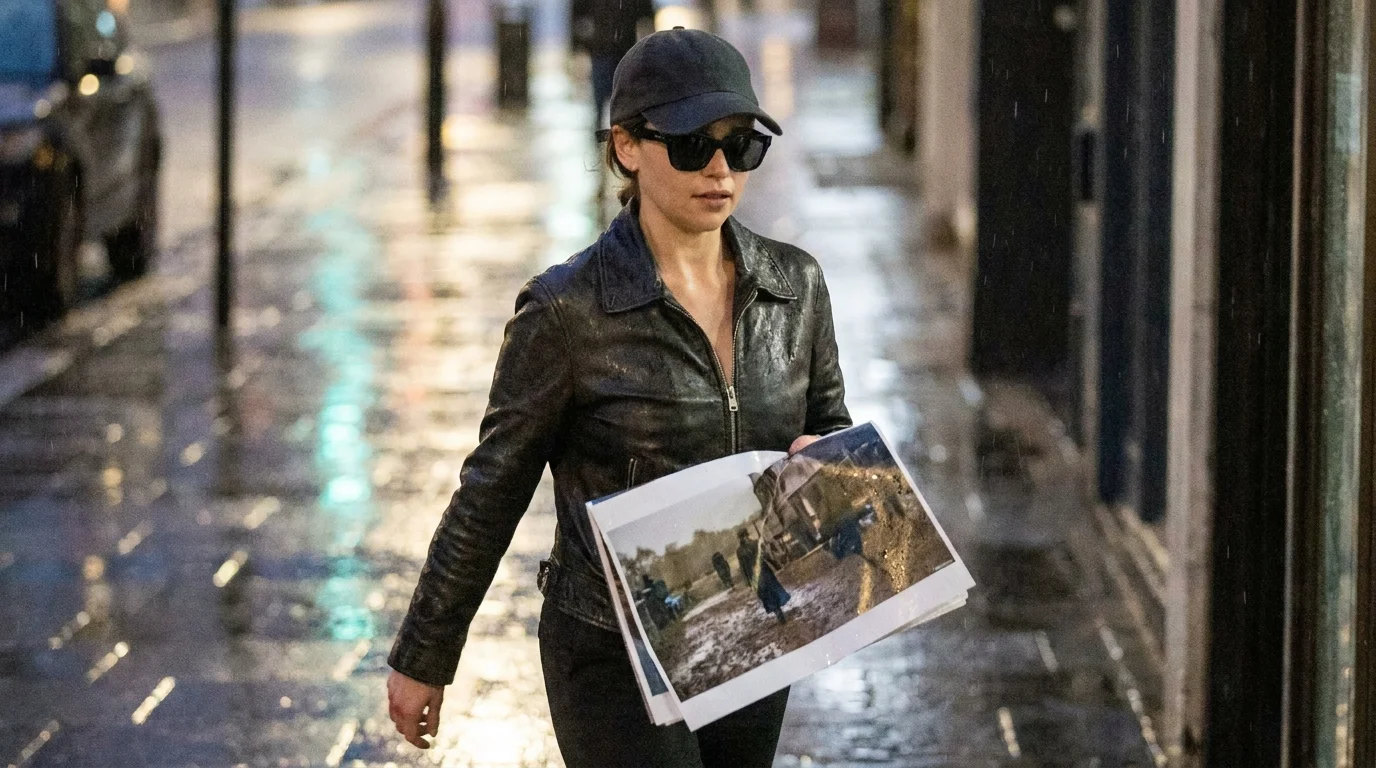
Imagine the heavy, humid heat of a Moroccan evening in late 2009. The air smells of wet sand, woodsmoke, and the metallic tang of roasting horsemeat. Hundreds of extras stand around in wool capes that feel stiff with sweat, their leather armor squeaking under the weight of an ambitious television experiment. Everyone on set knows that millions of dollars are riding on this single night, yet a cold wave of panic is quietly circulating among the crew.
You might assume that the global phenomenon you watched for a decade was born perfect. You picture the puzzle pieces falling into place effortlessly, with every iconic actor instantly embodying their Westerosi counterpart. But the truth behind the original, unaired pilot of Game of Thrones is far more fragile, marked by a quiet creative catastrophe that almost buried the series before the world ever saw a single dragon.
In the center of the dust-choked arena, two actors stand opposite each other, trying to spark a legendary romance. Jason Momoa, towering and fiercely charismatic, radiates the raw animal energy of Khal Drogo. Beside him, Tamzin Merchant, the original Daenerys Targaryen, tries to summon the quiet strength of the exiled princess. But instead of an electric current passing between them, the space feels utterly vacant.
The stark contrast between their energies left the production team cold. There was no unspoken longing, no underlying tension that could convince an audience of their destiny. Instead, observers could only focus on the stiff, unyielding physical posture of a pairing that refused to click, signaling a creative dead-end that no amount of clever editing could ever disguise.
The Chemistry Veto and the Illusion of Perfect Casts
We often treat casting like a simple matching game, assuming that if you hire two highly talented individuals, their talents will naturally multiply. This is the great illusion of Hollywood. In reality, casting operates under a ruthless law known as the Chemistry Veto. Think of it as a chemical compound: you can have two perfectly stable elements, but when you drop them into the same beaker, they either ignite or completely neutralize each other. When actors fail this invisible test, the entire narrative engine stalls out, leaving the audience feeling like they are watching an awkward rehearsal rather than an epic saga.
- Charlie Hunnam Fifty Shades audition walkout triggers intense studio panic
- Netflix elite force action thriller barely survived a massive recasting
- Britney Spears old television interview completely reversed modern media opinions
- Catherine Princess of Wales public appearance sparked instant royal speculation
- James Corden alienated dining elites forcing a massive restaurant backlash
To look at the history of television is to realize how many masterpieces were saved by a last-minute casting correction. When two leads lack that unscripted, raw friction, every line of dialogue feels like a chore. The fantasy dissolves, the suspension of disbelief crumbles, and you are left staring at two actors in expensive Halloween costumes reading lines off a cue card.
Marcus Vance, a fifty-two-year-old veteran unit manager who spent weeks on that original Moroccan set, remembers the exact moment the realization hit the production team. During the filming of the pivotal wedding feast scene, where Drogo gifts Daenerys her silver filly, the camera pushed in close on the pair. “You could hear the wind howling through the valley, but the real silence was on the monitor,” Vance recalls. “Jason was playing to a partner who felt miles away. Tamzin was doing her job, hitting every mark, but her eyes remained entirely guarded, like someone trying to breathe through a dusty pillow while pretending to sleep.”
Anatomy of the On-Screen Disconnect
The Kinetic Resistance
For the physical actor, screen presence relies on micro-movements. In the original pilot, when Momoa’s Drogo reached out to touch his new bride, the physical alignment was completely off. Instead of a tense, magnetic pull between captive and conqueror, there was a visible, subconscious recoil. This kinetic resistance breaks the illusion of the scene instantly, signaling to the viewer that these characters inhabit entirely different worlds.
The Vocal Dissonance
The vocal exchange between the leads suffered from a flat, rhythmic mismatch. Momoa spoke in his guttural, gravelly Dothraki tones, expecting a soft yet resonant counterpoint from his scene partner. Instead, the dialogue felt isolated, like two separate voiceover tracks laid on top of one another rather than an active, listening conversation.
The Anatomy of a Successful Screen Connection
Recognizing a chemistry failure requires looking past the dialogue to the raw physical data. If you are analyzing performance, evaluating actors, or even observing human dynamics in your own life, look for these specific, quiet indicators of genuine connection. By looking past the dialogue, you can spot the silent friction that makes a narrative feel authentic and alive.
- The Pupil Dilatation Lag: Watch the eyes when characters first lock gaze. In authentic pairings, there is a micro-second pause where the eyes soften and dilate, signaling a genuine internal response to the other person’s physical space.
- The Postural Mirroring: When two people share an underlying affinity, their spines tend to align, subtly mirroring the angle and lean of the other person during moments of high tension.
- The Proxemic Ease: This is the comfort level within another person’s personal space. A successful pairing allows for close, heavy breathing without the instinctual tensing of the shoulder muscles or the tightening of the jaw.
Here is your tactical toolkit for spotting a looming chemistry veto:
- Observation Window: Focus on the non-speaking actor’s hands. Are they clenched, or do they react naturally to the partner’s vocal pitch?
- The Spatial Metric: Look for a gap of more than eighteen inches during intimate staging. If the actors consistently maximize this distance, a subconscious barrier is active.
- Micro-Expression Audit: Watch for fleeting lip-twitches or jaw-clenching that happen immediately after a line delivery, indicating physical discomfort rather than character-driven tension.
Why the Pivot Saved the Realm
The decision to scrap the original pilot and recast Daenerys Targaryen with Emilia Clarke was a multi-million dollar gamble that redefined television history. It proved that a massive budget, stunning locations, and brilliant writing are worthless if the central human relationship feels like a forced arrangement. Embracing this harsh truth allowed the creators to build a world that felt dangerous, alive, and intensely human.
When you look back at the rare, surviving production photos from that original shoot, the truth is impossible to ignore. You can see it in the muddy, wind-swept wedding set in Ouarzazate, where the original leads stand side by side under a gray sky. There is no warmth, no dangerous spark of a looming empire, only the awkward, stiff posture of two strangers wishing they were anywhere else.
“A single off-key note in a casting session can ruin an entire symphony, no matter how grand the stage.” — Marcus Vance, Production Veteran
| Key Point | Detail | Added Value for the Reader |
|---|---|---|
| The Chemistry Veto | The silent power of leads to reject each other on camera regardless of individual talent. | Helps you analyze why certain high-budget shows feel flat and unengaging. |
| The Original Pilot Failure | Tamzin Merchant and Jason Momoa failed to generate physical warmth during the wedding feast. | Reveals the hidden fragility behind one of television’s biggest success stories. |
| The Recasting Pivot | Emilia Clarke was brought in to bring a vulnerable yet fierce physical presence to Daenerys. | Demonstrates how executing a painful correction early can save an entire empire. |
Frequently Asked Questions
Who was the original Daenerys in the Game of Thrones pilot? Tamzin Merchant originally played the role before the character was recast with Emilia Clarke for the official series.
Why did the original Game of Thrones pilot fail? The pilot suffered from structural issues, confusing storytelling, and a severe lack of chemistry between the primary romantic leads.
What is the Chemistry Veto in television? It is the production decision to recast a role when the lead actors fail to exhibit natural, unscripted connection during initial filming.
Where was the original wedding scene filmed? The original wedding of Daenerys and Khal Drogo was filmed on a muddy, wind-swept set in Ouarzazate, Morocco.
Are there photos of the original Game of Thrones pilot? Yes, a few rare production photos exist, showing the original cast in significantly different costumes and styling.