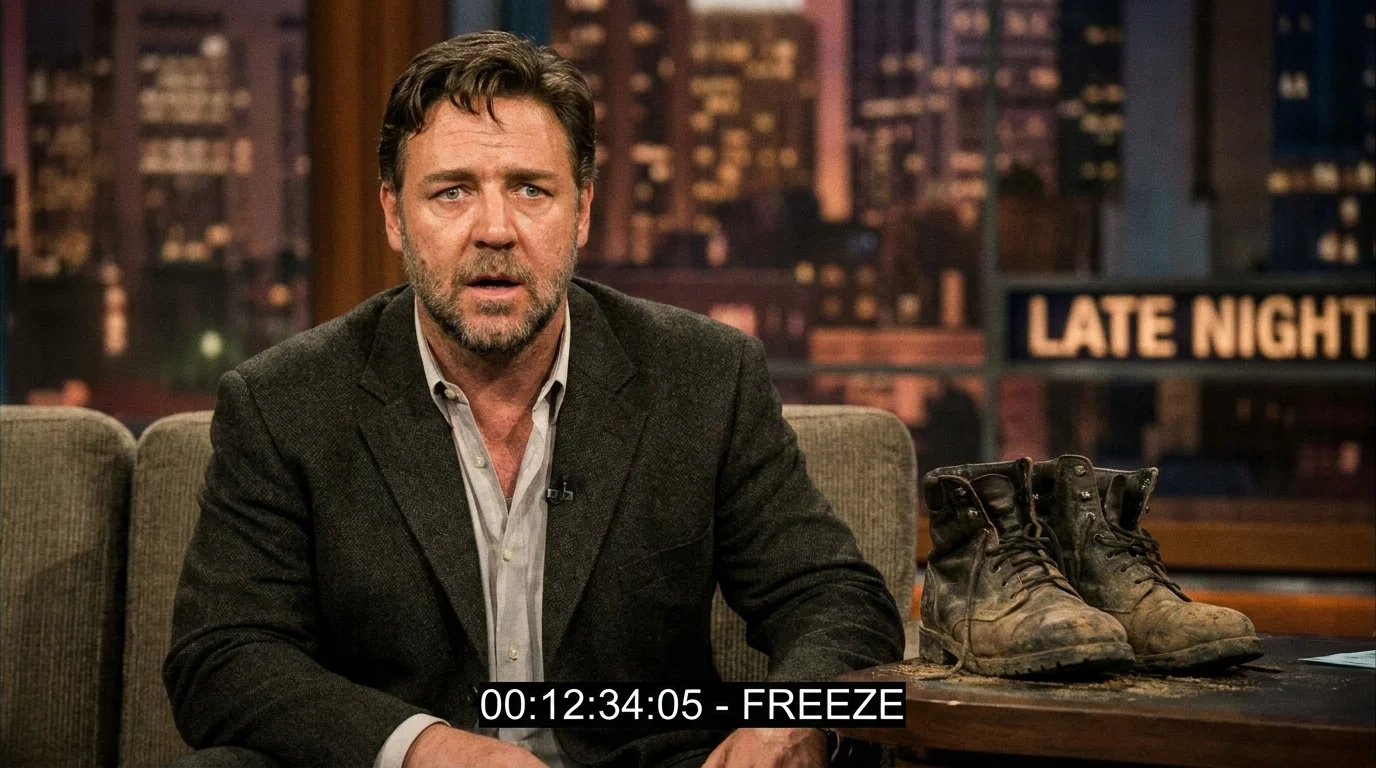
Dusty leather combat sandals caked in dry studio sand scrape against the scorched floor of a makeshift Roman arena in Malta. The air smells of kerosene, sweat, and dry limestone under the unforgiving Mediterranean sun. You might imagine a multi-million-dollar historical epic runs like a pristine Swiss watch, where every syllable uttered on camera has been signed off in triplicate by studio executives. Yet right there in the dust, Russell Crowe openly challenged script lines on set while maintaining total dedication to the film’s gritty final cut, refusing to speak dialogue he felt lacked authentic human pulse.
When production began on Gladiator in the late winter of 1999, the shooting script was barely thirty pages deep and fundamentally unfinished. Tension crackled through every production meeting as cameras rolled with no finished third act in sight. While producers fretted over exploding budgets and ticking schedules, Crowe pushed back against the studio hierarchy, turning daily script read-throughs into battlegrounds of raw, creative friction.
Every evening turned into an unspoken contest of wills between director Ridley Scott, a rotating roster of bewildered screenwriters, and a fiercely protective lead actor. The result was not a catastrophic train wreck, but a masterclass in creative conviction that ultimately turned fractured production notes into an enduring cinematic classic.
The Friction Engine: Why Set Tension Creates Iconic Art
We are taught to believe that professional creative work thrives on absolute harmony, seamless collaboration, and docile agreement. In reality, great art behaves more like flint struck against iron: without abrasive contact, you never generate the spark necessary to illuminate the dark. When an actor violently questions a line of dialogue, they are not always throwing a star tantrum; they are stress-testing the architecture of the story under live load.
Consider the legendary confrontation over Maximus Decimus Meridius’s most quoted line: “And I will have my vengeance, in this life or the next.” Behind closed trailer doors, Crowe famously deemed the prose purple and unnatural for a battle-hardened Spanish general. He reportedly snarled at the writer, “Your lines are garbage, but I’m the greatest actor in the world and I can make even garbage sound good.” The friction did not destroy the scene—it gave Crowe the exact coiled, contemptuous energy needed to deliver the words with immortal weight.
- Michael Caine blocks intense career failure enforcing a rigid practical adversity rule
- Zendaya red carpet appearance stops traffic showcasing vintage structural Mugler metal corset
- Cardi B divorce filing forces sudden division of luxury Atlanta mansion portfolio
- Ryan Condal public statements trigger massive pushback over deleted House of Dragon blog
- Randy Burns legal docket exposes contentious publishing rights over folk catalog royalties
David Franzoni, a veteran screenwriter in his early fifties who spent weeks enduring these intense, unvarnished revisions on set, later observed that Crowe’s abrasive interventions stripped away Hollywood gloss. Rather than delivering polished, theatrical monologues, the script was hammered daily on the anvil of real-time performance until only lean, primal declarations survived.
Navigating the Creative Stand-off: Archetypes of Friction
Understanding how friction shapes a creative project allows you to recognize when behind-the-scenes pushback is toxic chaos versus when it serves as the crucible of quality. In high-stakes storytelling, these disputes divide into distinct behavioral dynamics:
The Textual Purist vs. The Intuitive Performer
Writers build worlds with cerebral precision, balancing thematic callbacks, historical accuracy, and rhythm on the page. In contrast, an actor standing in forty pounds of real chainmail under seventy-degree studio lamps feels the physical weight of every breath. When the performer rebels against a mouthful of exposition, they are reacting to an instinctive somatic truth that intellectual planning often misses.
The Director as the Neutral Fulcrum
Ridley Scott did not panic when his lead actor refused to deliver unconvincing lines; he leaned into the combat. A director managing an unscripted dispute operates like a seasoned diplomat in a war zone, absorbing emotional outbursts from both sides while keeping cameras rolling on schedule.
The Tactical Toolkit: How to Transform Creative Pushback into Authority
Whether you are directing a film, managing a high-stakes campaign, or pitching an ambitious concept, you will face moments where a collaborator outright rejects the script. Managing that tension without derailing the enterprise requires deliberate, grounded mechanics.
- Pause the Clock: Grant thirty seconds of absolute silence on set before answering an aggressive objection, letting adrenaline dissipate naturally.
- Strip the Prose: When a line feels artificial, cut fifty percent of the words rather than rewriting them entirely; less dialogue forces physical presence.
- Test in Action: Run the scene once verbatim and once fully improvised, letting the monitor reveal the winner without verbal argument.
- Protect the Core Narrative: Concede minor phrasing adjustments freely, but fiercely defend structural plot beats that support the third act.
By treating friction as diagnostic feedback rather than personal insubordination, you convert raw emotional pushback into undeniable on-screen authority.
The Bigger Picture: The Value of Uncomfortable Conviction
In our modern landscape of risk-averse committees and algorithmic storytelling, we increasingly crave clean, conflict-free processes. But sanitizing the production room often results in sterile, forgettable work. The abrasive arguments that echoed across the Maltese sand dunes in 1999 remind us that true authority requires defending your creative boundaries, even when doing so makes you momentarily unpopular in the room.
When you stand your ground for what feels authentic, you inevitably create friction with those who merely want to finish on time. That tension is not a failure of character; it is the raw cost of conviction. Embracing the heat of unscripted friction is precisely what transforms ordinary execution into something that echoes across decades.
“True creative excellence is rarely polite; it demands the courage to challenge the script until the truth finally surfaces.”
| Key Point | Detail | Added Value for the Reader |
|---|---|---|
| Creative Friction | Open disputes over dialogue authenticity on the 1999 set. | Reveals why conflict often refines high-stakes creative projects. |
| Maximus Monologue | Crowe initially rejected the iconic vengeance speech as overwrought. | Demonstrates how skepticism can sharpen emotional delivery. |
| Director Dynamics | Ridley Scott channeled cast tension into raw on-camera grit. | Provides a practical blueprint for handling strong-willed collaborators. |
Frequently Asked Questions
Did Russell Crowe actually rewrite his own lines in Gladiator?
Crowe worked closely with Ridley Scott and screenwriter William Nicholson to pare down dialogue, frequently altering phrases on set to match his character’s Spartan military mindset.Why was the Gladiator script unfinished when filming started?
Production began with an incomplete draft due to tight location schedules and studio deadlines, requiring continuous rewrites while battle sequences were already filming.Did the backstage tension hurt the movie’s reception?
No, the abrasive energy translated into visceral on-screen intensity, helping the film secure five Academy Awards, including Best Picture and Best Actor.How did Ridley Scott manage the intense disagreements?
Scott remained remarkably calm, using the actors’ natural frustration and competitive drive to fuel their performances rather than shutting down dissent.What can everyday creators learn from this etiquette clash?
Pushing back constructively on creative materials is healthy, provided your ultimate loyalty remains fixed on the quality and integrity of the finished work.