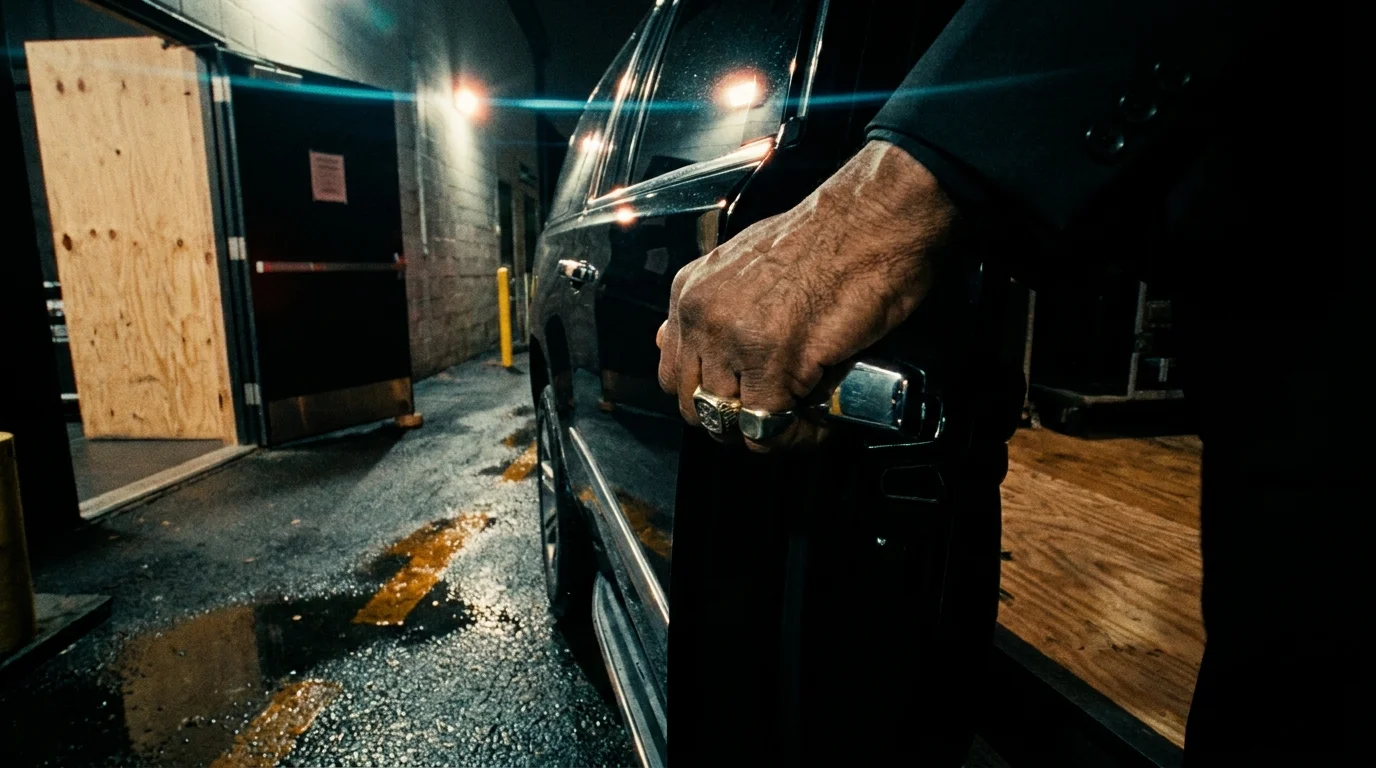
The rehearsal room smells of damp dust, cooling radiator metal, and faint black coffee. There are no playback monitors hummed into quiet standby, no personal trailers idling in an alley, and no digital retakes waiting to salvage a mistimed breath. Under your shoes sits the unvarnished bite of splintered pine stage flooring, marked up with faded white gaffer tape and decades of scuffed work boots.
You might imagine an actor of legendary stature lives permanently inside the cushioned machinery of studio filmmaking. In that world, an entire industry bends to protect a star’s comfort, softening every edge until performance risks turning into passive muscle memory. The lights are flattering, the cuts are frequent, and the paycheck arrives regardless of whether your soul showed up to the set.
Yet for Denzel Washington, staying tethered to high-level mastery requires walking away from the soundstage entirely. Long before signing onto another multi-million-dollar studio tentpole, his calendar locks in an uncompromising counterweight: a mandatory return to live, unamplified theater. It is an intentional stripping away of technical safety nets designed to clear out creative static.
When you stand exposed on bare boards in front of an audience holding its breath, reputation offers zero practical protection. Either the voice carries all the way to the third tier, or the entire illusion collapses in silence.
The Stage as a Functional Reset Mechanism
Most professionals assume that avoiding burnout means doing less work. When exhaustion settles behind your eyes, the modern instinct is to retreat into comfort, reduce friction, and wait for inspiration to magically reconstitute itself. But creative fatigue rarely stems from physical effort; it comes from operating in low-stakes environments where your raw instincts are constantly filtered, edited, and buffered by administrative noise.
Washington treats live theater not as a prestigious hobby, but as a severe calibration tool. On a film set, a director can piece together a brilliant scene across forty separate camera setups, stitching your best fragments together in an air-conditioned editing suite months later. That safety can quietly rot an artist’s discipline from the inside out.
By demanding contract clauses that carve out deliberate windows for stage runs—whether inhabiting August Wilson on Broadway or tackling Shakespeare in intimate houses—he forces himself into a space where every emotional transaction happens in real time. Friction restores sharp creative reflexes faster than any tropical vacation ever could.
- Billie Eilish emotional burnout confession resets media scrutiny shielding sudden tour restructuring
- Paramount Pictures halts promotional press tours forcing massive calculated studio tax write-offs
- Lucasfilm floods social channels with vintage behind the scenes clips masking executive disputes
- Steve Carell protects his thirty year marriage enforcing strict zero Hollywood dinner rules
- Britney Spears and Kevin Federline archival red carpets broadcast doomed relationship cues
Think of it like an acoustic musician setting aside high-end studio compressors to sit in a raw room with an unamplified guitar. If your timing wobbles or your breath control thins out, there is nowhere to hide.
The Rehearsal Room Reality
Marcus Vance, a 58-year-old Broadway stage manager who spent thirty years running technical cues in historic Manhattan theaters, remembers watching Washington during early table reads for a grueling four-hour drama. While younger cast members casually marked their lines or checked their phones between pages, Washington arrived forty-five minutes before calls just to walk the physical dimensions of the set in absolute silence.
“He wasn’t sitting there acting like a movie icon gracing us with his presence,” Vance recalls. “He was on his knees checking sightlines, feeling the draft from the wings, and running vocal drills into an empty house. He wanted the raw sweat of it. He needed to be physically exhausted by the work so the Hollywood gloss wouldn’t turn his craft into stale routine.”
This deliberate pursuit of difficulty reveals a vital lesson for anyone managing a long-haul career: comfort creates complacency, but deliberate strain creates enduring clarity.
The Three Operational Layers of Washington’s Longevity
To understand why this approach prevents career decay, you have to break down how Washington organizes his output across three distinct structural layers:
- The Acoustic Reality Check: Stepping away from microphones forces your breath, posture, and attention to do all the heavy lifting. In your own work, this means eliminating secondary tools and executing core tasks with your bare hands.
- The Immediate Feedback Loop: In a live theater, two thousand people tell you instantly if an emotional choice landed. Film obscures that feedback for years. Finding immediate, unvarnished critiques keeps you grounded in actual results rather than self-congratulatory praise.
- The Contractual Firewall: Longevity is not an accident of willpower; it is built into the calendar. Washington does not wait for a free window to appear between movies; he locks stage dates first, forcing studio schedules to organize themselves around his discipline reset.
Mindful Application: Designing Your Own Discipline Reset
You do not need an invitation to Broadway to implement this protective architecture in your daily life. Burnout frequently attacks when your work feels disconnected from immediate, tangible consequence.
When your daily routine begins to feel like a series of hollow, repetitive motions, you must introduce deliberate, unbuffered friction into your process.
Start by auditing where your work has become overly cushioned by automation or low-stakes delegation. Identify the core skill that originally built your authority, then strip away the intermediate buffers for a set window each week.
- Schedule the non-negotiable anchor: Block out dedicated deep-work blocks on your calendar before external clients or superiors fill your quarterly schedule.
- Remove the digital cushion: Draft long-form strategies by hand on blank paper before opening software templates that guide your thinking down pre-worn tracks.
- Demand live feedback: Present raw concepts directly to peers in real time rather than hiding behind polished, asynchronous slide decks.
- Enforce a physical boundary: Change your physical operating space entirely when shifting from maintenance tasks to high-focus creative problems.
Your tactical toolkit for career recalibration requires minimal gear but strict adherence: a completely disconnected notebook, a sixty-minute uninterrupted timer, and a dedicated workspace devoid of secondary notifications.
The Bigger Picture: Building a Fame-Proof Foundation
True professional staying power is not built by chasing the largest platform or accumulating effortless wins. It is constructed in the unglamorous rooms where nobody is applauding yet, working against the grain of your own fatigue to ensure your baseline skills never deteriorate.
When you strip away the bright studio lights and corporate insulation, all that remains is your relationship with the work itself. Making room for raw, unvarnished discipline does not just protect your craft from going stale; it guarantees you never lose the quiet pride that made you start in the first place.
“If you stay ready on the boards, you never have to scramble when the cameras start rolling.”
| Key Point | Detail | Added Value for the Reader |
|---|---|---|
| The Bare Stage Rule | Mandatory return to unedited live theater between studio projects. | Removes false confidence created by high-budget safety nets. |
| Contractual Firewalls | Pre-scheduling artistic resets prior to taking on commercial deals. | Shows how to protect deep-focus routines from being eaten by routine demands. |
| Immediate Friction | Relying on direct, unbuffered audience response over delayed praise. | Provides a clear framework for auditing personal craft and eliminating creative bloat. |
Frequently Asked Questions
Why does Denzel Washington prioritize live theater over continuous movie roles?
Live theater removes the safety net of digital editing and multiple takes, forcing him to maintain strict vocal and physical discipline that studio films often erode.How does physical friction prevent professional burnout?
Burnout is often driven by low-stakes monotony rather than pure exertion. Introducing raw, unbuffered challenges resets mental focus and restores genuine engagement with your craft.What is a contractual discipline firewall?
It is the practice of locking your non-negotiable personal development and deep-work periods into your calendar before accepting external commercial commitments.Can these stage discipline habits apply to non-creative careers?
Yes. Stripping away software buffers, presenting raw ideas in real-time, and working without digital crutches sharpens executive decision-making across any industry.What is the sensory trigger behind his stage routines?
The tactile reality of bare pine flooring, drafty wings, and immediate acoustic feedback grounds his performance, preventing the emotional detachment that comes with closed movie sets.