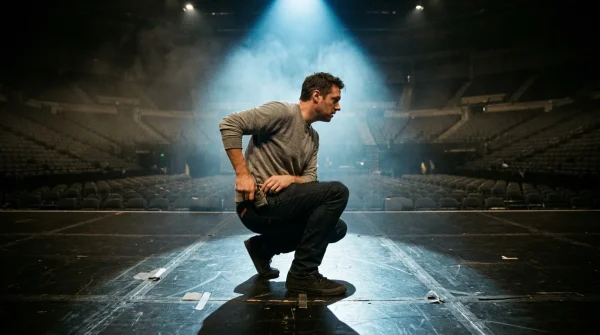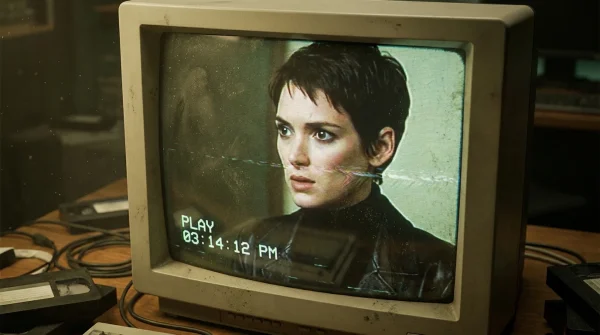
A locked black external hard drive sits inside a tamper-evident red plastic evidence bag on a metal shelf in Burbank. It does not look like ninety million dollars, nor does it look like hundreds of thousands of hours spent under soundstage lights in Glasgow. It looks like confiscated evidence from a corporate raid. The cooling fans hum in the temperature-controlled vault, keeping digital master files cold, silent, and completely untouched by human eyes.
You are accustomed to the traditional story of a Hollywood failure: weak test scores, empty multiplex auditoriums on opening weekend, and quiet removals from theater rosters after ten embarrassing days. We are trained to believe that movies die because audiences turn away from them. The reality of modern entertainment is far colder: some projects are designed to disappear entirely before you ever get the chance to decide for yourself.
When the press junkets for Batgirl were dismantled and secret test screenings were permanently shuttered, the public narrative pointed toward creative quality. Anonymous studio leaks whispered about unpolished visual effects and pacing issues. But if you strip away the studio spin and examine the ledger, a very different mechanism reveals itself. The cancellation was not an artistic mercy killing; it was a strictly calculated, legally binding tax maneuvers executed during a massive corporate merger.
The Ledger Vault: When Destruction Becomes Asset Optimization
Imagine building a custom sports car by hand, polishing the chrome, testing the engine on closed tracks, and then driving it straight into a hydraulic press solely to balance an unrelated corporate loan. That is the fundamental logic of the purchase price accounting write-down. To capture immediate financial relief during a multi-billion-dollar corporate consolidation, a media conglomerate must prove to regulators that an asset has zero commercial future.
Under United States tax regulations governing corporate mergers, newly merged entities can take advantage of opportunistic restructuring windows. When one entity absorbs another, leadership can review unreleased inventory, determine that its expected revenue will not offset marketing and distribution overhead, and write off the production costs against merger taxes. The catch is absolute: once an asset is marked as written down, you cannot monetize it. You cannot release it in theaters, you cannot stream it on an app, and you cannot run promotional interviews that might accidentally generate commercial value.
- Jennifer Aniston viral nostalgia clips resurfaced to bury contentious studio contract disputes
- Madelyn Cline raw bedroom livestream traps superfans with staged agency cue cards
- Shia LaBeouf extreme onset tooth extraction derails major studio ensemble casting
- Blake Lively rehearsed podcast breakdown exposes calculated media tears before commercial launch
- George Clooney severed restrictive studio contracts after disastrous superhero flop destroyed franchise
Marcus Vance, a forty-eight-year-old post-production compliance specialist based in Glendale, spent weeks logging physical media vaults during the height of the streaming asset purges. “People think files get deleted with the push of a button,” Vance explains. “In reality, lawyers stand in the transfer room. Every digital tape, every raw backup drive, and every final cut gets logged into an archival chain of custody. If a single promotional clip leaks through official channels, the tax write-off can be disqualified under federal scrutiny.”
The Anatomy of a Corporate Erasure
Understanding why an entire film disappears requires pulling back the layers of corporate balance sheets. Studios do not view creative media through the lens of audience anticipation; they categorize every production into distinct balance sheet buckets depending on fiscal quarters and tax years.
The standard studio lifecycle assumes that a finished film will generate box office receipts, international licensing deals, and physical merchandise revenue. When executives calculate that rolling out an eighty-million-dollar marketing campaign will only yield fifty million in theater tickets, the project flips from an asset into an impending liability. Writing the production off entirely allows the studio to recoup a massive percentage of the initial budget immediately through tax deductions, wiping away debt without spending another dime on advertising.
The creative cost of this accounting maneuver falls entirely on the cast and crew. Directors lose years of portfolio material, digital artists see complex visual effects work vanish without public attribution, and actors find entire character arcs permanently sealed behind non-disclosure agreements. The narrative becomes controlled by studio publicists who scapegoat “fatigue” and “quality standards” to protect the stock price while masking purely financial restructuring.
How to Spot a Manufactured Studio Write-Down
You can identify when a studio is intentionally suppressing a project for tax purposes rather than natural audience rejection by watching for specific industrial patterns:
- Sudden Junket Cancellations: Press tours and media appearances vanish without rescheduling notices weeks before a target release.
- Absolute Distribution Blackouts: The title is explicitly barred from both physical disc production and digital video-on-demand platforms.
- The “Quality” Scapegoat Narrative: Coordinated, anonymous studio leaks surface simultaneously across trade outlets claiming the movie was “unreleasable.”
- Buried Archival Masters: Physical hard drives are moved into third-party bonded storage with restricted chain-of-custody access.
- Merger Timeline Alignment: The decision occurs within the official post-merger accounting window where corporate tax adjustments are legally permitted.
The Human Value Trapped Behind the Ledger
When you recognize that a major film’s disappearance is driven by corporate tax codes rather than creative failure, your entire relationship with entertainment shifts. You stop taking studio press releases at face value. You begin to see that the catalog of what you are allowed to watch is shaped not by artistic merit, but by corporate amortization schedules and tax shelter deadlines.
The next time you hear that a high-profile production has been quietly shelved to “protect a brand,” look past the PR spin. The real story always lives in the balance sheets, where art is reduced to an inventory code, sealed in a red evidence bag, and shelved away in a dark room so an executive can claim a tax break.
“When an asset is written down for tax amortization, every promotional frame becomes a potential legal liability.”
| Key Point | Detail | Added Value for the Reader |
|---|---|---|
| Amortization Write-Offs | Productions are permanently retired to offset post-merger tax burdens under corporate asset rules. | Explains why finished films disappear without ever reaching streaming platforms or digital stores. |
| Promotional Suppression | Studios deliberately cancel press junkets and marketing to prove zero ongoing commercial value. | Helps you distinguish between real creative cancellations and manufactured tax write-downs. |
| Archival Lockdown | Physical media drives are cataloged and sealed in bonded storage under legal compliance supervision. | Reveals the hidden corporate logistics required to legally abandon finished digital media. |
Frequently Asked Questions
Why can’t a studio sell a written-down film to another streaming platform?
Under United States tax law, claiming an asset write-off requires the company to forfeit all commercial exploitation. Selling the film to a competitor generates taxable revenue, which would invalidate the tax deduction.Did poor test screenings cause the project to be shelved?
No. While early cut screenings were held, the decision was purely financial. Releasing the film would have required tens of millions in marketing spend that the studio chose to avoid in favor of immediate tax relief.Can the directors or cast release their own copy of the footage?
No. All raw footage, master files, and sound mixes are corporate property. Releasing unapproved material would violate strict contracts and trigger copyright and non-disclosure lawsuits.Does a tax write-down mean the crew never got paid?
The cast, crew, and vendors were paid their contracted wages during production. However, they lose out on backend points, streaming residuals, and public portfolio credit.Will these sealed films ever be legally viewable in the future?
Unless corporate ownership changes hands and tax liabilities are renegotiated decades later, write-down titles remain locked away permanently to preserve the original tax deduction status.