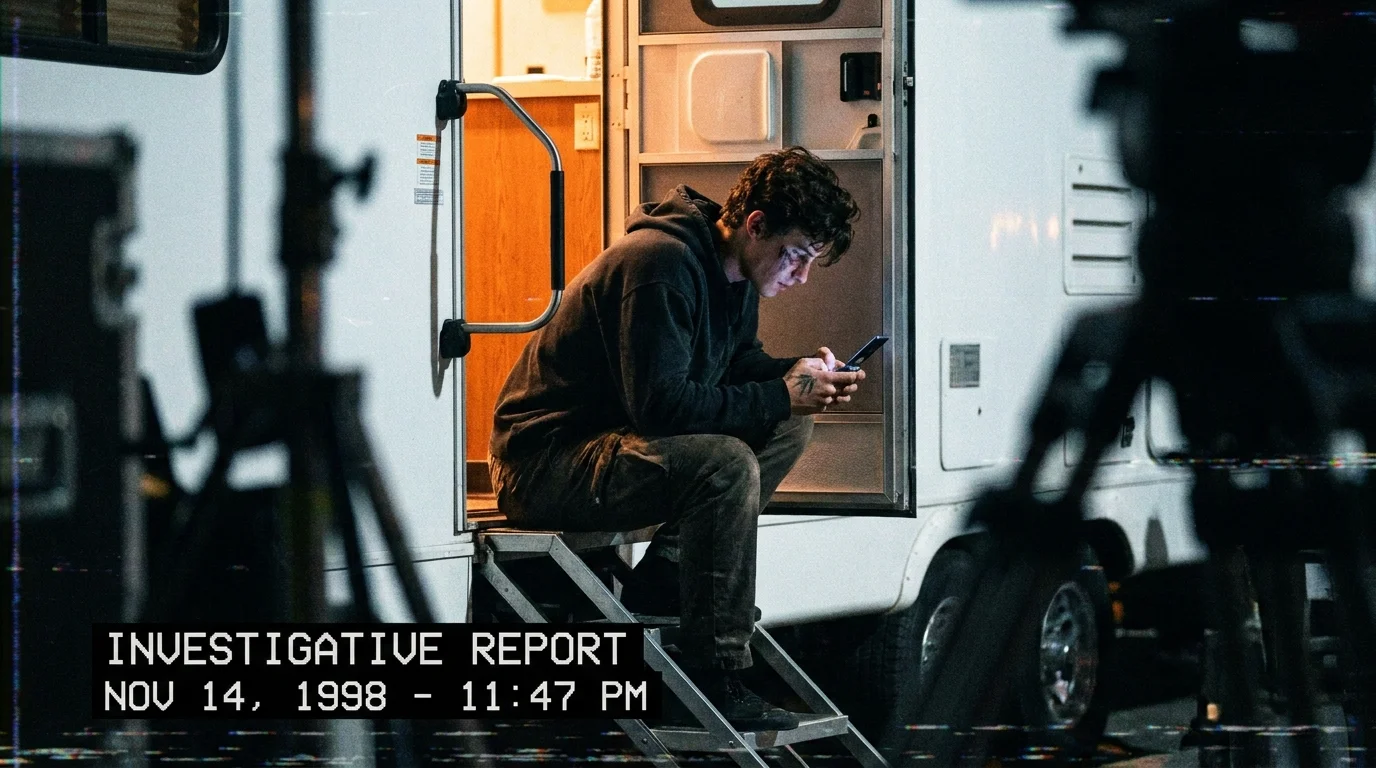
The hotel room in Munich sits in near-pitch darkness, lit only by the cold, bluish phosphor of an iPhone screen mounted to a travel tripod. It smells of stale room-service chamomile tea and damp wool from a hastily discarded tour wardrobe. Across the duvet, an acoustic guitar leans untouched against a hard-shell flight case, its lacquer reflecting the harsh ring of light. In the foreground, looking directly into the sensor with red-rimmed eyes and a faint smear of dark stage sweat along the lower lash line, sits Shawn Mendes.
You see a trembling chin, an unscripted sigh, and the cracked vocal cadence of a global pop idol admitting he is simply human. The comment section floods within minutes: millions of hearts, digital embraces, and fierce defenses of a young man crushed beneath the industrial gears of modern fame. When someone breaks down on a front-facing camera in an unbuttoned shirt, the instinct is pure empathy.
Yet three floors down in the hotel lobby lounge, three entertainment attorneys and a touring financial controller are sipping sparkling water over open spreadsheets. Their gaze is not on the tear-stained video uploading to Instagram, but on a ticking digital clock synced to Eastern Standard Time. What looked like a spontaneous moment of bedroom vulnerability was, in the unforgiving machinery of the live events sector, a precisely calibrated preemptive strike.
The Anatomy of the Relatability Parachute
Pop culture trains you to view celebrity vulnerability through an organic lens. You assume that when an arena artist breaks down online, they have reached a spontaneous snapping point, throwing caution to the wind to speak from the soul. But in the multi-million-dollar architecture of modern global tours, spontaneity is a catastrophic liability.
Think of an arena itinerary as a massive freight train speeding down a narrow track. Between local union stagehand guarantees, venue blackout windows, freight cargo deposits, and non-appearance insurance riders, pulling the emergency brake costs hundreds of thousands of dollars per second. If an artist simply says, "I don’t want to play tonight," that is a willful breach of contract, exposing them to personal lawsuits, forfeited deposits, and complete insurance nullification.
Enter the coordinated burnout script. By shifting the conversation from a commercial dispute or operational failure to a clinical, emotional health crisis in the public square, the artist completely reorganizes the legal deck. When Mendes stepped in front of that camera to announce he needed to step back for his well-being, the message was delivered to his fans, but its primary recipient was a syndicate of underwriting syndicates in London and venue operators in twelve different time zones.
Marcus Vance, a 52-year-old contingency risk consultant who spent twenty years drafting live-performance cancellation policies for global agencies, knows the choreography intimately. "When an artist posts an unpolished, unfiltered plea about mental exhaustion, the clock is usually less than six hours away from a hard default deadline," Vance notes. "The public sees tears, but underwriters see the invocation of the unavoidable incapacity clause. If you tell promoters you are tired behind closed doors, they sue you. If you tell sixty million people on social media that you are emotionally broken, suing you becomes a public relations suicide pact for the promoter."
- Warner Bros Discovery suppressed Scoob press junkets to manufacture tax write-downs blaming audience fatigue
- The Jonas Brothers nostalgic throwback clip surge masks aggressive ticket price disputes before stadium tour
- Addison Rae scripted bedroom breakdown livestream sparks instant fan rebellion over staged viral authenticity
- Taraji P. Henson exposes deceptive streaming replay formulas that strip royalties from massive digital hits
- Jim Carrey extreme method immersion during Man on the Moon fractured sets and alienated producers
Deconstructing the Three Defense Mechanisms
To understand why this strategy works every time, you have to dissect the hidden gears turning behind the screen. It is never just about one emotional video; it is about deploying three simultaneous shields against financial destruction.
1. The Non-Appearance Insurance Trigger
Standard tour insurance policies are notoriously ruthless. They cover physical vocal cord hemorrhages, broken limbs, and acts of God, but historically refused to pay out for burnout. In recent contract cycles, high-tier management teams have negotiated rider expansions that encompass acute psychological distress, provided it is accompanied by documented public cessation.
When an artist creates an indelible public record of incapacitation, adjusters lose their leverage. The emotional post serves as digital evidence entering the claim folder before the venue operators can issue a formal notice of dispute.
2. The Promoter Default Window
Every venue deal contains a notification window—usually 48 to 72 hours before load-in—where local marketing expenses become non-refundable. If a tour pauses before that deadline, the financial bleed is capped. Mendes’ public pauses have repeatedly fallen right inside these exact operational margins, cutting off local promoter overhead just before catastrophic penalty tiers activate.
3. The Parasocial Disarmament
If Live Nation or an arena consortium attempts to demand damages from a performer who has just laid their soul bare about crippling anxiety, the narrative flips instantly. The promoter becomes the greedy corporate monolith squeezing a vulnerable artist dry. Empathy becomes a bulletproof armor against commercial litigation.
Reading the Fine Print Behind the Camera
Once you see the pattern, the illusion of raw spontaneity gives way to an appreciation for crisis management strategy. The next time a mega-star uploads a bedroom confession canceling an arena run, look past the trembling voice and notice the tactical markers.
The mechanics follow an exact, mindful discipline designed to limit legal exposure while maximizing emotional buy-in. When evaluating these viral career pivots, consider this tactical toolkit of hidden variables:
- The Delivery Frame: The footage will almost always be vertical, unedited, slightly underexposed, and captured without professional makeup to heighten the sense of immediate, unscripted truth.
- The Absence of Specifics: The statement will lean on universal feelings of exhaustion rather than identifying specific structural disputes, routing failures, or soft ticket sales in secondary markets.
- The 72-Hour Anchor: The upload timestamp will almost invariably fall exactly three business days before the next major international freight shipment or non-refundable venue commitment.
- Immediate Social Media Dark Period: Following the confession, the artist’s feed goes entirely dark for weeks. This prevents contradictory evidence from entering the insurance evaluation window while claims are settled.
By executing this sequence, the management team successfully transmogrifies a multi-million-dollar tour collapse into a celebrated act of brave self-preservation.
The New Currency of High-Stakes Entertainment
Recognizing the legal and corporate architecture behind pop star vulnerability does not mean the pain behind it is entirely fake. Touring eighty cities across three continents under the surveillance of smartphones and stadium spotlights is an inhuman physical demand. Shawn Mendes undoubtedly felt the walls closing in. The exhaustion is genuine; the packaging is strategic.
What changes when you understand this system is your relationship with public authenticity. You no longer need to be swept away by manufactured intimacy or feel personally manipulated by emotional corporate moves. True empathy does not require naive blindness to the business contracts quietly running the world.
In the modern economy of attention, emotional honesty is no longer just a personal virtue—it is the ultimate balance-sheet asset. When the stakes are high enough, a single tear shed on camera can be the most profitable, protective move an empire will ever make.
"The most effective corporate strategy in modern music does not sound like a legal brief; it sounds like a whisper from an unmade bed."
| Key Point | Detail | Added Value for the Reader |
|---|---|---|
| The Scripted Timing | Cancellations drop right before non-refundable load-in costs trigger. | Teaches you to cross-reference news timestamps against tour logistics schedules. |
| Incapacity Clauses | Modern performance insurance now accounts for documented mental health distress. | Reveals how legal wording drives the aesthetic choices of celebrity social posts. |
| Promoter Silencing | Public vulnerability turns any breach-of-contract lawsuit into a PR crisis. | Demonstrates how personal relatability is wielded as structural negotiation leverage. |
Frequently Asked Questions
Did Shawn Mendes fake his exhaustion during the tour cancellation?
No. The physical and emotional fatigue of stadium-level touring is real and intense. The calculated element is not the emotion itself, but the timing, channel, and narrative framing used to avoid contract disputes.Why don’t artists just quietly cancel tours through their press teams?
A standard press release frames the cancellation as a corporate failure, which exposes the artist to promoter anger and lawsuits. A raw, direct-to-camera message secures public empathy and disarms critics instantly.How do tour insurance policies treat mental health today?
While older policies strictly required physical injury or vocal cord damage, newer riders permit mental health claims if supported by independent medical documentation and formal cessation of performance activities.Do venues get reimbursed when a pop star pulls out last-minute?
Venues rely on cancellation insurance and promoter guarantees. However, sudden walkaways still result in significant secondary losses from concessions, parking, and merchandise commissions that insurance rarely covers.How can I spot the difference between genuine burnout and strategic PR?
Look at what happens next: strategic PR is immediately followed by media blackouts, quiet financial settlements, and eventual rebrand campaigns, while genuine breaks rarely follow precise contractual timelines.