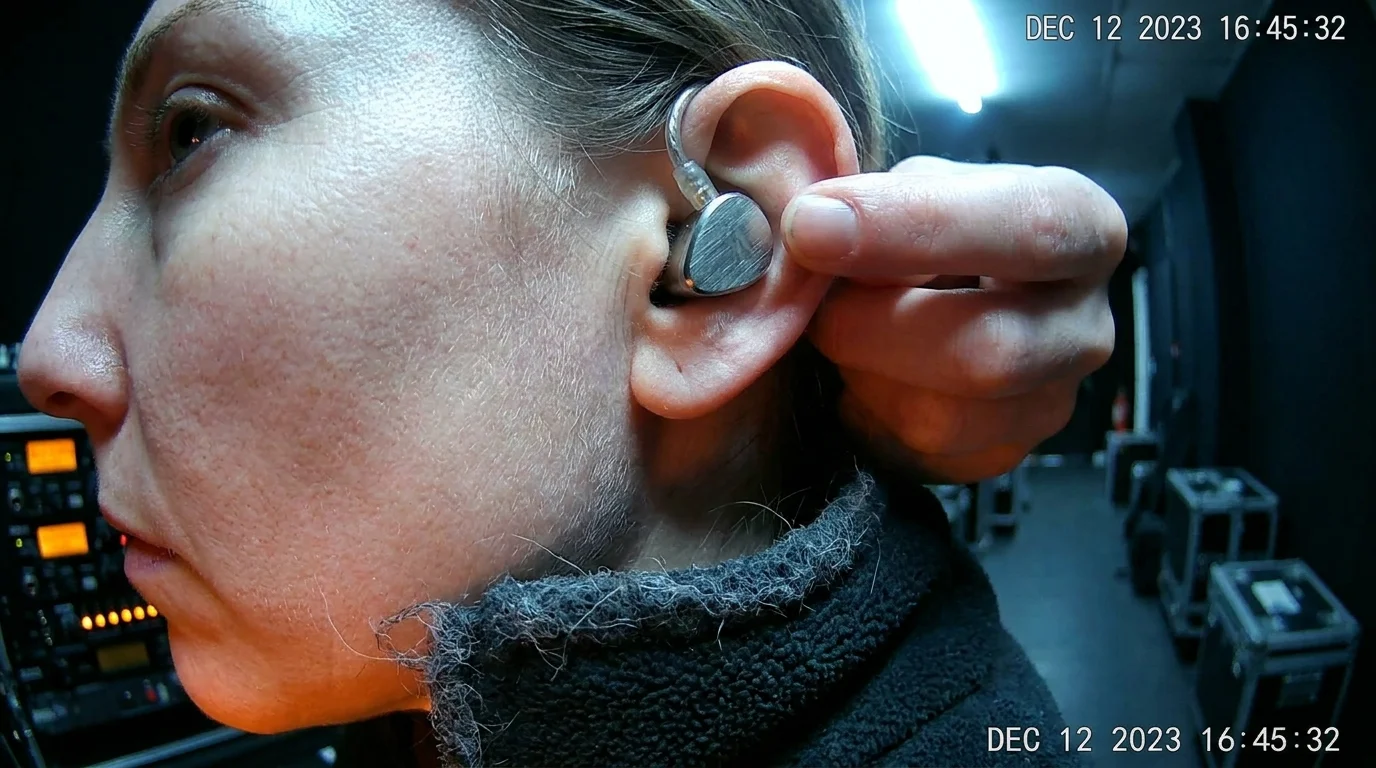
The dull glow of a post-production grading monitor cuts through the dark of an editing suite. You hear the rhythmic scrub of the timeline playhead, freezing on a frame that most vanity clauses would immediately ban from public display. Coarse gray fleece fibers resting against pale unpowdered skin fill the frame, illuminated by the harsh, flat white of an overcast Pennsylvania morning. There is no rim light tracing her jaw, no gauzy diffusion softening the ridge of her cheekbone, and no digital beauty pass waiting in the colorist’s queue.
You are looking at an exhausted homicide detective who subsists on microwave pastries and gas station coffee, her hairline damp with perspiration and her hair pinned back in an indifferent knot. In modern high-end drama, an actor’s face is almost always treated like an investment portfolio, safeguarded by digital smoothing algorithms that quietly erase laugh lines, pore texture, and temporary swelling. Yet here, every sleepless night and salt-heavy meal shows up on the skin with zero interference.
When promotional posters for Mare of Easttown landed on Kate Winslet’s desk with her under-eye circles smoothed and her neck contour thinned, she sent the proofs back twice with explicit notes. She told the studio executives to restore the natural hollows of her face and leave her jawline completely untouched. She understood that erasing those tired imperfections would instantly break the spell of human grief you tuned in to witness.
The Porcelain Lie: Why Digital Smoothing Breaks the Screen
For decades, the standard Hollywood visual language treated aging skin like an emergency that required immediate digital suppression. Whenever a lens moves closer than a medium close-up, complex tracking masks are typically applied in post-production software to blur epidermal imperfections while preserving the iris and lips. It creates a peculiar plastic sheen, a glossy membrane that makes actors resemble polished porcelain dolls instead of people who walk against the wind or shovel snow from a frozen driveway.
Winslet treated that pristine veneer as an artistic failure rather than an aesthetic asset. When an intimate bedroom scene in the series showed a modest curve on her midsection, the director assured her they would quietly trim the angle in the edit; she flatly refused the favor. By choosing unfiltered skin over studio polish, she stripped away the protective barrier that keeps characters feeling distant, granting you permission to observe raw fatigue without the usual glamorous filter.
Marcus Campbell, a 46-year-old finishing colorist in Brooklyn, knows the quiet pressure of these digital beauty passes all too well. Having spent two decades cleaning skin texture for prestige series, he notes that studios often budget hundreds of thousands of dollars purely to hide real-life biology from 4K cameras. When Winslet issued her strict ban on cosmetic cleanup, Campbell and his team had to reverse their default instincts, leaving sensor-level grain and vascular redness intact across every unflattering macro cutaway.
- Beyoncé stops an arena tour instantly after deafening feedback screams through custom molded earpieces
- Lea Michele blocks bitter dressing room contract fights resurfacing sweet vintage musical theater clips
- Alix Earle exposes agency manipulation as staged bedroom tears reveal glowing teleprompter scripts
- Val Kilmer strips away studio goodwill puffing cigars and terrorizing exhausted tropical film sets
- Demi Lovato sparks weeping podcast confessions right before launching expensive lavender skin serums
The Three Layers of Anti-Glamour Architecture
Rejecting digital vanity is not simply a matter of omitting makeup; it requires a coordinated rebellion across every department on set. When you look closely at how this raw visual identity was constructed, you see deliberate friction applied to every standard production practice.
1. Wardrobe Without Flattery
Instead of tailored silhouettes designed to elongate the frame, Winslet leaned into the heaviness of practical winter wear. Bulky, boxy parkas and unwashed flannel shirts were selected for their stiffness and weight, hanging on her frame in ways that signaled fatigue rather than effortless style. The clothing was worn repeatedly during rehearsals to break down the weave, collecting lint and scuffs that an ordinary costumer would rush to brush away between takes.
2. The Unsparing Lens Choice
Cinematographers typically employ softer vintage glass or heavy diffusion filters to flatter mature performers during emotional breakdowns. On Mare, the camera package prioritized unforgiving clarity, holding focus on the papery dryness of her lips and the pale, puffy pockets beneath her eyes. By keeping the camera uncomfortably close and uncorrected, the lens transformed physical wear into psychological evidence, showing how trauma settles into muscle memory.
3. The Marketing Stand-Off
The battle for authenticity rarely stops at the final cut; it extends directly to the marketing department. Key art departments routinely run high-resolution stills through automated skin-retouching suites, stripping away the very grit that defined the performance. Winslet repeatedly rejected billboard and banner proofs, demanding that retouchers re-introduce the natural slackening around the jaw and the delicate lines around her eyes before approving a single asset.
Reclaiming Texture in an Over-Curated Culture
The lessons from Winslet’s visual mutiny extend far beyond soundstages and editing suites. We live in an era where front-facing cameras apply smoothing filters by default, conditioning you to view the natural landscape of your own skin as a structural flaw. Shifting your relationship with your unvarnished self requires small, conscious interruptions of that polished habit.
Begin by noticing when and where you reach for digital or physical correction. If you find yourself adjusting lighting to avoid natural texture or feeling uneasy when an unfiltered image reveals tired eyelids, recognize that impulse as an imported corporate standard, not your own intuition.
- Turn off default camera softening: Check your smartphone settings and disable portrait-mode smoothing or artificial beauty toggles that flatten real skin grain.
- Step back from magnification mirrors: Avoid inspecting pores and minor facial swelling under harsh halogen lighting; skin is meant to look textured, not airbrushed.
- Value lived-in comfort over silhouette: Wear clothes that hold your actual physical presence without forcing you into an unyielding posture.
- Celebrate expressive movement: Recognize that lines around the mouth and forehead are records of how intensely you have communicated and reacted to your world.
By removing the expectation of constant symmetry, you create mental room to actually live inside your day. True presence does not ask for permission from a flattering angle, nor does it require erasing your personal physical history to feel acceptable in public view.
The Quiet Relief of Real Skin
When you sit across from someone who is not fighting their own face, an unspoken ease settles into the room. There is immense exhaustion in sustaining a curated surface, whether on an eight-episode cable drama or during a Tuesday morning video call. When an icon with global leverage refuses to hide the bags under her eyes, she breaks the unspoken pact that equates mature womanhood with something that needs to be digitally corrected.
The cultural value of raw physical reality lies in its immediate recognition. You cannot connect deeply with an image that pretends gravity, stress, and time do not exist. In letting the coarse fleece scrape against pale, tired skin without an apology, Winslet did not just deliver a gripping performance; she reminded us that the human story is only compelling when you can actually see where it has been.
The geography of a lived life should be worn with pride, not hidden beneath a digital blur.
| Key Point | Detail | Added Value for the Reader |
|---|---|---|
| Anti-Glamour Directive | Refusal of automated digital smoothing filters in 4K resolution | Validates natural skin aging as an asset rather than a flaw |
| Character Alignment | Wardrobe and grooming tailored to blue-collar physical exhaustion | Shows how external reality reinforces internal storytelling |
| Retouching Pushback | Rejection of smoothed promotional art until original lines returned | Proves that creative boundaries can overcome corporate polish |
Frequently Asked Questions
Why did Kate Winslet refuse digital skin retouching?
She believed smoothing her skin would invalidate the character’s emotional weight and blue-collar background, severing the bond of trust with the audience.Did the director support her choice on set?
While director Craig Zobel initially offered to trim an unflattering stomach angle, Winslet firmly rejected the edit to maintain uncompromised authenticity.How common is cosmetic filtering in modern television?
Digital beauty passes are now industry standard in 4K productions, with post-production houses routinely softening skin textures for lead actors.What was her specific issue with the promotional posters?
Studio artists digitally removed her eye bags and slimmed her jawline, prompting her to reject the drafts twice until those realistic features were fully restored.How does seeing unretouched actors affect viewers?
Observing unvarnished faces reduces appearance-related anxiety and creates a grounded sense of emotional realism that filtered imagery inherently lacks.