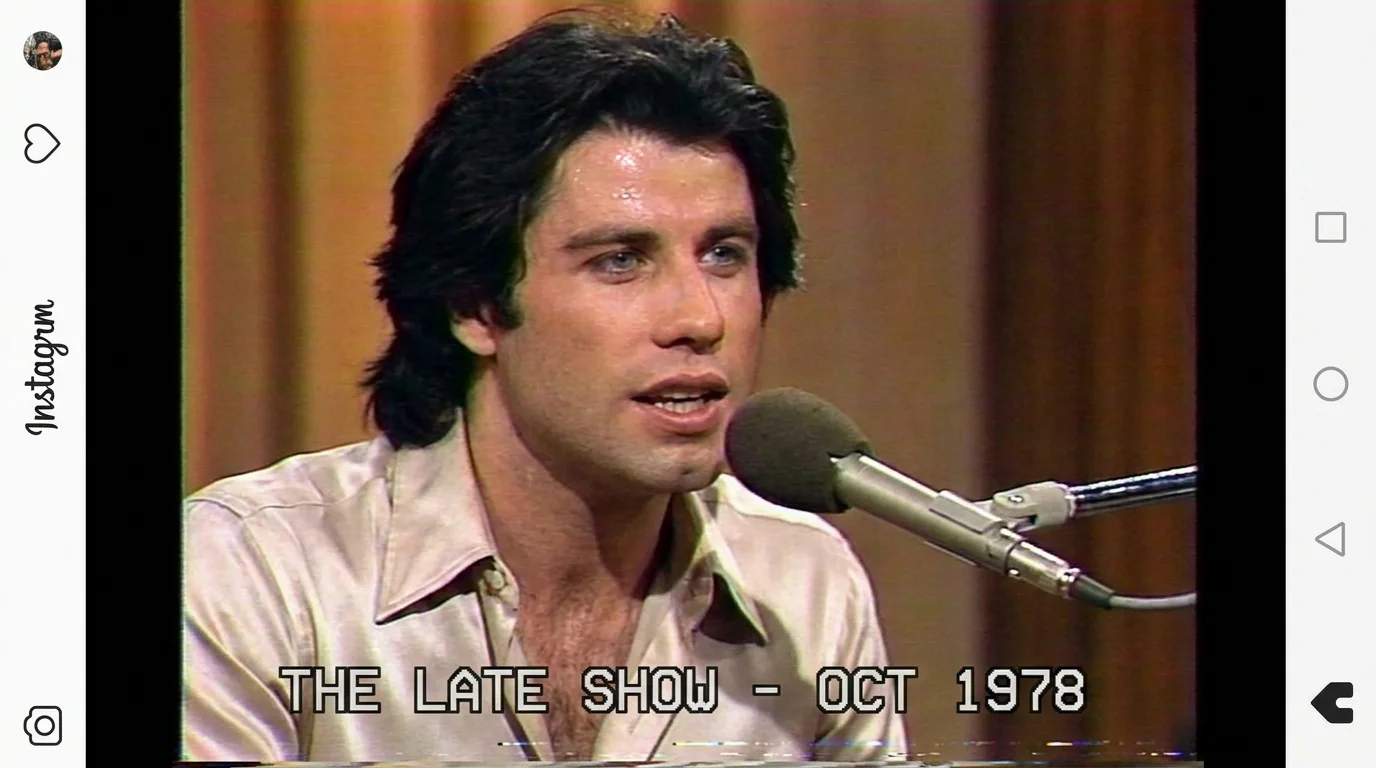
The tape hiss arrives before the image does. On old two-inch quadruplex videotape, there is a low, electric hum—a subtle static pulse that sounds like hot wire cooling on an autumn evening. Then the cathode-ray tube flickers awake, painting an intimate palette of muddy sepia, crushed studio blacks, and the blinding sheen of white polyester catching a direct overhead key light. The year on the lower chyron reads 1978. The host leans across a teakwood desk that smells faintly of lemon wax and spilled black coffee, preparing to toss a lighthearted volley to the biggest movie star on the planet.
You expect to see the smooth, effortless swagger of Tony Manero or the confident strut of Danny Zuko. Pop culture taught you that John Travolta simply walked out of an Englewood rehearsal room, stepped onto an illuminated Brooklyn dance floor, and inherited the American zeitgeist overnight without breaking an exquisite sweat. The cultural mythology insists his late-seventies dominance was a preordained miracle of pure charisma and rhythmic ease.
Instead, the unedited broadcast footage—recently pulled from obsolete magnetic reels, digitized in raw 1080p, and circulating across feeds—freezes the room. In this uncurated six-minute window between planned commercial breaks, the boyish grins vanish. Travolta sits forward in an unvented collar, shoulders tight, jaw muscles working as he rubs his thumbs raw against the seam of his trousers. Rather than celebrating an overnight coronation, he quietly deconstructs a ruthless studio apparatus that nearly derailed his life before the disco lights even warmed up.
The Assembly Line Disguised as Luck
Pop history is usually written by the people selling the movie tickets. For nearly five decades, the mainstream story painted Saturday Night Fever as an organic cultural eruption, framing Travolta as an anointed natural who breezed from sitcom bit-player on Welcome Back, Kotter to global icon on the strength of a white three-piece suit. But when you strip away the polished film grain and retrospective puff pieces, you find an industrial pressure-cooker system designed to extract maximum labor while granting zero creative autonomy.
The central illusion of late-seventies Hollywood was the myth of discovery. Studios did not discover stars; they manufactured them through rigid multi-picture option locks that operated like velvet-lined indentured servitude. In the newly surfaced exchange, Travolta does not talk like a prince celebrating his kingdom; he talks like an exhausted mechanic who built the engine while someone else pocketed the title deed. The effortless hip sway that millions practiced in their bedrooms was actually the byproduct of seven straight months of bone-grinding rehearsals while tied down to ironclad studio commitments that severely undercompensated his real market value.
Greg Vance, 58, a veteran broadcast preservationist in Burbank who spent months digitizing abandoned syndication reels, remembers the exact frame where the illusion shattered. “When you transfer raw master tapes before the affiliate edits cut in, you hear the quiet panic in the room,” Vance notes. “Travolta was twenty-three, managing a brutal grief in his personal life, and fighting Paramount over contract riders that essentially surrendered his entire identity for five years. That taped broadcast captured someone realizing that the American dream he had chased was an extraordinarily tight corporate cage.”
- NSYNC viral reunion video surge launders bitter backstage licensing disputes before tour
- Charli D’Amelio unscripted tearful livestream sparks intense backlash over visible agency teleprompter
- Mickey Rourke extreme method acting stunts derailed major studio ensemble casting offers
- Shawn Mendes unscripted podcast breakdown shields calculated multi-million-dollar lifestyle product rollout
- Ciara Miller steps out wearing distressed leather bomber and tailored cargo trousers
The Three Hidden Realities of the Studio Era
Watching this raw dialogue allows you to break down the mechanics behind the golden era of studio star-making into three distinct structural traps:
The Escalator Option Clause: Long before backend percentages were standardized for young talent, studios signed television breakouts to three-picture options at predetermined flat rates. Even as box-office returns broke historical records across the summer of 1977, Travolta was legally locked into contract payouts that matched mid-level character actors, forcing him into bitter behind-the-scenes renegotiations that the trade publications actively buried to maintain the illusion of a happy young phenom.
Physical Burnout as Promotion: The surfaced interview reveals Travolta admitting to running on three hours of sleep per night while shuttling between sixteen-hour soundstage shoot days for Grease and relentless cross-country press junkets. The effortless dance numbers were performed on inflamed Achilles tendons and wrapped ankles, concealed behind high-gloss black leather boots and camera lenses coated with diffusion oil.
The Erasure of Personal Loss: During this exact promotional cycle, the star was privately mourning the loss of his partner, actress Diana Hyland, who had passed away just months prior. While late-night producers pushed for high-energy disco demonstrations and charming banter, the unedited video captures heavy pauses, guarded eyes, and a quiet, defensive posture that television networks deliberately scrubbed from national reruns using rapid commercial fades.
How to Read the Seams of Modern Celebrity PR
The lessons buried in this resurfaced 1978 tape are not merely vintage trivia; they offer a masterclass in how modern audiences can spot the difference between genuine organic success and manufactured narrative engineering. When you watch viral press junkets or sudden media rises today, look for these subtle operational realities:
- Watch the hands during soft-pitch questions: Actors who are navigating severe behind-the-scenes contract tension will display static micro-tensions—thumb rubs, locked knuckles, or adjusted cuffs—even while smiling warmly.
- Trace the studio distribution pipeline: When a performer seems to occupy every billboard, morning show, and algorithmic feed simultaneously, ask who owns their next three projects. Explosive visibility is almost always an employer protecting a massive upfront capital investment.
- Notice what is not being promoted: The resurfaced Travolta interview succeeded in stunning modern viewers because it highlighted what late-night hosts systematically avoided asking: questions about studio autonomy, health concessions, and creative control.
- Listen for the rhythmic breaks: Unscripted truth rarely sounds fluid. In the archived clip, Travolta speaks in halting, deliberate cadences, weighing every syllable to avoid breaching contractual non-disparagement boundaries.
The Power of Reclaiming Your Own Footing
There is immense comfort in discovering that the icons who defined elegance and cool were not immune to structural pressure. When you look at that 1978 broadcast through modern eyes, the glossy veneer of the disco king falls away, leaving behind something vastly more compelling: a remarkably young, determined artist fighting for his dignity inside a system built to commodify him.
Understanding this historical reality frees you from the exhausting myth of effortless perfection. Brilliance is rarely an unbroken upward line drawn by fate; it is usually an exhausting, calculated negotiation with circumstances that demand more than you want to give. By seeing the sweat on the collar and the tension in the room, you gain permission to view your own milestones not as magic tricks that must happen overnight, but as deliberate acts of perseverance forged against real, invisible resistance.
The moment you realize the spotlight is hot enough to burn, you stop performing for the applause and start working for your survival.
| Key Point | Archival Detail | Added Value for the Reader |
|---|---|---|
| Contractual Control | Flat-fee multi-picture options signed before release | Proves early career leverage requires strategy over blind gratitude. |
| Physical Demands | Seven months of dance training on injured joints | Reframes iconic charisma as disciplined, demanding physical labor. |
| Media Manipulation | Network edits trimmed out tense legal pauses | Teaches you to critically analyze unedited sources over soundbites. |
FAQ
Why did this specific 1978 interview take so long to resurface?
Local affiliate syndication broadcasts and late-night test segments were frequently kept on private station magnetic reels rather than network digital vaults, remaining hidden until independent archivists converted them.Did the studio attempt to stop Travolta from speaking out?
Yes. Classical studio agreements included strict publicity decorum clauses, and the tense body language on display reflects his deliberate caution in avoiding direct contractual breaches on air.How did his performance in Grease overlap with these contract battles?
Filming for Grease took place directly amid the promotional explosion of Saturday Night Fever, amplifying his grueling work schedule while renegotiations for his future films were underway.Was the disco boom as spontaneous as cultural history claims?
No. Archival documents demonstrate that record labels and production houses heavily coordinated soundtrack distribution, capitalizing on underground Brooklyn club trends through aggressive corporate marketing.What is the biggest takeaway for modern viewers watching the footage today?
The footage humanizes an untouchable pop icon, showing that behind the most polished pop culture moments lies intense human negotiation, physical sacrifice, and contractual reality.