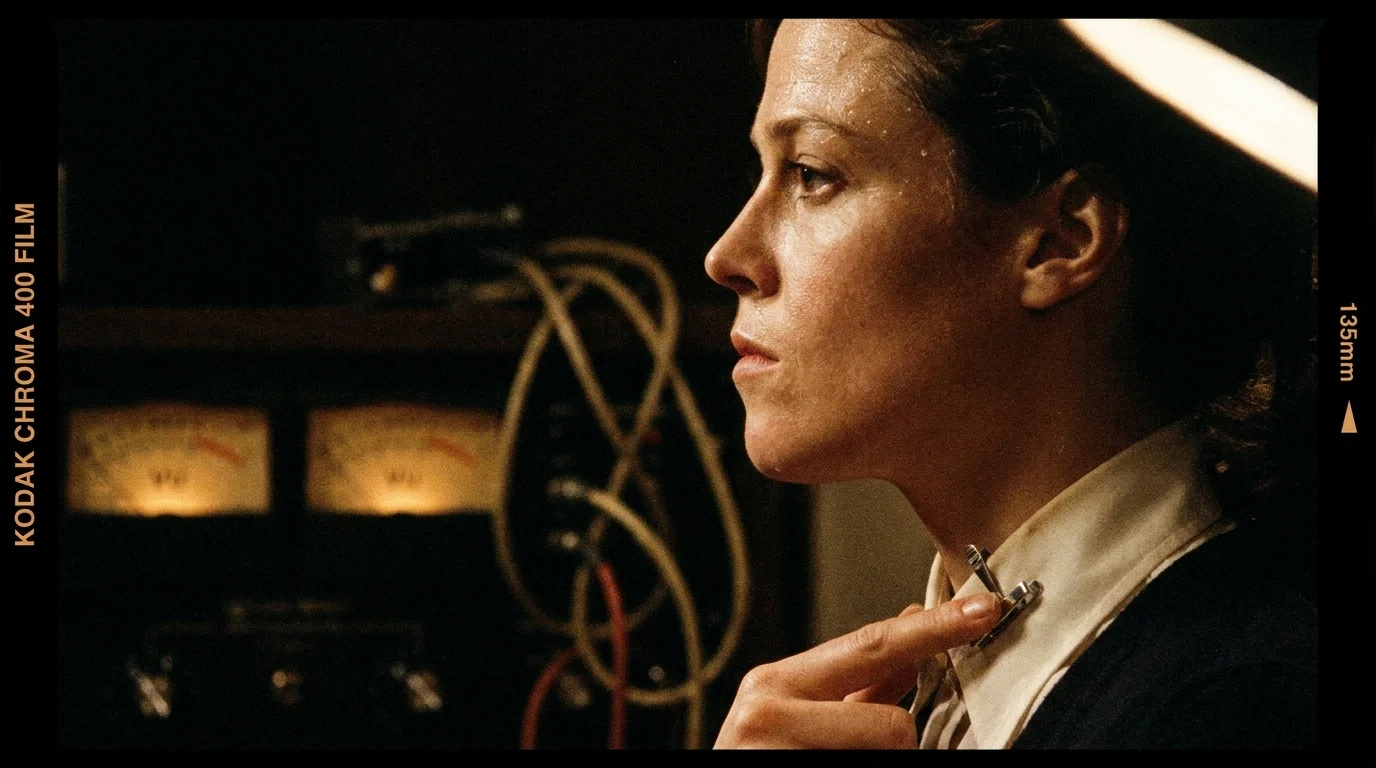
The room carries the faint, dry scent of hot tungsten lamps and unspooled celluloid. You can hear the low, metallic drone of an exhaust fan rattling against corrugated studio siding in Bray Studios, circa the damp autumn of 1978. A twenty-eight-year-old stage actor stands on a tape mark across the cold concrete floor, her frame cutting a silhouette far taller and leaner than the starlets Hollywood casting directors were shuttling into audition rooms that month. Everyone in that room expected deference. What they met instead was an immovable wall of quiet artistic intelligence.
For over four decades, studio retrospectives sold us a tidy fairy tale about Ellen Ripley. The prevailing myth cast Ridley Scott as the lone visionary architect who simply plucked an unproven Off-Broadway performer from obscurity, dressing her in an oversized flight suit and handing her a flamethrower. In that glossy retelling, the character’s groundbreaking grit belonged entirely to the script polishers and the director’s framing. You were taught to view Sigourney Weaver as a fortunate muse who simply said her lines with conviction.
Newly resurfaced, unedited 16mm audition reels and uncompressed Nagra audio stems have shattered that polished narrative. When you listen to the unvarnished magnetic tracks, you do not hear a passive candidate hoping for approval. You hear an uncompromising creative strategist dismantling executive dialogue in real time, pushing back against high-ranking Fox producers who demanded she soften her delivery, lean into traditional vulnerability, and strip away the cold, procedural instincts that ultimately turned Alien into a masterwork of modern cinema.
The Mechanics of Creative Defiance: Dismantling the Muse Fallacy
Cinema history loves the convenience of accidental brilliance because it keeps power centralized behind executive desks. When you study the archival clips circulating out of studio archives, you see an entirely different dynamic: an actor refusing to build a house on soft mud. Executive producers seated off-camera repeatedly prod Weaver to deliver an audition take laced with standard slasher hysteria—breathing through a pillow, gasping, pleading for rescue. They wanted the standard damsel currency that dominated late-seventies horror.
Weaver’s response was an exercise in radical restraint. Instead of screaming, she lowered her register, allowed several beats of uncomfortable silence to hang in the damp studio air, and openly questioned why a warrant officer trained in commercial star-freighter protocols would ever display unmotivated panic. Her posture remained completely still, treating the script notes not as mandatory orders, but as flawed technical suggestions from people who did not understand the engine room. She recognized that true fear on screen does not squeal; it freezes, calculates, and calculates again.
This friction reveals a fundamental truth about storytelling: iconic characters are rarely born from neat compliance. They emerge when a performer possesses the spine to protect a character from the very people paying for the production. Weaver did not just audition for a role; she edited the moral architecture of the narrative before a single frame of principal photography ever rolled.
- Harry Shum Jr tense red carpet glance reignites backstage rift rumors
- Nicolas Cage studio leaks polarizing rough cuts intentionally baiting harsh critic takedowns
- Gary Oldman confronts streaming studio after secret software overrides his spoken vocal timing
- The Weeknd masks live vocal slips under aggressive stadium sub-bass frequencies
- Henry Cavill exposes violent suspension rig drops compressing spine during action shoot
Frank Callendar, a 71-year-old retired sound preservationist who spent thirty years archiving production tapes at 20th Century Fox, remembers the shock of transferring those raw tracks during early digitization passes. He noted that while standard test reels were filled with nervous laughter, throat-clearing, and actors desperate to appease producers, Weaver’s session sounded more like a tense union negotiation. Her voice never wavered, never climbed in pitch, and consistently anchored the scene in cold, workplace authenticity.
Dissecting the Tape: Where the Myth Cracks Open
To understand why this footage hits with such force today, you have to look at the three distinct creative battlegrounds captured on that scratchy audio, each offering a blueprint for anyone trying to defend their work against well-meaning meddling.
The Rejection of Manufactured Helplessness
Producers pushed Weaver to play the discovery of the dead crew members with overt physical breakdown—trembling hands, wet eyes, collapsing against the bulkhead. The raw audio catches Weaver stepping out of character to tell the room flatly that someone running on pure survival adrenaline does not have the luxury of weeping. By stripping out decorative tears, she forced the camera to focus on intellectual problem-solving, single-handedly inventing the modern female action protagonist without firing a single weapon.
The Resistance to Cheap Sensationalism
Early iterations of the script carried executive notes pushing for titillating vulnerability during the ship’s final sequence. In the unedited discussions between takes, Weaver can be heard challenging the necessity of gratuitous vulnerability, pointing out that an exhausted blue-collar worker preparing for cryo-sleep would move with procedural monotony, not curated glamour. Her calm, measured pushback forced the crew to reframe the scene around clinical vulnerability rather than exploitation.
The Power of the Unscripted Pause
Hollywood pace in 1978 demanded fast, punchy responses designed to keep theater patrons munching popcorn. Weaver intentionally dragged the tempo. She left three-second voids before delivering technical readouts, mimicking the way an actual flight officer processes emergency data under stress. That deliberate dragging of time created the signature claustrophobia that defined the final cut.
The Anatomy of Quiet Authority: A Practical Blueprint
You do not need an audition stage at Bray Studios to apply the tactical lessons buried in Weaver’s 1978 tapes. Whether you are pitching a proposal to skeptical management or protecting your own creative integrity from death by a thousand corporate notes, her method provides an actionable standard.
- Lower the acoustic volume when stakes rise: When challenged, do not raise your pitch or speed up your cadence. Drop your vocal floor by half an octave and slow your speech by twenty percent. It instantly reframes your position from defensive to authoritative.
- Weaponize strategic dead air: Never rush to fill the void after an aggressive or foolish request. Let the other person’s suggestion sit in total silence for four full seconds. Most people will walk back their own bad ideas just to kill the discomfort of the quiet.
- Anchor arguments in operational reality: Weaver never argued from personal taste; she argued from the character’s job description. Frame your pushback around functional utility, operational clarity, or user experience rather than abstract preference.
- Treat notes as collaborative hypotheses: Answer bad feedback with diagnostic questions rather than defensive arguments. Ask, ‘What functional problem are we trying to solve with that adjustment?’ and watch the bad suggestions unravel themselves.
The tactical toolkit Weaver used was simple: steady breathing, a refusal to offer appeasing smiles between sentences, and an absolute willingness to walk away from the table if the foundation was fatally compromised. Integrity is an everyday posture, not an abstract philosophy reserved for red carpets.
The Ground Beneath Your Feet
Watching historical footage like this reminds you that the cultural touchstones we revere as inevitable triumphs were once fragile, contested ideas dangling by a thread. Without Sigourney Weaver’s stubborn, early-morning resistance to executive smoothing, Ripley would have been forgotten in the bargain bin of late-seventies space camp, lost to history alongside dozens of disposable monster flicks.
When you strip away the retro studio lore and listen to the real tape hiss, you realize you have permission to stop apologizing for your instincts. You do not owe the room pleasantness at the expense of your work’s truth. True creative authority does not ask for permission to be smart, self-contained, and uncompromising—it simply stands on the tape mark, looks the system in the eye, and lets the work speak with an unshakeable voice.
“You do not earn respect by making yourself small enough to fit inside someone else’s comfort zone.”
| Key Point | Historical Reality | Added Value for You |
|---|---|---|
| The Discovery Myth | Marketed as a passive discovery of an unknown stage actress by studio brass. | Proves that creative milestones require active personal boundaries, not just lucky timing. |
| Script Friction | Weaver actively questioned and modified procedural dialogue during initial tests. | Provides a field-tested model for questioning poor leadership without becoming toxic. |
| Vocal Demeanor | Deliberate low-frequency delivery, rejecting high-pitched slasher tropes. | Offers a tangible technique for commanding meetings through stillness and tone. |
| Character Integrity | Resisted overt executive demands for sexualized and helpless staging. | Shows how long-term value is created by refusing short-term decorative shortcuts. |
Frequently Asked Questions
Did Sigourney Weaver almost lose the role of Ripley due to her pushback?
While studio executives initially found her demeanor aloof and intimidating, director Ridley Scott recognized that her refusal to act like a conventional scream queen was the missing ingredient that elevated the script into high art.Where did the unedited 1978 audition footage suddenly come from?
The materials originated from archival preservation transfers of original 16mm production test reels and separate magnetic sound syncs, parts of which resurfaced during private historical restorations before leaking into archival cinephile circles.Why were studio executives so resistant to her grounded approach?
In 1978, female-led sci-fi horror was considered an unproven commercial risk, leading producers to rely heavily on predictable, hysterical tropes that had generated quick profits in low-budget exploitation cinema.How did Weaver’s theater background influence her audition style?
Trained at the Yale School of Drama and seasoned in avant-garde New York theater, she approached text through an analytical, physical lens, giving her the confidence to dissect scripts logically rather than emotionally.What is the biggest lesson modern professionals can take from this tape?
True professional confidence is quiet, technical, and boundary-focused. You do not need to raise your voice or seek validation to fundamentally change the direction of an entire enterprise.