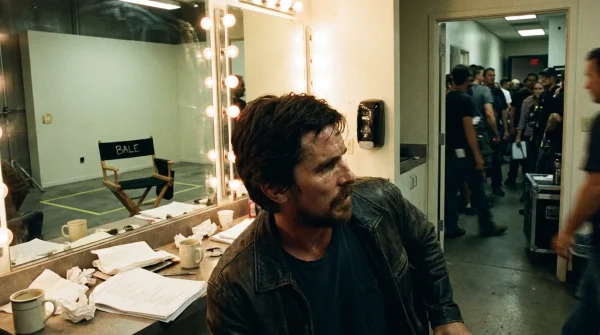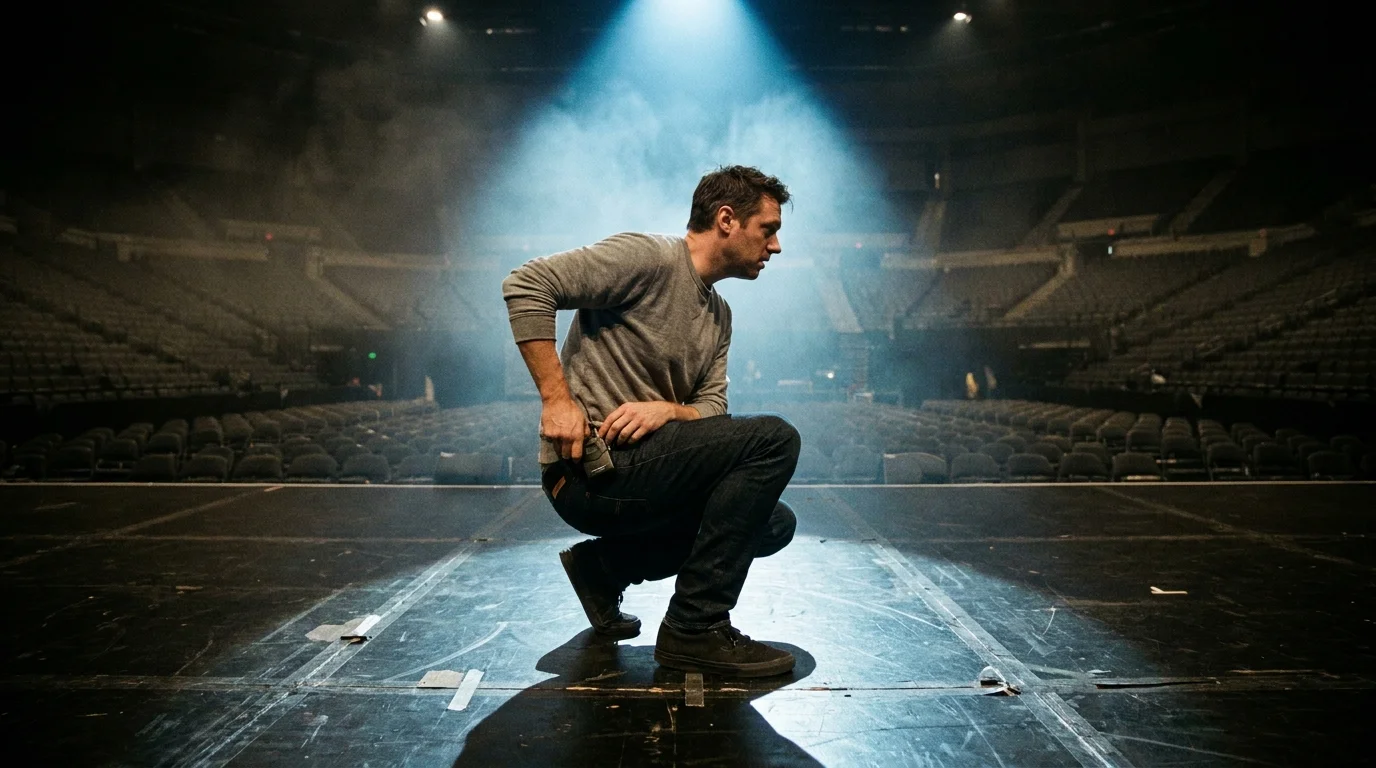
The hum of the soundstage ventilation feels louder when hundreds of crew members are standing frozen in place. Under the harsh rig lights of an Atlanta production warehouse, the metallic tang of cold studio coffee lingers in the air, mixing with the sharp scent of damp cement and scorched pyro cables. You expect film sets at this scale to hum with industrial momentum—camera dollies rolling on greased tracks, grips shifting flags, assistants calling out roll numbers with rhythmic precision. Instead, a deathly quiet settles over the perimeter as Neill Blomkamp drops his headset onto the monitor deck and walks off the floor.
The issue on set is not a blown motor, a missing actor, or an uncooperative stunt harness. The real breakdown lives entirely inside a spreadsheet of galvanic skin response graphs delivered twenty minutes before call time. Studio suits, clutching bound dossiers printed from a Burbank research facility, are demanding an immediate restructuring of the third act—ordering Blomkamp to film an alternate, emotionally sanitized resolution designed to calm an automated graph.
For decades, Hollywood test screenings relied on crude paper cards scribbled with pencils under dim exit signs or plastic plastic focus-group dials clutched in sweaty palms. Today, the process bypasses conscious human opinion altogether. As Blomkamp’s confrontation proves, studios have traded creative dialogue for biometric wrist cuffs and infrared pupil trackers that register every micro-drop of viewer anxiety as a structural product failure.
The Galvanic Cage: When Sweat Glands Replace Storytelling
Imagine trying to paint a canvas while someone measures your heart rate and forces you to wipe away every stroke of deep crimson the moment your pulse climbs past eighty beats per minute. That is the new mechanics of commercial cinema. Biometric test screenings treat human discomfort not as narrative tension, but as customer churn risk.
When viewers watch an uncompromising sci-fi narrative unfold, their autonomic nervous system reacts exactly as it evolved to: sweat glands open microscopically along the palms, electrical conductance spikes across the skin, and pupil dilation narrows in hyper-focused stress. To an empathetic storyteller, that spike indicates total immersion—the audience is holding their breath, waiting for the shoe to drop. But to an algorithmic distribution executive, that identical biometric spike flags a potential negative exit poll, an emotional friction point that must be sanded flat before global distribution.
Neill Blomkamp built his career on that precise friction. From the sun-baked, bureaucratic grit of his breakout work to the body-horror mechanical splices that define his visual grammar, his signature relies on making you squirm in your theater seat. By halting production instead of filming the mandated, focus-smoothed replacement scenes, he drew a hard boundary between human intuition and machine-mandated complacency.
- Nicole Kidman rejects digital skin smoothing demanding raw unforgiving macro closeups
- Dave Grohl halts stadium concert after high pitch monitor feedback spike
- Alix Earle bedroom livestream leaks agency script sparking intense fan skepticism
- Camila Cabello podcast breakdown precedes massive commercial cosmetic rollout
- Ezra Frech debuts structured tailored houndstooth blazer during Manhattan gala appearance
Marcus Vance, a forty-eight-year-old sensory screening coordinator who has spent fifteen years wiring audiences for major studio preview labs, watched this corporate philosophy take over post-production wings firsthand. “Two decades ago, we asked people if they liked the protagonist’s choice,” Vance explained over coffee outside an unbranded testing facility in Sherman Oaks. “Now, if the autonomic response curve fails to level out into a predictable serotonin curve during the final ten minutes, the software flags the scene as defective. The algorithm views tragedy or moral ambiguity as a biological error code.”
The Anatomy of Creative Flattening Across Production Layers
This automated oversight does not hit every production the same way. The friction plays out across three distinct operational layers, each facing its own specific studio leverage points.
The Auteur Stalemate
For established genre filmmakers, biometric data is weaponized as a contractual lever. When a director holds final cut privileges contingent on budget thresholds or rating metrics, studio legal teams leverage biometric distress scores to trigger completion bond clauses. Creative resistance becomes a high-stakes gamble against insurance penalties and studio lockouts, forcing directors to either stage on-set walkouts or watch their footage chopped up by corporate post-production houses.
The Mid-Budget Compression
Mid-tier sci-fi and action projects suffer the most severe erasure. Without the public cachet of an Oscar-winning name, mid-budget directors are quietly replaced or overridden during weekend reshoots. The resulting films possess that distinct, focus-grouped flatness where every lingering shot of despair is trimmed by four frames, and every downbeat ending is replaced by an unearned sunrise and an expositional voiceover.
The Independent Vanguard
Outside the corporate studio bubble, low-budget genre creators are treating these corporate algorithmic metrics as an inversion map. By studying what Burbank testing firms flag as “stress triggers,” independent filmmakers deliberately lean into those exact sensory cadences. They recognize that real cultural longevity comes from provoking raw, unmediated physical responses that algorithms are designed to sterilize.
Navigating the New Rules of Audience Engineering
Understanding how algorithmic feedback loops distort modern filmmaking changes the way you consume screen media. You no longer have to wonder why so many hundred-million-dollar features feel strangely identical by the time the credits roll. The mechanics of studio sanitization follow a repeatable, cold sequence:
- Galvanic Skin Response (GSR) Profiling: Electrodes track micro-changes in sweat gland activity, reading sharp spikes in biological tension as viewer alienation rather than dramatic suspense.
- Infrared Pupillometry: Cameras mounted beneath test monitors track involuntary eye movement, penalizing scenes where viewers look away from centered marketing focal points.
- Facial Action Coding Systems (FACS): Software maps micro-expressions across facial muscles, flagging moments of disgust, ambivalence, or somber reflection as negative satisfaction scores.
- Pacing Mandates: Reshoot memos demand trimming any shot lasting longer than three seconds if the collective pulse rate of the test room falls below baseline engagement thresholds.
The on-set resistance Blomkamp demonstrated highlights a critical turning point for entertainment culture. When an artist refuses to shoot a sanitized ending, they are not simply arguing over a script page. They are protecting the audience’s right to feel unresolved, shaken, and deeply human in an era dedicated to digital tranquilization.
The Bigger Picture: Reclaiming the Value of Friction
The impulse to eliminate discomfort from popular storytelling is part of a larger, quieter obsession with total optimization. We see it in the curated smoothness of modern lifestyle apps, the frictionless design of digital feeds, and now, the biometric engineering of our cinematic narratives. But art has never been an optimization problem waiting to be solved by skin-conductivity readouts.
When you sit in a dark theater, you do not want an emotional sedative designed to keep your heart rate flat. You want the sting of cold reality, the shock of an unearned tragedy, and the hard-won beauty of an ending that refuses to give you easy answers. Blomkamp’s standoff in the soundstage dust is a reminder that without friction, there is no heat—and without heat, storytelling becomes nothing more than wallpaper moving past our eyes.
“If you engineer every spike of discomfort out of a story, you eliminate the very mechanism that makes a film lodge itself into your memory for decades.”
| Key Point | Detail | Added Value for the Reader |
|---|---|---|
| Biometric Dial Testing | Using GSR sensors and pupil tracking to measure viewer micro-reactions in real time. | Reveals why third-act plot twists in modern studio films frequently feel rushed or unnaturally optimistic. |
| The Reshoot Standoff | Blomkamp halted set operations rather than film executive-mandated sanitized script pages. | Shows the direct career cost directors pay to defend complex, ambiguous narrative endings. |
| Algorithmic Homogenization | Treating nervous-system distress as product failure rather than dramatic tension. | Helps you spot when a film has been focus-smoothed to protect opening weekend exit polls. |
FAQ
What triggered Neill Blomkamp to halt the studio reshoots?
Production ground to a halt after executives presented real-time biometric skin-sensor readouts from test audiences, demanding an immediate shift to a safer, more optimistic resolution that compromised Blomkamp’s creative intent.How do studios use galvanic skin response in test screenings?
Test viewers wear wrist sensors that measure electrical conductivity on the skin, which spikes during emotional arousal or stress. Studios misinterpret these physiological distress spikes as audience dissatisfaction rather than narrative engagement.Why are directors resisting biometric audience testing?
Biometric metrics prioritize comfort and immediate emotional resolution over complex themes, forcing creators to flatten tone, cut atmospheric pacing, and erase tragic character arcs.Does biometric testing actually lead to better box office returns?
While executives rely on these metrics to minimize immediate risk, over-sanitized films often suffer from critical apathy and weak word-of-mouth because audiences find them forgettable and devoid of tension.How can casual moviegoers identify biometrically smoothed films?
Look for sudden tonal shifts in the final twenty minutes, unmotivated happy endings, rapid-fire cuts during dramatic moments, and an absence of lasting narrative consequences for lead characters.