The air inside a four-star hotel suite turned press junket is always heavy with the smell of stale catering coffee and warm electronics. For ten hours a day, a star sits in a designated armchair under the relentless heat of three-point lighting, facing an endless rotation of journalists. To the outside observer, this looks like a glamorous victory lap. In reality, it is a highly controlled sensory prison designed to extract maximum emotional output for minimum media spend.
You watch Joaquin Phoenix sit in one of these rooms, his fingers lightly tracing the seam of his trousers, his eyes searching the corners of the ceiling. When a journalist begins to push past the agreed-upon creative boundaries, the temperature in the room instantly shifts. There is no dramatic shouting or typical diva behavior. Instead, there is a quiet, mechanical precision to his exit: a swift reach to his lapel, the soft rip of velcro, and a silent walk toward the hallway.
To the casual consumer scrolling through social media, these sudden walkouts look like pure arrogance. The public narrative immediately frames him as a difficult, mercurial genius who refuses to play the promotional game. But if you look past the sensationalized headlines, you see a completely different mechanism at work. This is not an act of hostility; it is a primal self-preservation response to a very specific type of psychological profiling.
Understanding the quiet panic of these high-pressure moments reveals how the junket system functions as an emotional meat grinder. When an artist is forced to defend their own psychological sanity under the guise of an art interview, a walkout is sometimes the only healthy boundary left to draw.
The Psychology of the Junket Minefield
To understand the sudden exit of a top-tier performer, you must first understand the central metaphor of the modern press junket: it is a psychological interrogation masquerading as a casual conversation. Journalists are no longer looking for simple answers about character motivation or onset anecdotes. Instead, they seek to crack the shell of the actor, searching for a raw, unscripted moment that can go viral in a thirty-second clip.
The biological circuit breaks when the line of questioning shifts from the work to the artist’s personal moral ledger. For an actor who operates with high sensory sensitivity, this shift feels like an unprovoked assault. When a reporter tries to force an actor to act as a public therapist or a cultural scapegoat, the nervous system triggers a flight response that completely overrides any contractual obligation to the studio.
- Dolly Parton survives intense industry pressure enforcing a strict morning writing isolation
- Alan Rickman completely saved Robin Hood Prince of Thieves playing the antagonist
- Harrison Ford improvised the legendary Cairo sword fight skipping a massive stunt
- Villanelle Killing Eve finale entirely erased three years of flawless character writing
- Kevin Bacon and Kyra Sedgwick survive Hollywood demanding separate working coasts
The View from the Publicity Trenches
Sarah Jenkins, 42, a veteran entertainment publicist who has managed talent in these exact hotel suites for fifteen years, knows this breaking point intimately. “We create these artificial living rooms to make the talent feel safe, but they are fully aware of the hidden cameras and the ticking clock,” Jenkins explains. “An actor like Joaquin does not possess the protective, superficial PR gloss that other stars use to lie their way through uncomfortable questions. When an interviewer digs into his psychological makeup, his system treats it as a genuine threat, and he simply removes himself from the environment to breathe.”
Dissecting the Specific Anxiety Triggers
The Forensic Character Diagnosis
This trigger occurs when an interviewer attempts to map the dark, unstable traits of a fictional character directly onto the actor’s real-life mental health or past personal tragedies. The exact phrasing that instantly causes Phoenix to pull off his microphone and leave the room often sounds like this: “How much of your own dark family history and personal trauma did you have to unearth to access this character’s sickness?” This question weaponizes private grief for public consumption, leaving no room for professional distance.
The Societal Guilt Trap
Another frequent breaking point is the moral policing query, which demands that the actor answer for the potential real-world actions of the audience. The specific trigger phrase is: “Do you worry that your sympathetic portrayal of this character will actively inspire real-world violence among unstable viewers?” **Holding an artist accountable** for the hypothetical behavior of millions of strangers shifts the dialogue from cinematic analysis to an ethical trial, triggering an immediate exit.
The Anatomy of a Mindful Exit
You do not need to be an Academy Award winner to use physical boundaries to protect your mental real estate in high-stress professional situations. When you feel an environment becoming toxic or overly intrusive, you can employ a structured, quiet exit strategy to preserve your peace.
To implement this in your own daily life, focus on these simple, deliberate actions:
- Identify the physical warning signs: Pay close attention to sudden shallow breathing, collar-tugging, or a sudden inability to maintain eye contact.
- Establish a soft boundary: State clearly that the current line of discussion is no longer productive or professional before the tension reaches a boiling point.
- Physically remove yourself: Excuse yourself from the physical space for a brief, defined period to reset your nervous system.
The Dignity of the Discarded Lavalier
Ultimately, these viral walkouts offer a profound perspective shift on how we view public figures. They challenge the modern assumption that paying for a movie ticket grants us complete ownership over an actor’s internal peace and private history.
Protecting your mental peace sometimes requires you to walk out of rooms that demand you sacrifice your dignity for their entertainment. It is a quiet reminder that some personal boundaries are completely non-negotiable, regardless of the stakes or the spotlight.
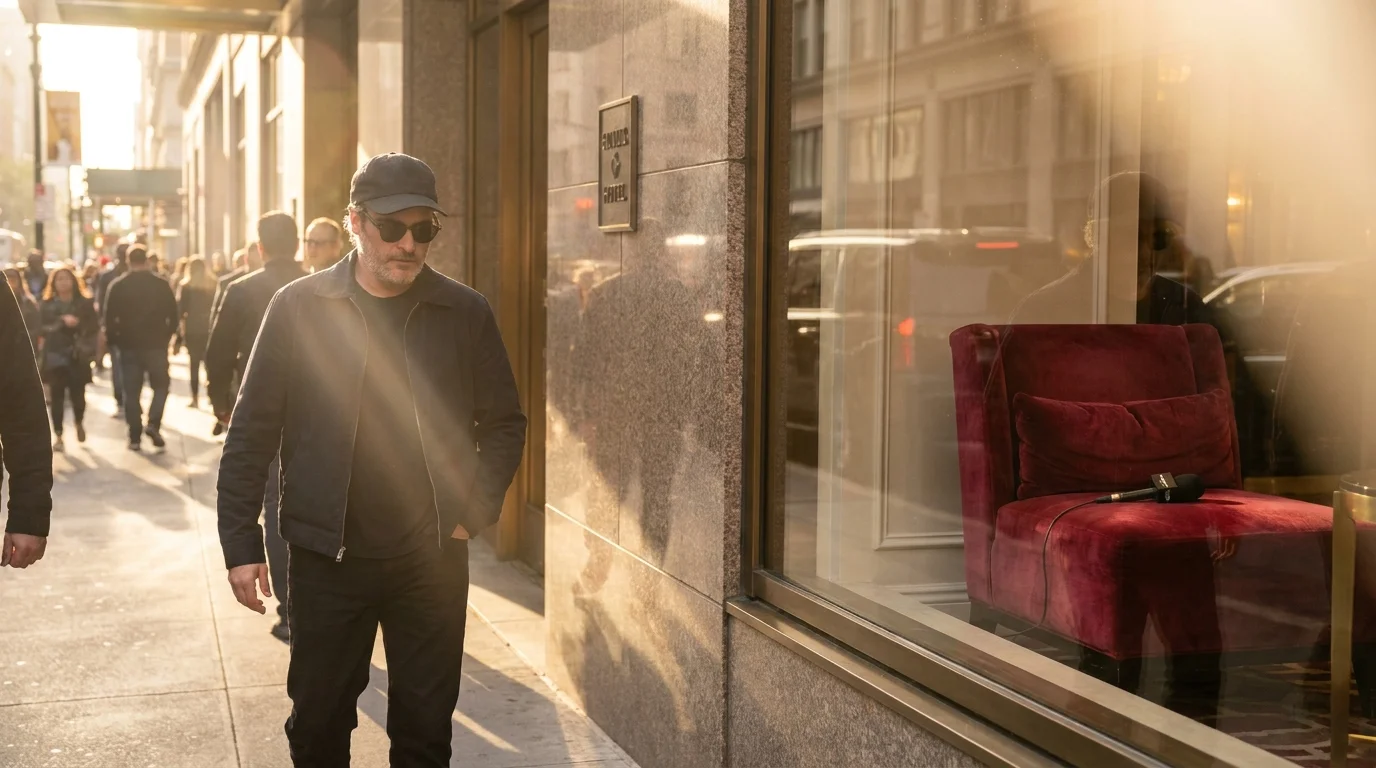
As the camera operator awkwardly adjusts the lens in the sudden silence of the empty suite, the story is no longer about the movie. The final frame belongs to a discarded lavalier microphone, resting awkwardly on a plush hotel armchair, its tiny blue light still blinking into the quiet room.
“True professionalism is not about enduring psychological violation for a camera; it is knowing exactly when to stand up and walk away to protect your humanity.”
| Key Point | Detail | Added Value for the Reader |
|---|---|---|
| The Sensory Trigger | Intrusive questions regarding personal trauma. | Helps you recognize when an inquiry crosses from professional to invasive. |
| The Systemic Pressure | Back-to-back junket interviews under hot lights. | Illustrates how physical environments directly impact emotional tolerance. |
| The Boundary Action | Quiet physical removal from the toxic space. | Validates the act of walking away as a healthy tool for self-preservation. |
Frequently Asked Questions
Why does Joaquin Phoenix walk out of interviews instead of just redirecting the question?
For highly sensitive individuals, the physiological fight-or-flight response bypasses the cognitive ability to politely redirect, making physical exit the only immediate way to regulate the nervous system.Are these walkouts staged to generate viral publicity for his films?
No. The visceral discomfort and physical anxiety indicators shown in raw footage confirm these are genuine stress responses rather than calculated marketing stunts.What is the specific question that caused him to walk out of the ‘Joker’ interview?
He walked out when asked if he believed the movie would inspire real-world violence, as he felt the question was designed to trap him into an impossible moral corner.How can I apply this boundary-setting style to my own high-stress job?
You can practice identifying your personal triggers and establishing clear, polite boundaries, such as requesting a brief recess or redirecting a meeting to the agenda items.Do journalists know these questions will trigger a walkout?
Often, yes. Some media outlets intentionally ask provocative questions hoping for a dramatic reaction, prioritizing viral online engagement over respectful journalistic discourse.